
Mit Magzter GOLD unbegrenztes Potenzial nutzen
Erhalten Sie unbegrenzten Zugriff auf über 9.000 Zeitschriften, Zeitungen und Premium-Artikel für nur
Versuchen GOLD - Frei
"Henry was not a great king but he was respected as a most Christian one"
BBC History UK
|June 2023
David Carpenter talks to David Musgrove about the second part of his biography of King Henry II, and the extraordinary revolution that removed him from power in 1258

David Musgrove: This is the second volume of a two-part biography of Henry III, covering the period 1258 down to the king’s death in 1272. The year 1258 saw revolt against the king, so had Henry’s reign gone well up to this point?
David Carpenter: Henry would have said that he had given long years of peace to England, linked to an absence of foreign war. He was a pacific king as well as a most Christian one. He had none of the cruelty and irreligion of his father, King John. He gave huge alms to the poor, attended multiple masses, and, most importantly, was rebuilding Westminster Abbey in honour of his patron saint, Edward the Confessor. Henry had accepted Magna Carta, and his financial exactions (though still resented) were far lower than John’s as a result.
His critics, though, saw him as a simple-minded, naive king who had plunged into ill-advised projects, including trying to place his second son on the throne of Sicily. In his open-handed way, Henry had also given gigantic rewards to his foreign relatives, thus creating tensions at court and divisions with his English subjects. And Henry, politically unaware, had failed to reform local government. This meant his sheriffs and judges had become increasingly oppressive. Magnates, too, had been allowed to expand their local power. If there was peace, it seemed to be peace with injustice.
So when we get to 1258, there was revolution in the court of Henry, with one group of courtiers turning on another, led by Henry’s half-brothers from Poitou.
You state that Henry is less central to volume two than to volume one. Who is the key figure in this sorry?
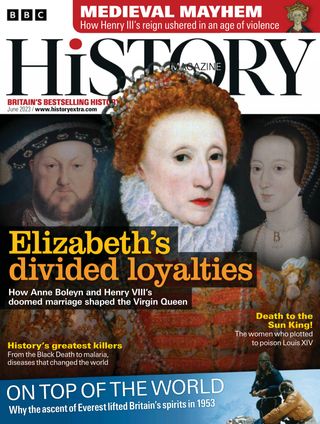

Diese Geschichte stammt aus der June 2023-Ausgabe von BBC History UK.
Abonnieren Sie Magzter GOLD, um auf Tausende kuratierter Premium-Geschichten und über 9.000 Zeitschriften und Zeitungen zuzugreifen.
Sie sind bereits Abonnent? Anmelden
WEITERE GESCHICHTEN VON BBC History UK

History Extra
Personal stories
Few shows have enjoyed the longevity of Who Do You Think You Are? and it's easy to understand why it has endured.

1 min
June 2026

History Extra
Tidal change
Southern mythos notwithstanding, there exists no static, exceptional American South.
1 mins
June 2026

History Extra
Marriage story
Emily Howes on her novel about Catherine Dickens' relationship with her famous husband
1 mins
June 2026
History Extra
Sexual her-story
A witty, wide-ranging account of the myths and power structures behind female sexuality impresses SARAH JONES
2 mins
June 2026

History Extra
History man
According to Tom Hanks, during his childhood 'The War' was a recurring topic in the conversations of the adults around him.
1 min
June 2026
History Extra
How to be a master of disguise
10 do's and don'ts when attending a masquerade
2 mins
June 2026

History Extra
Age of indulgence
Our content producer Charlotte Vosper picks episodes of the HistoryExtra podcast about Georgian Britain
1 min
June 2026

History Extra
Gaffer tape
While Bobby Robson and Gareth Southgate both led England to World Cup semi-finals, Alf Ramsey remains the only manager to actually win the trophy.
1 mins
June 2026

History Extra
What's the origin of the Fosbury Flop?
Like the Salchow in ice skating, the Fosbury Flop is a sport technique that immortalises the name of its creator.
1 min
June 2026

History Extra
EXHIBITIONS
In 1776, the United States of America was born - heralded by the Declaration of Independence.
1 min
June 2026
Translate
Change font size