
Mit Magzter GOLD unbegrenztes Potenzial nutzen
Erhalten Sie unbegrenzten Zugriff auf über 9.000 Zeitschriften, Zeitungen und Premium-Artikel für nur
Versuchen GOLD - Frei
The Unlovable Parts of a Loving Society
Philosophy Now
|February/March 2022
Matei Tanasă asks if we should love the unlovable.

Do all people deserve to be loved? To be able to answer such a question, we must first understand its meaning. So first, what is love? The common view regarding love meets Plato’s view on it quite nicely. His view as elaborated in his dialogues Phaedo and Symposium is that love for someone or something is a type of desire. Specifically it is a desire for beauty. Yet by desiring a certain person or thing, we must also desire its conservation, its protection, and its general wellbeing – by which I simply mean, lack of pain or its non-destruction. If on the contrary, we want a certain thing or person to change, that would necessarily mean that we want it to be different from the way it is, implying that we do not love it, at least as it is. Defining love in this way does satisfy a common belief on the subject, which is that if someone truly loves you then they will accept you as you are and will not desire your alteration. Counting all this in, then, my initial question could be rephrased as: Do all people deserve to be desired just as they are?
Evidently, the term ‘deserve’ is an ethical term. If person A does deserves thing B, then it is morally correct for A to have B. So in order to answer our question, we must now also find out what we morally ought to desire. The question then becomes: is it morally right for all people to be desired just as they are?


Diese Geschichte stammt aus der February/March 2022-Ausgabe von Philosophy Now.
Abonnieren Sie Magzter GOLD, um auf Tausende kuratierter Premium-Geschichten und über 9.000 Zeitschriften und Zeitungen zuzugreifen.
Sie sind bereits Abonnent? Anmelden
WEITERE GESCHICHTEN VON Philosophy Now

Philosophy Now
Nosferatu
Stefan Bolea considers two very different artistic approaches to love and death.

6 mins
April/May 2025

Philosophy Now
Heidegger's Ghost
Raymond Tallis wonders where Heidegger's body went when he was philosophising.
7 mins
April/May 2025

Philosophy Now
Is Comedy Good For Us?
Damaris Stock has a laugh with Plato and friends.
10 mins
April/May 2025

Philosophy Now
In Defense of Idleness
Wendell O'Brien says, 'Just Don't Do It'.
10 mins
April/May 2025

Philosophy Now
Leaving Nothing to Chance by Carl Knight
LEAVING NOTHING TO Chance (2025) by Carl Knight, is an informed, proficient and lucid defence of luck egalitarianism.
3 mins
April/May 2025

Philosophy Now
Star Maker by Olaf Stapledon
THE 1937 SCIENCE FICTION novel Star Maker was written by philosophy professor Olaf Stapledon in the dark days as Europe awaited the onslaught of Nazi Germany. This casts a shadow over the whole book.
6 mins
April/May 2025

Philosophy Now
Love & Emptiness in the Sufi Tradition
Medha Ninad Tambe meditates on Rumi, love and self-negation.
7 mins
April/May 2025

Philosophy Now
The Hedgehog's Dilemma: A Metaphor About the Challenges of Human Intimacy
Krishna Chaubey explains Arthur Schopenhauer's poignant thought experiment.
4 mins
April/May 2025

Philosophy Now
The Mirror & the Flame
Rebwar Fatah imagines Attar's & Hegel's shared path.
4 mins
April/May 2025
Philosophy Now
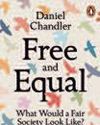
Free and Equal by Daniel Chandler
DANIEL CHANDLER, AN economist and philosopher based at the London School of Economics, begins Free and Equal: What Would a Fair Society Look Like? (2023) by asking an intriguing question. How is it, he wonders, that the most influential political philosopher of the last century has had almost no practical impact on politics or policy? The philosopher in question is John Rawls, whose magnum opus was A Theory of Justice (1971).
5 mins
April/May 2025
Translate
Change font size