Versuchen GOLD - Frei
A Philosophical History of Transhumanism
Philosophy Now
|February/March 2024
John Kennedy Philip goes deep into the search for (post-) human heights.
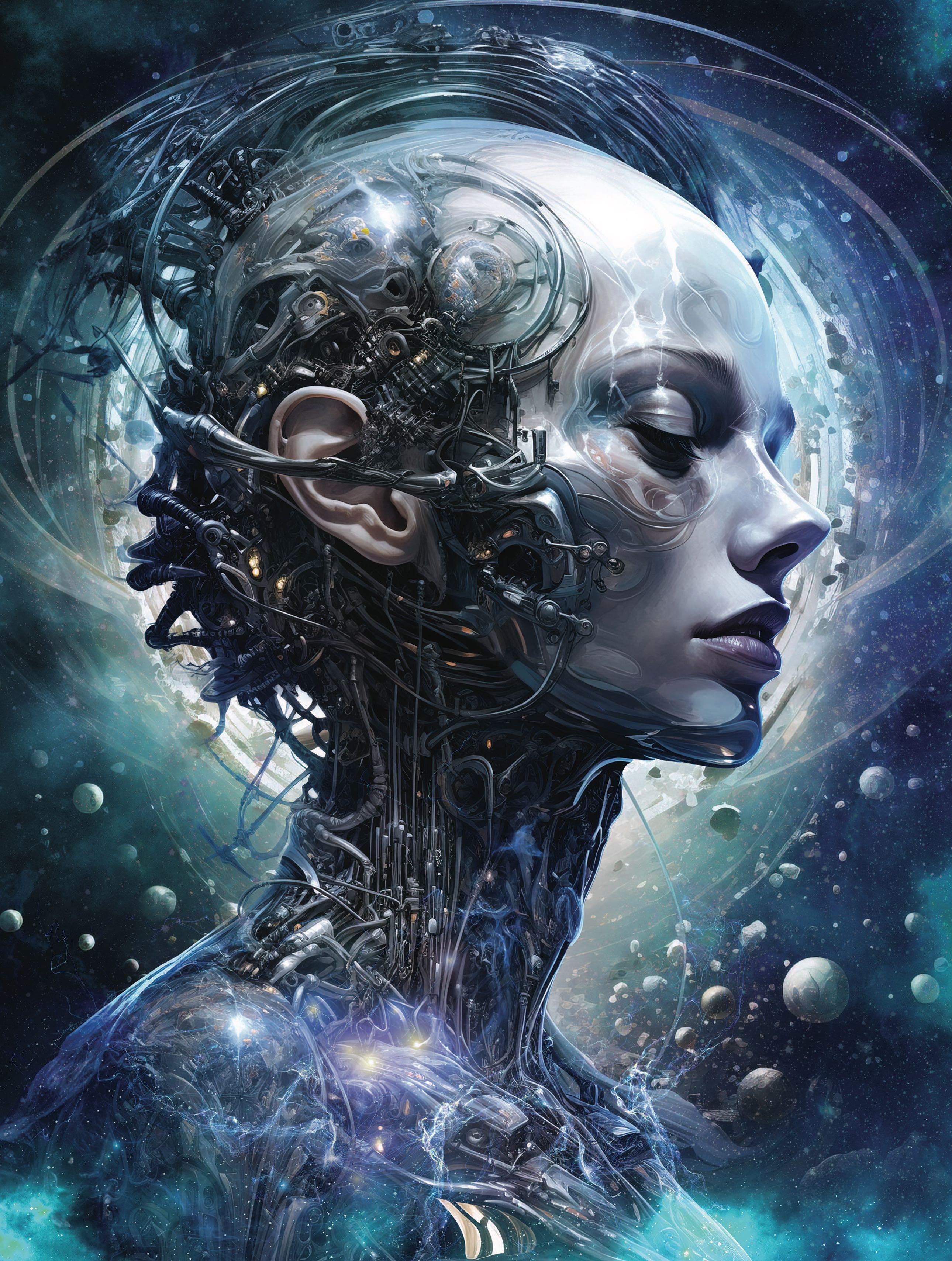
Throughout our history, we human beings have been trying to transform ourselves with a view of overcoming our limitations, even death. There is a tendency in humanity to search for a way around every obstacle and limitation, and to make one’s life happier and better in this world. This discloses our yearning to become better than we are – better than human: to move from being mere Homo sapiens to become Homo superior. Transhumanism is a movement which advocates this transformation of the human condition through applied reason, especially by developing technologies, and then making them widely available. Transhumanism itself has gradually evolved over the past couple of decades. Now it promotes research into areas such as life-extension projects, cryonics, molecular nanotechnology, human enhancement projects such as bionics, artificial intelligence, uploading human consciousness into computers, and designer babies, among other things. We can say that the ultimate objective of transhumanism is to enable us to live forever.
Commentators tend to say that transhumanism is either dehumanizing or superhumanizing. The view that transhumanism is dehumanizing is held by ‘bioconservatives’ such as Francis Fukuyama and Richard Jones. Fukuyama expresses his critique in his book Our Posthuman Future: Consequences of the Biotechnology Revolution (2003). He thinks that transhumanistic projects will violate basic human rights and will blur the line between natural and artificial, which indeed would induce moral dilemmas. Ultimately, the fear is that transhumans will eliminate original humanity. Transhumanism as a

Diese Geschichte stammt aus der February/March 2024-Ausgabe von Philosophy Now.
Abonnieren Sie Magzter GOLD, um auf Tausende kuratierter Premium-Geschichten und über 9.000 Zeitschriften und Zeitungen zuzugreifen.
Sie sind bereits Abonnent? Anmelden
WEITERE GESCHICHTEN VON Philosophy Now

Philosophy Now
Nosferatu
Stefan Bolea considers two very different artistic approaches to love and death.

6 mins
April/May 2025

Philosophy Now
Heidegger's Ghost
Raymond Tallis wonders where Heidegger's body went when he was philosophising.
7 mins
April/May 2025

Philosophy Now
Is Comedy Good For Us?
Damaris Stock has a laugh with Plato and friends.
10 mins
April/May 2025

Philosophy Now
In Defense of Idleness
Wendell O'Brien says, 'Just Don't Do It'.
10 mins
April/May 2025

Philosophy Now
Leaving Nothing to Chance by Carl Knight
LEAVING NOTHING TO Chance (2025) by Carl Knight, is an informed, proficient and lucid defence of luck egalitarianism.
3 mins
April/May 2025

Philosophy Now
Star Maker by Olaf Stapledon
THE 1937 SCIENCE FICTION novel Star Maker was written by philosophy professor Olaf Stapledon in the dark days as Europe awaited the onslaught of Nazi Germany. This casts a shadow over the whole book.
6 mins
April/May 2025

Philosophy Now
Love & Emptiness in the Sufi Tradition
Medha Ninad Tambe meditates on Rumi, love and self-negation.
7 mins
April/May 2025

Philosophy Now
The Hedgehog's Dilemma: A Metaphor About the Challenges of Human Intimacy
Krishna Chaubey explains Arthur Schopenhauer's poignant thought experiment.
4 mins
April/May 2025

Philosophy Now
The Mirror & the Flame
Rebwar Fatah imagines Attar's & Hegel's shared path.
4 mins
April/May 2025
Philosophy Now
Free and Equal by Daniel Chandler
DANIEL CHANDLER, AN economist and philosopher based at the London School of Economics, begins Free and Equal: What Would a Fair Society Look Like? (2023) by asking an intriguing question. How is it, he wonders, that the most influential political philosopher of the last century has had almost no practical impact on politics or policy? The philosopher in question is John Rawls, whose magnum opus was A Theory of Justice (1971).
5 mins
April/May 2025
Listen
Translate
Change font size