
Go Unlimited with Magzter GOLD
Get unlimited access to 10,000+ magazines, newspapers and Premium stories for just
Try GOLD - Free
Low, Medium And High Bong Sau
Wing Chun Illustrated
|Issue No. 36, 2017
How To Protect Your Upper Centreline

THE WING CHUN system has three primary Bong Sau positions: a middle Bong Sau, which is taught in the Siu Nim Tau level, a low Bong Sau introduced in Cham Kiu form, and a high Bong Sau taught in the Biu Ji level. The three Bong Sau positions defend the upper, middle, and lower centreline.
The first step in understanding these techniques and ultimately using them for self-defence is to apply their fundamentals with skill and elegant effectiveness.
The Bong Sau builds a bridge with an incoming technique, sticks to it, and rotates as it allows the incoming technique to pass your body. Shifting and moving your body off the line as Bong Sau protects your boundaries is a safe and reliable approach. This is Ying Bong.
There is also a Yang Bong that builds a bridge with the incoming technique, sticks to it, and rotates as it moves the incoming technique off its line. So, instead of moving your body out of the way, this Bong Sau moves the incoming technique off the line. Although this is an aggressive approach to Bong Sau, it can still be performed without crashing. Your opponent will feel a gradual, but substantial, change of direction; it will be like bending bamboo without breaking it.
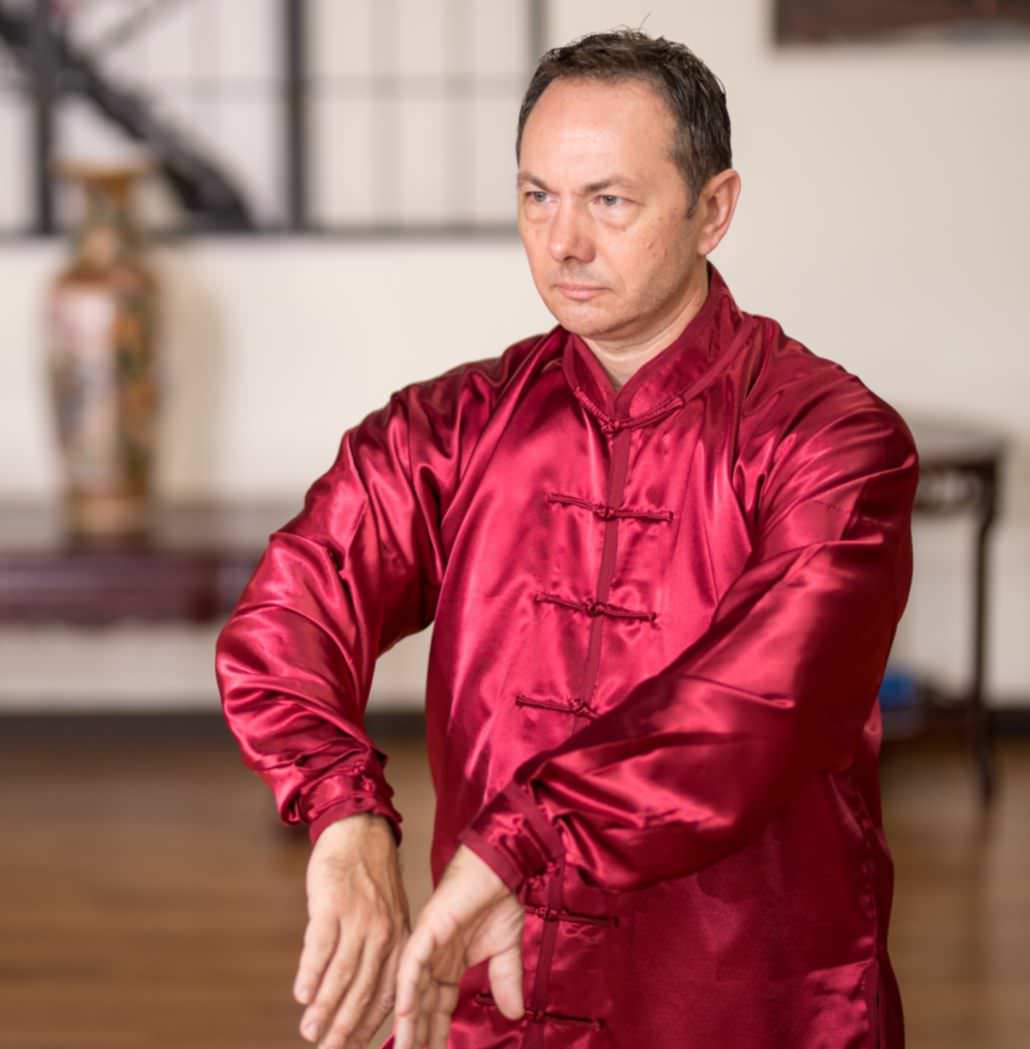
These approaches to Bong Sau are the same, whether we use high, medium or low Bong Sau.
At the end of the Siu Nim Tau form, we learn the mid-level Bong Sau. The wrist is at sternum level, and the elbow is at shoulder height. This means the forearm has a downward angle. This Bong Sau can be supported using a shift and will protect the centreline range between the sternum and shoulder. With this


This story is from the Issue No. 36, 2017 edition of Wing Chun Illustrated.
Subscribe to Magzter GOLD to access thousands of curated premium stories, and 10,000+ magazines and newspapers.
Already a subscriber? Sign In
Translate
Change font size