
Go Unlimited with Magzter GOLD
Get unlimited access to 10,000+ magazines, newspapers and Premium stories for just
Try GOLD - Free
Can Abigail Allwood Find Life On Mars?
The Atlantic
|June 2018
She made her name identifying the earliest accepted proof of life on Earth. Now NASA is counting on her to repeat the trick.
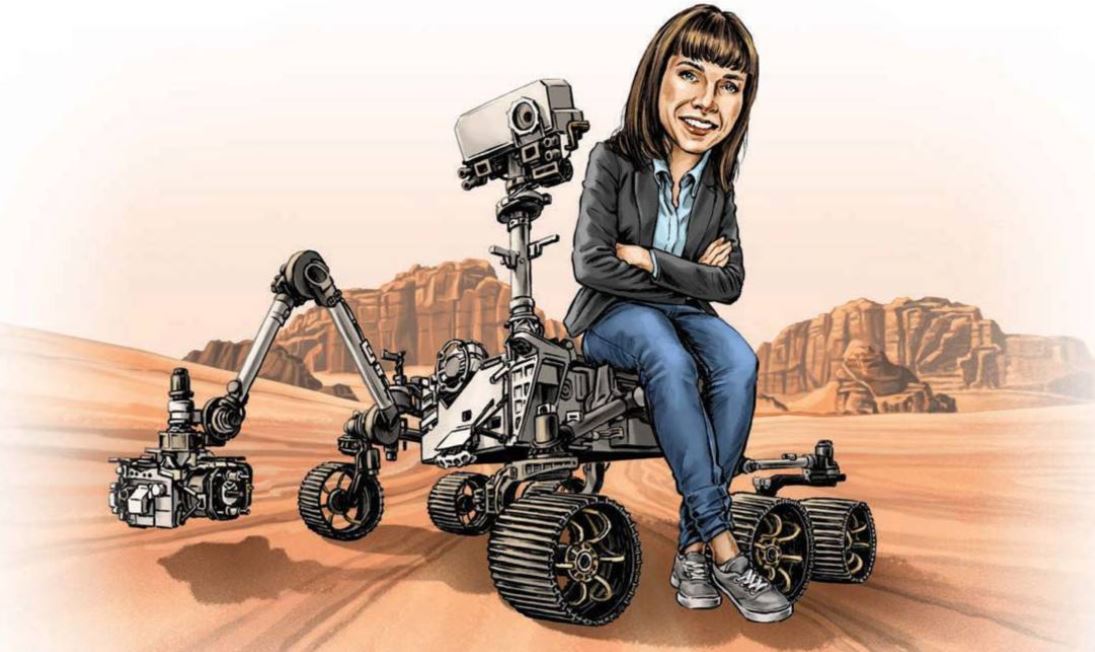
From 2003 to 2005, when Abigail Allwood was a graduate student in earth science at Macquarie University, in Australia, she made a series of remarkable discoveries. She was doing fieldwork in the country’s Pilbara region, where she was charged with studying fossilized stromatolites, or columns of sedimentary rock originally created by layers of microbes—some of the planet’s first known life.
The area, a 196,000-square-mile expanse of rust-colored desert populated with rock formations dating back more than 2 billion years, is more or less what you might picture when someone says “the ends of the Earth.” Parts of it remain virtually untouched by humans. Allwood recalled for me recently how one day she and Ian Burch, then her research partner (now her husband), hiked the length of a high, narrow ridge some 10 miles long. “I’m pretty sure we were the only people that had been there for thousands of years,” she told me. “I remember a northern quoll [a ratlike marsupial native to Australia] coming right up to us to take a closer look. It had never seen a human being before, so it wasn’t afraid.”
Even more exciting than the native fauna, however, were the geologic formations Allwood and Burch had come to study. They resembled stacks of upside-down ice-cream cones—a pattern typical of stromatolites, which usually form in shallow water. Their presence suggested that this part of the desert was once a very wet area, perhaps an ocean reef. Before long, Allwood would establish that the rocks constituted the oldest known evidence of life on Earth.

This story is from the June 2018 edition of The Atlantic.
Subscribe to Magzter GOLD to access thousands of curated premium stories, and 10,000+ magazines and newspapers.
Already a subscriber? Sign In
MORE STORIES FROM The Atlantic
The Atlantic
How America Celebrated Its 100th Birthday
The Centennial Exhibition of 1876 promised a glorious industrial future. Outside its gates, the country seethed with violence and corruption.

12 mins
June 2026

The Atlantic
THE CLOWN SHOW
The Savannah Bananas are reviving one of the most entertaining—and controversial—teams in Negro Leagues history.
21 mins
June 2026

The Atlantic
The Diva
Denyce Graves is retiring from performing after a career as one of opera's leading women. But there's more work for her to do.
10 mins
June 2026

The Atlantic
Cat Heir
Did Karl Lagerfeld really leave millions to Choupette?
26 mins
June 2026

The Atlantic
The Secret of Elizabeth Strout's Appeal
How she writes best sellers that are also critical darlings
10 mins
June 2026
The Atlantic
THE VENTURE-CAPITAL POPULIST
How David Sacks and the new tech right went full MAGA and captured Washington
32 mins
June 2026

The Atlantic
Glory Days
Heartland rock was shot through with nostalgia— but nostalgia for what?
9 mins
June 2026

The Atlantic
Alien Nation
Why Americans want to believe that the government is hiding the truth about extraterrestrial life
11 mins
June 2026

The Atlantic
Dinah's Hat
On the day Dinah lost her hat, I was sitting on the top step of my just-right Scamp trailer doing a crossword.
24 mins
June 2026

The Atlantic
THE AMERICA I'VE KNOWN
In my 93rd year, it's become ever more clear that patriotism requires sacrifice and collective effort.
7 mins
June 2026
Translate
Change font size