
Go Unlimited with Magzter GOLD
Get unlimited access to 10,000+ magazines, newspapers and Premium stories for just
Try GOLD - Free
MYSTERY CULTS IN THE ANCIENT WORLD
All About History UK
|Issue 133
In the Greco-Roman world, forgotten cults enacted arcane rituals whose secrets historian Hugh Bowden reveals...

In the time of the Ancient Greeks and Romans, secret societies practised rituals, the knowledge of which has since been lost to time. These rituals, known as 'mysteries', continue to fascinate historians who seek to piece together disparate sources, from scant written accounts to evidence found at archaeological sites, in an attempt to further understand these fascinating cults. Professor Hugh Bowden of King's College London has spent many years studying Greek religion and to celebrate the release of his seminal work, Mystery Cults In The Ancient World, in paperback, he spoke to us about these groups, their various practices and the difficulties posed by researching something intended to remain secret.
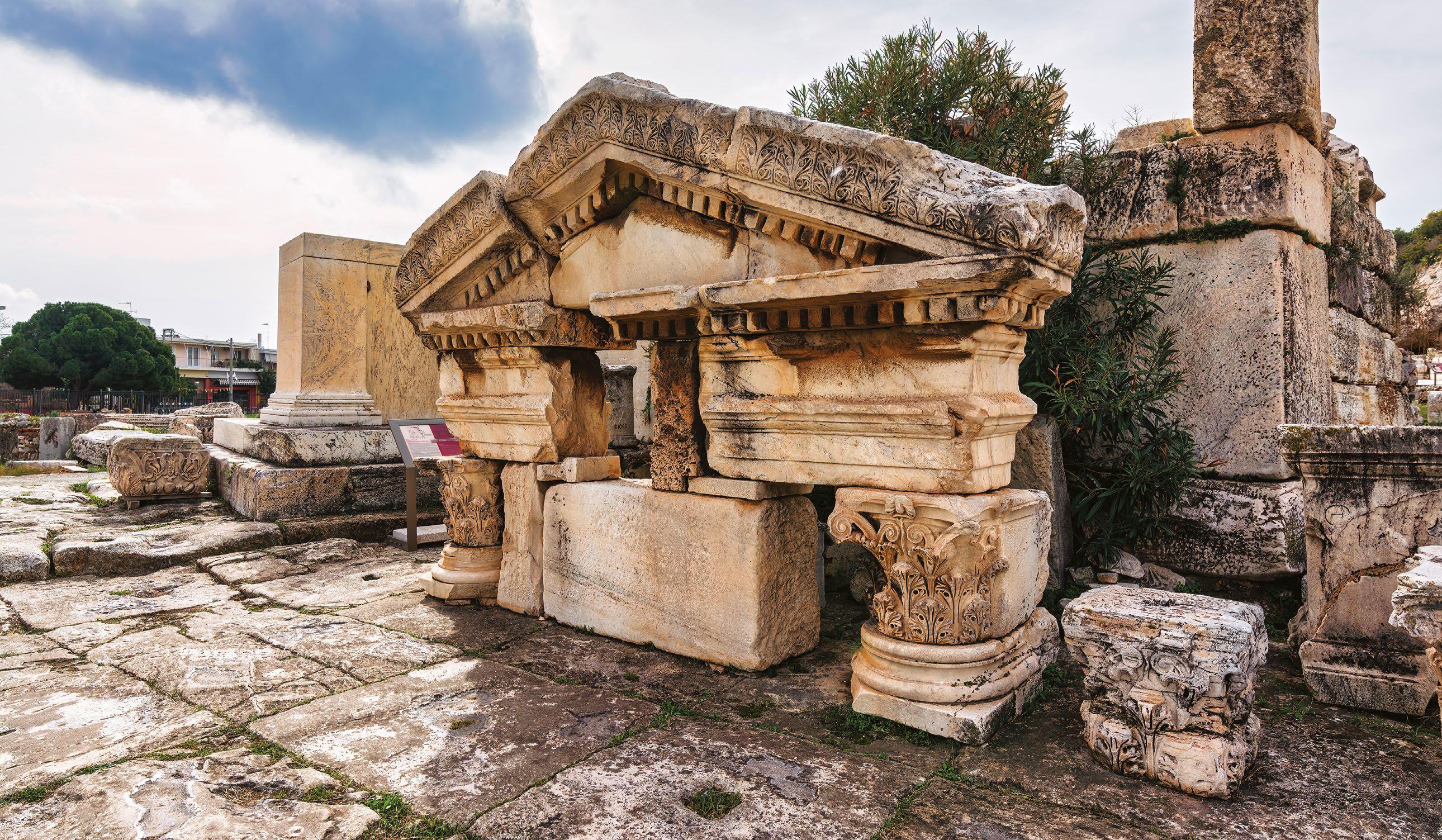
In the introduction to your book, you define both the use of the word 'mystery' and the term 'mystery cult' in this context, could you just explain these definitions for the benefit of our readers?
The word 'mystery' originates from an ancient Athenian festival, the Eleusinian Mysteries, and in this context actually refers to a festival involving initiation. 'Mystery cult' is a modern term and can be an unhelpful one. For example, the Eleusinian Mysteries are a festival in honour of the goddess Demeter and her daughter Persephone (referred to in ancient times as Kore). And whilst initiation was important, there were lots of other activities that were just part of the worship of that goddess that were not particularly 'cult-like'. However, other cults like the Mysteries of Mithras involve meetings of small groups of initiates and in that sense is closer to what we would consider cult practices. So we don't use the terms 'mystery' or 'cult' quite in the way that we do in modern parlance, though there is some overlap.

This story is from the Issue 133 edition of All About History UK.
Subscribe to Magzter GOLD to access thousands of curated premium stories, and 10,000+ magazines and newspapers.
Already a subscriber? Sign In
MORE STORIES FROM All About History UK

All About History UK
HOT FUDGE SUNDAE
USA, 19-20TH CENTURY

1 mins
Issue 169

All About History UK
HISTORY OF THE WORLD CUP
Football writer Jonathan Wilson explains why the tournament has always been a reflection of its time
10 mins
Issue 169

All About History UK
THE MAKING OF THE MIDDLE AGES AN ATLAS OF EUROPE
Explore the medieval world with this guide
1 min
Issue 169
All About History UK
PROPHECIES OMENS, AUGURIES, DIVINATION, ORACLES, DREAMS, APOCALYPSE
How humanity tries to predict the future
1 min
Issue 169

All About History UK
MICHAEL JACKSON: AN AMERICAN TRAGEDY
A by-the-book examination of the rise and fall of the King of Pop
2 mins
Issue 169
All About History UK
LECHAEUM
In 391 BCE (or 390 BCE, sources differ) during the Corinthian War (395-387 BCE), a force of lightly armed and armoured peltasts under the command of the Athenian Iphicrates faced almost 600 Spartan hoplites at Lechaeum, near Corinth.
11 mins
Issue 169

All About History UK
AGE of ALCHEMY
How occult ritual and a thirst for gold paved the way for modern chemistry
12 mins
Issue 169

All About History UK
THE QUEEN'S CLOTHES
An exhibition at Buckingham Palace explores Elizabeth II's life in fashion
2 mins
Issue 169

All About History UK
WHAT IF...9/11 HAD BEEN FOILED?
It was a day that shook the world. But what would preventing the attack mean for the 'War on Terror'?
6 mins
Issue 169
All About History UK
CURIOUS CATS AND FANTASTICAL FELINES
An entertaining jaunt through furry folklore
2 mins
Issue 169
Translate
Change font size