
Go Unlimited with Magzter GOLD
Get unlimited access to 10,000+ magazines, newspapers and Premium stories for just
Try GOLD - Free
THE FIRST SHOGUN
All About History UK
|Issue 130
How an exile took power in an age of murderous intrigue and a teetering empire

For all its majesty and splendour, the imperial court of Kyoto was awash in vengeful plots hatched by the feuding bloodlines that crowded the austere palace. For almost 300 years the era known as Heian, where the former capital of Nara was moved further north to Kyoto, dubbed Heiankyo to lend it an air of magnificence, featured shaky alliances that dampened the risks of civil war. As an antidote to factionalism the emperors cultivated an excess of refinement; frivolous art and gracious manners served as a thin veneer hiding the bad blood among these sovereigns and their jealous kin. Contrasting this was the emergence of the samurai, or the ones who served, in the beginning of the 9th century as a distinct social class and ad hoc national army. The edification of bushido as a code of ethics and martial jurisprudence helped distinguish Japanese society from its neighbours as its civilisation spread over the main island of Honshu and reached Hokkaido, which was beyond government control in previous eras.
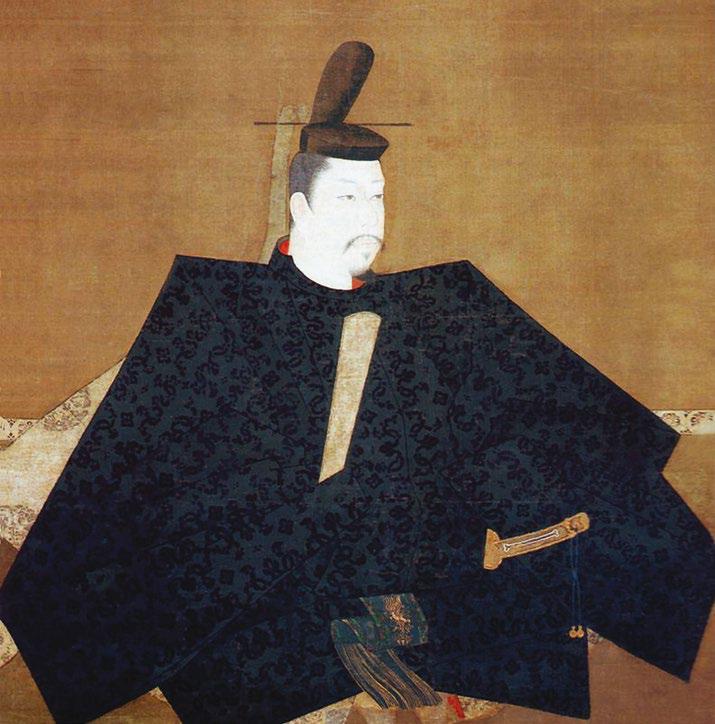
But samurai and their fealty to regional clans were a bigger headache than they appeared. For Emperor Go-Shirakawa his own safety was at stake when he enlisted two samurai clans of imperial descent, meaning their respective founders were born in the imperial household, to defend Kyoto against any upstart. Where once the Fujiwara clan had entwined themselves in the imperial household by the middle of the 12th century, Go-Shirakawa elevated his favourites, the Heike clan, to the highest offices in the land. Of course, this meant eliminating the Heike’s main rivals – the elite Genji clan – in a brief civil war. Their family names were the Taira and the Minamoto, respectively.

This story is from the Issue 130 edition of All About History UK.
Subscribe to Magzter GOLD to access thousands of curated premium stories, and 10,000+ magazines and newspapers.
Already a subscriber? Sign In
MORE STORIES FROM All About History UK

All About History UK
HOT FUDGE SUNDAE
USA, 19-20TH CENTURY

1 mins
Issue 169

All About History UK
HISTORY OF THE WORLD CUP
Football writer Jonathan Wilson explains why the tournament has always been a reflection of its time
10 mins
Issue 169

All About History UK
THE MAKING OF THE MIDDLE AGES AN ATLAS OF EUROPE
Explore the medieval world with this guide
1 min
Issue 169

All About History UK
PROPHECIES OMENS, AUGURIES, DIVINATION, ORACLES, DREAMS, APOCALYPSE
How humanity tries to predict the future
1 min
Issue 169

All About History UK
MICHAEL JACKSON: AN AMERICAN TRAGEDY
A by-the-book examination of the rise and fall of the King of Pop
2 mins
Issue 169
All About History UK
LECHAEUM
In 391 BCE (or 390 BCE, sources differ) during the Corinthian War (395-387 BCE), a force of lightly armed and armoured peltasts under the command of the Athenian Iphicrates faced almost 600 Spartan hoplites at Lechaeum, near Corinth.
11 mins
Issue 169

All About History UK
AGE of ALCHEMY
How occult ritual and a thirst for gold paved the way for modern chemistry
12 mins
Issue 169

All About History UK
THE QUEEN'S CLOTHES
An exhibition at Buckingham Palace explores Elizabeth II's life in fashion
2 mins
Issue 169

All About History UK
WHAT IF...9/11 HAD BEEN FOILED?
It was a day that shook the world. But what would preventing the attack mean for the 'War on Terror'?
6 mins
Issue 169
All About History UK
CURIOUS CATS AND FANTASTICAL FELINES
An entertaining jaunt through furry folklore
2 mins
Issue 169
Translate
Change font size