Try GOLD - Free
THE DEADLY RACE
History of War
|Issue 138
How the road to peace led to an arms contest between the USA and USSR, with prototypes, proliferation and the world’s biggest bomb
-

Within days of the Nagasaki bombing, some of the scientists who'd worked on the Manhattan Project released a statement. In it, they warned of the "grave danger that lies ahead", predicting that other countries might now be "spurred on to create atomic bombs of their own in self-defense [leading to] an armaments race".
The arms race they were predicting, however, had already started. As soon as Soviet leader Joseph Stalin had seen evidence of the destruction at Hiroshima, he'd issued orders for the USSR to develop an atomic weapon. Despite the immense secrecy around the Manhattan Project, the Soviets were better positioned to do this than the Americans imagined. For over a year, they'd not only known of the laboratory at Las Alamos, but they'd also had two spies working there as scientists.
America's nuclear monopoly ended on 29 August 1949 when the USSR tested its first atomic bomb at Semipalatinsk in Kazakhstan. Shocked, but determined to stay ahead of their Cold War rivals, the US now looked to develop a weapon even more powerful than an atomic bomb. Edward Teller, a physicist at Los Alamos, championed the idea of hydrogen fusion. Harness the same energy the Sun uses, he argued, and you could produce a weapon with catastrophic power. In January 1950, President Harry Truman announced that the US would build what was now being called a hydrogen (or H) bomb.

This story is from the Issue 138 edition of History of War.
Subscribe to Magzter GOLD to access thousands of curated premium stories, and 10,000+ magazines and newspapers.
Already a subscriber? Sign In
MORE STORIES FROM History of War
History of War
HOW TO BUILD A SPITFIRE
AN ABSORBING TALE OF ONE MAN'S OBSESSION TO BUILD A FULL-SIZE REPLICA SPITFIRE IN HIS GARDEN JUXTAPOSED AGAINST REAL STORIES OF BUILDING SPITFIRES AND THE MEN WHO FLEW THEM

2 mins
Issue 154
History of War
THE AIRLIFT
VICTORIES, MYTHS, AND THE BERLIN BLOCKADE
3 mins
Issue 154
History of War
WITH SPANNERS DESCENDING
Discover the essential role of British Army engineers during Second World War airborne operations
1 min
Issue 154
History of War
HOMEMADE EOKA FLAG
Breaking a ban enforced during the Cyprus Emergency, this flag compared the Cypriot fight against the British Empire to the Greek War of Independence against the Ottoman Empire
1 mins
Issue 154

History of War
SPIES, LIES AND DECEPTION
Introduce your children to over a century of spying as the Imperial War Museum's exhibition on espionage comes to Manchester
1 mins
Issue 154
History of War
DESERT DAREDEVIL
Scientist, explorer and a pioneer of special forces warfare – Ralph Bagnold was responsible for creating a crack unit during WWII
9 mins
Issue 154

History of War
OBJECTS IN FOCUS: VE/VJ DAY
The Royal Armouries Museum's new display commemorates the individuals and weapons who fought in the Pacific during WWII's final months
1 min
Issue 154
History of War
1945 - THE RECKONING WAR, EMPIRE AND THE STRUGGLE FOR A NEW WORLD
THIS EXAMINATION OF WHAT THE END OF WWII MEANT FOR THE BRITISH, DUTCH AND FRENCH EMPIRES POSES SOME UNCOMFORTABLE QUESTIONS
2 mins
Issue 154
History of War
POINTE DU HOC
During D-Day's toughest mission, US Rangers stormed an artillery position between Omaha and Utah beaches, before holding out against two nights of counterattacks
10 mins
Issue 154
History of War
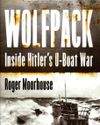
WOLFPACK- INSIDE HITLER'S U-BOAT WAR
GET A TASTE OF THE FEAR, TENSION AND 'DEATH OR GLORY' LIFE OF GERMANY'S SUBMARINE CREWS
1 min
Issue 154
Listen
Translate
Change font size