Try GOLD - Free
Did they really have to fight to the finish?
BBC History UK
|September 2023
From 1914, powerful voices called for the First World War to end in a negotiated compromise. Why were they ignored?

On 28 September 1916 David Lloyd George, then Britain's minister of war, gave an interview to the American news agency United Press that became instantly famous. Asked how long the conflict in which his nation was currently embroiled would last, and how it may end, he said: "The fight must be to the finish to a knockout.
"The inhumanity, the pitilessness of the fighting that must come before a lasting peace is possible, is not comparable with the cruelty that would be involved in stopping the war while there remains a possibility of civilisation again being menaced from the same quarter," Lloyd George opined. "Peace now, or at any time before the final complete elimination of this menace, is unthinkable."
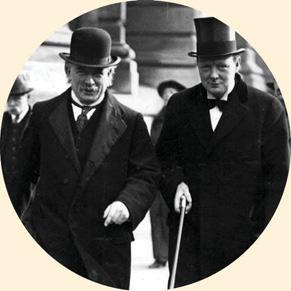
In short, Lloyd George believed it was necessary for Britain to wage war until it had achieved absolute victory. And he did so for two principal reasons. First, he blamed his counterparts in the Central Powers of Germany and Austria-Hungary for the outbreak of the First World War, and for cruelties and barbarism committed during the course of the conflict. This, in itself, made the idea of negotiating utterly repulsive. Second, the enormity of human sacrifices rendered the proposal to end the war by compromise completely unattractive. Leaders on all sides were keenly aware that something positive had to come out of the war and only military victory could provide it.
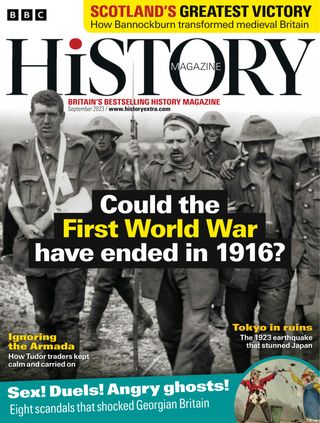

This story is from the September 2023 edition of BBC History UK.
Subscribe to Magzter GOLD to access thousands of curated premium stories, and 10,000+ magazines and newspapers.
Already a subscriber? Sign In
MORE STORIES FROM BBC History UK
History Extra
Going for gold
PATRICIA FARA recommends a globetrotting, time-travelling account of the roots of chemistry

2 mins
May 2026
History Extra
Viking revenge
JAMES OSBORNE indulges his love of Norse history in a role-playing game that scores high on the visuals but only skates over the underlying history
1 mins
May 2026

History Extra
Siena in five places
One of Tuscany's most magical hilltop cities is a medieval marvel of civic pride.
3 mins
May 2026
History Extra
The great survivor
When Elizabeth II ascended the throne in 1952, she could barely have conceived the currents - imperial retreat, multiculturalism, de-industrialiation – that would transform the nation during her reign. On the centenary of the Queen's birth, David Cannadine explores how she navigated seven decades of dizzying change
10 mins
May 2026

History Extra
Georgian Chocolate Tart
ELEANOR BARNETT serves up a rich chocolate tart that was once fit for a recovering king
2 mins
May 2026

History Extra
Capital ideas
A Kingdom and a Village: A One -Thousand-Year History of Moscow
1 mins
May 2026
History Extra
War report
SAM WILLIS enjoys a richly detailed and entertaining account of Admiral Horatio Nelson's greatest victory and its complicated aftermath
2 mins
May 2026
History Extra
The Peasants Revolt erupts
Popular anger at rising living costs shakes feudal England to its core
1 mins
May 2026
History Extra
Tales of coexistence
HEATHER J SHARKEY is impressed by a sweeping yet nuanced book challenging the idea that Jews and Muslims have been locked in a perpetual state of war
2 mins
May 2026

History Extra
"Narratives of victimhood, resistance and sacrifice are core to the Iranian regime's identity"
Revolution, repression and recurring crisis have shaped Iran's recent past – and continue to define its volatile present
10 mins
May 2026
Translate
Change font size