Try GOLD - Free
It was the shot heard around the world... But who fired it?
BBC History UK
|May 2025
It's 250 years since British troops clashed with American colonists at Lexington and Concord. George Goodwin reveals how one fateful day triggered the American Revolutionary War - and sparked a ferocious race to blame the other side
-
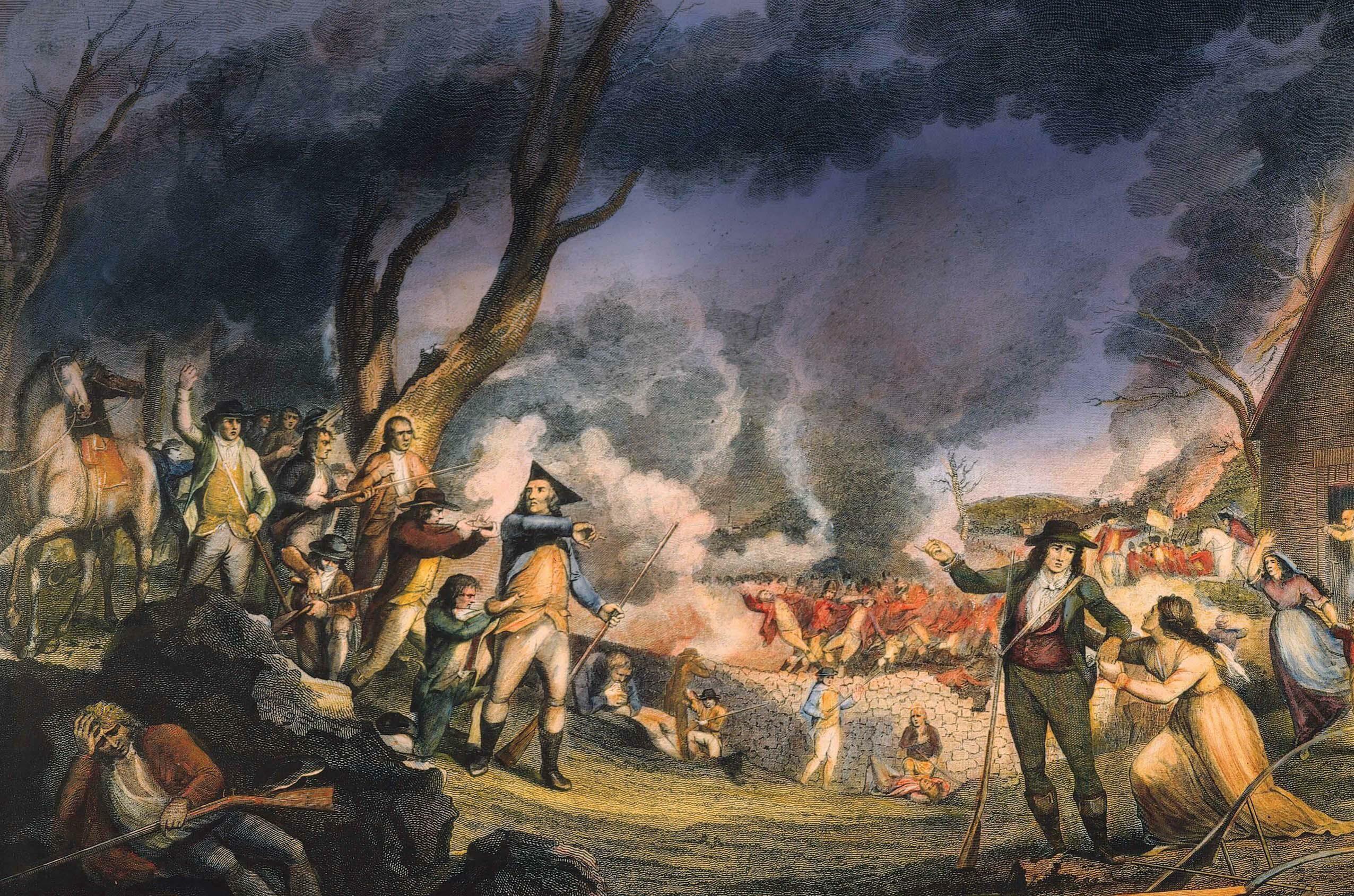
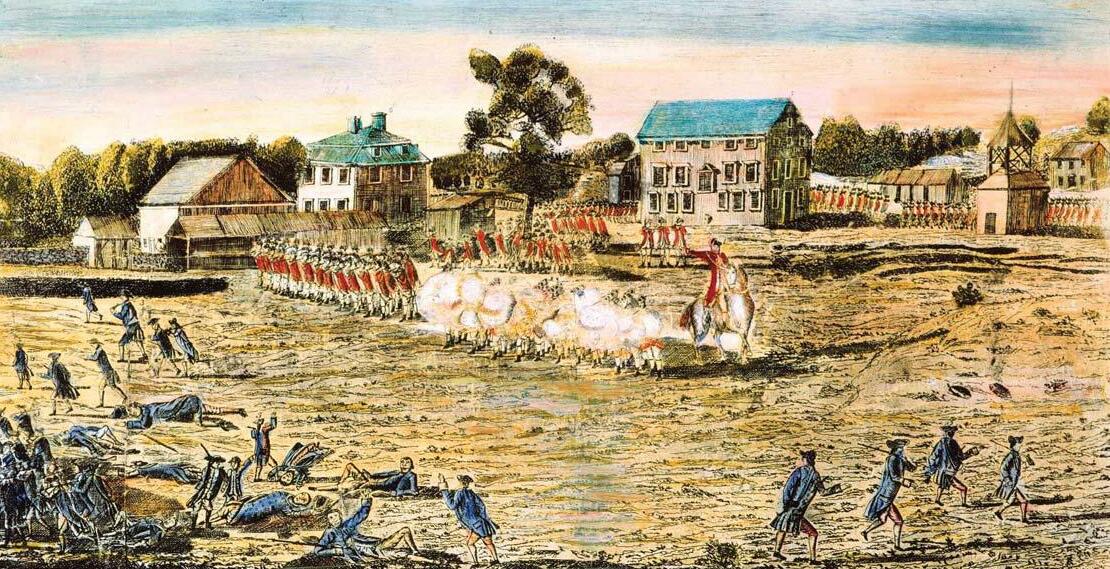
At 5am on 19 April 1775, two groups of British subjects faced each other across the town common of Lexington, 11 miles north-west of Boston, Massachusetts. One group was composed of local inhabitants, militiamen who would fight as Patriots. The other was of red-coated British troops under the immediate command of Marine Major John Pitcairn.
The militiamen were certainly not there by chance: the plans of General Gage, the British governor of Massachusetts, had been revealed to his opponents.
Simmering tensions over London's repeated assertions of control over its American colonies, dating back to the 1760s, had brought the two sides to this point. After a tense standoff, the Redcoats and militiamen traded fire. At the end of this brief but fateful exchange, eight Patriots lay dead.
A bloody retreat
Major Pitcairn and his men were just the vanguard of a 1,500-strong force under the overall command of Lieutenant Colonel Francis Smith. The colonel had a clear mission that day: to seize Patriot-held cannon and munitions in nearby Concord, the main town in Middlesex County and the centre for mobilising the county militia regiments of 6,000 men. And so, shortly after the clash at Lexington, Smith's Redcoats pushed on to Concord.
Hostilities were resumed at Concord's North Bridge at around 9am, shortly after the British had undertaken a largely fruitless search for weaponry to the west of the town. The intensity of the engagement now increased: colonist numbers had grown to around 400, with the local men now joined from surrounding areas by militia that included the elite Minutemen, whose name reflected their timely readiness for action.

This story is from the May 2025 edition of BBC History UK.
Subscribe to Magzter GOLD to access thousands of curated premium stories, and 10,000+ magazines and newspapers.
Already a subscriber? Sign In
MORE STORIES FROM BBC History UK
History Extra
Going for gold
PATRICIA FARA recommends a globetrotting, time-travelling account of the roots of chemistry

2 mins
May 2026
History Extra
Viking revenge
JAMES OSBORNE indulges his love of Norse history in a role-playing game that scores high on the visuals but only skates over the underlying history
1 mins
May 2026

History Extra
Siena in five places
One of Tuscany's most magical hilltop cities is a medieval marvel of civic pride.
3 mins
May 2026
History Extra
The great survivor
When Elizabeth II ascended the throne in 1952, she could barely have conceived the currents - imperial retreat, multiculturalism, de-industrialiation – that would transform the nation during her reign. On the centenary of the Queen's birth, David Cannadine explores how she navigated seven decades of dizzying change
10 mins
May 2026

History Extra
Georgian Chocolate Tart
ELEANOR BARNETT serves up a rich chocolate tart that was once fit for a recovering king
2 mins
May 2026

History Extra
Capital ideas
A Kingdom and a Village: A One -Thousand-Year History of Moscow
1 mins
May 2026
History Extra
War report
SAM WILLIS enjoys a richly detailed and entertaining account of Admiral Horatio Nelson's greatest victory and its complicated aftermath
2 mins
May 2026
History Extra
The Peasants Revolt erupts
Popular anger at rising living costs shakes feudal England to its core
1 mins
May 2026

History Extra
Tales of coexistence
HEATHER J SHARKEY is impressed by a sweeping yet nuanced book challenging the idea that Jews and Muslims have been locked in a perpetual state of war
2 mins
May 2026

History Extra
"Narratives of victimhood, resistance and sacrifice are core to the Iranian regime's identity"
Revolution, repression and recurring crisis have shaped Iran's recent past – and continue to define its volatile present
10 mins
May 2026
Listen
Translate
Change font size