Go Unlimited with Magzter GOLD
Get unlimited access to 10,000+ magazines, newspapers and Premium stories for just
Try GOLD - Free
Galileo's GREATEST DISCOVERIES
How It Works UK
|Issue 179
Peer into the mind of this trailblazing astronomer and discover his pioneering observations

Using a brass telescope of his own design, Galileo spent hours spying on worlds beyond our own. What he discovered changed the way we viewed the Solar System. Born in Pisa, Italy, in 1564, Galileo Galilei spent his youth as a keen musician and medical student at the University of Pisa. However, like so many other great minds, Galileo felt the pull of mathematics and found himself immersed in the worlds of mechanics and astronomy. Before his rise to academic stardom, the world largely viewed the universe through the eyes of Greek philosophers such as Aristotle. Based on the existence of celestial spheres and an Earth-centric view of the universe, the science of astronomy in the early 16th century was very much in its infancy. At least until Galileo began a scientific revolution using a new invention.
Arguably his most important contribution to science was the creation of his refracting telescope. Having discovered a new instrument called the spyglass in 1609, Galileo began experimenting with how he might use it to magnify his view of the world and beyond. Although Galileo didn’t technically invent the telescope, which was first patented by Dutch eyeglass maker Hans Lippershey, his modifications to the original design gave him the ability to gaze at the stars with unrivalled precision. Wasting no time, Galileo pointed his telescope towards the stars for the first time in 1610. The year that followed was filled with lunar discoveries, solar revelations and planetary observations that changed the way we view the celestial residents of space. From Moon craters to Saturn’s ‘ears’, Galileo saw objects in space up close using his refractor telescope, which he developed to have a magnification of up to 30 times.


This story is from the Issue 179 edition of How It Works UK.
Subscribe to Magzter GOLD to access thousands of curated premium stories, and 10,000+ magazines and newspapers.
Already a subscriber? Sign In
MORE STORIES FROM How It Works UK
How It Works UK
WHY ANIMALS PLAY DEAD
These species have mastered faking their own deaths for several different reasons

1 min
Issue 214
How It Works UK
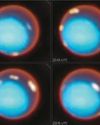
THE JAMES WEBB SPACE TELESCOPE MAPS 3D AURORAE ON URANUS
An international team of researchers has uncovered new insights into the upper atmosphere of Uranus, where ions swirling above the ice giant's clouds meet its magnetic field.
1 min
Issue 214
How It Works UK
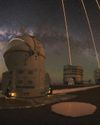
LASERS BEAM 'ARTIFICIAL STARS' INTO CHILE'S SKIES
The European Southern Observatory has released a breathtaking photo of the Milky Way shining over Paranal Observatory in Chile as lasers create artificial 'guide stars' in the dark sky above.
1 min
Issue 214

How It Works UK
WHISKERS AT WORK
How long hairs on a cat's face fine-tune their senses
2 mins
Issue 214

How It Works UK
HOW AI IMPROVES CAR SAFETY
The vehicle technology that saves lives today - and the innovations that will soon make the roads safer for everyone
4 mins
Issue 214

How It Works UK
APOLLO 17: THE LAST CREWED MOON LANDING
It's been over 50 years since the final Apollo mission, so why haven't we put astronauts on the Moon since then?
4 mins
Issue 214

How It Works UK
WHAT IS LIMESCALE?
Why 'hard' water leaves chalky, flaky deposits wherever it settles
2 mins
Issue 214

How It Works UK
Astronauts describe the moment a crack was discovered on their spacecraft
Chinese astronauts have described what happened when they were nearly stranded in space last year after a suspected piece of space junk struck their return capsule.
2 mins
Issue 214
How It Works UK
The Vera C. Rubin Observatory found 800,000 objects of interest in a single night
The newly commissioned Vera C. Rubin Observatory has issued 800,000 astronomy alerts in just one night, a staggering number of nightly discoveries that's expected to grow nearly tenfold by the end of this year.
2 mins
Issue 214
How It Works UK
RETURN TO THE MOON
Project Artemis is accelerating its push to put humans back on Earth's orbital dancing partner before the end of the decade
5 mins
Issue 214
Translate
Change font size