
استمتع بـUnlimited مع Magzter GOLD
احصل على وصول غير محدود إلى أكثر من 9000 مجلة وصحيفة وقصة مميزة مقابل
يحاول ذهب - حر
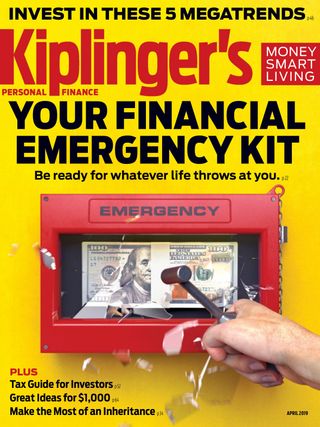
How To De-Risk Your Finances
April 2019
|Kiplinger's Personal Finance
If you lose your job or face a large, unforeseen expense, are you prepared?
-

The 35-day partial government shutdown that kicked off 2019 created a moment of truth for the 800,000 employees and contractors who had to figure out how to cover their bills until their paychecks kicked in again. Many did just fine, thanks to savings and, often, the added safety net of a working spouse. But for others, the sudden interruption in cash flow created a crisis. // The episode was a reminder of how many Americans live paycheck to paycheck. According to the results of a Federal Reserve study released last year, 40% of Americans did not have enough savings to cover a $400 emergency expense. Plus, debt has made a comeback since 2013 and now exceeds the previous peak reached in 2008, driven in part by a rise in student and auto loans. We’re handling the payments pretty well, thanks to a strong economy with historically low unemployment. But one day the stock market will cycle into a bear market and the economy will cycle into a recession. That will put pressure on your retirement and other savings, and some unlucky workers will lose their jobs.
If you faced a financial crisis—job loss, a catastrophic illness, divorce—how well would you weather the storm? Use our guide to shock-proof your finances, and keep our strategies for dealing with a crisis in your back pocket, just in case.
PREPARE
CREATE A BUDGET
Yes, budgeting can be tedious. But with a budget in place, you’ll have a picture of your income and expenses in case you need to tighten your purse strings later, and you’ll be better equipped to build a bigger savings cushion. To get started, you’ll need to track your expenses. Use an online budgeting tool or app that links to your bank, investment, credit card and other accounts and automatically tracks and categorizes expenses. CLARITY MONEY, MINT and

هذه القصة من طبعة April 2019 من Kiplinger's Personal Finance.
اشترك في Magzter GOLD للوصول إلى آلاف القصص المتميزة المنسقة، وأكثر من 9000 مجلة وصحيفة.
هل أنت مشترك بالفعل؟ تسجيل الدخول
المزيد من القصص من Kiplinger's Personal Finance

Kiplinger's Personal Finance
A TAX BREAK FOR MEDICAL EXPENSES
The editor of The Kiplinger Tax Letter responds to readers asking about health care write-offs.

2 mins
February 2026

Kiplinger's Personal Finance
Volunteering to Help Others at Tax Time
Through an IRS program, qualifying individuals can get free assistance with their tax returns.
2 mins
February 2026

Kiplinger's Personal Finance
CATCH-UP SAVERS FACE A TAXING 401(K) CHANGE
Under new rules, you may lose an up-front deduction but gain tax-free income once you retire.
2 mins
February 2026

Kiplinger's Personal Finance
The Case for Emerging Markets
Economic growth, earnings acceleration and bargain prices favor EM stocks.
3 mins
February 2026

Kiplinger's Personal Finance
THE NEW RULES OF RETIREMENT
Popular guidelines about how to save, invest and spend need to be updated and personalized to ensure you'll never run out of money.
15 mins
February 2026

Kiplinger's Personal Finance
Smart Ways to Share a Credit Card
Adding an authorized user has its benefits, but make sure you set the ground rules.
2 mins
February 2026

Kiplinger's Personal Finance
THE BEST AFFORDABLE FITNESS TRACKERS
These devices monitor your exercise, sleep patterns and more- and they don't cost an arm and a leg.
4 mins
February 2026
Kiplinger's Personal Finance
A VALUE FOCUS CLIPS RETURNS
THERE'S more to Mairs & Power Growth than its name implies. The managers favor firms with above-average earnings growth. But a durable, competitive position in their market- “a number-one or number-two position and gaining share,” says comanager Andrew Adams—and a reasonable stock price matter even more.
1 mins
February 2026

Kiplinger's Personal Finance
Look Beyond the Tech Giants
I am hooked on a podcast called Acquired, in which two smart guys do a deep analytical dive, typically lasting three or four hours, on a single successful company such as Coca-Cola or Trader Joe's. Ben Gilbert and David Rosenthal, a pair of venture capitalists, are especially adept at explaining what's behind the success of such tech giants as Alphabet (symbol GOOGL, $320), the former Google, which recently merited 11 hours and 42 minutes of dialogue all by itself.
4 mins
February 2026

Kiplinger's Personal Finance
How to Pay for Long-Term Care
A couple of months ago, I wrote that many Americans significantly underestimate how long they could live in retirement (see “Living in Retirement,” Dec.). With the possibility of a 30-year retirement becoming more common, retirees need to plan for so-called longevity risk to make sure their assets last a lifetime. And the longer you live, the more likely you'll need to pay for some form of long-term care. That can range from assistance with activities of daily living to in-home care to a nursing home stay.
2 mins
February 2026
Translate
Change font size