يحاول ذهب - حر
The Experience Machine And Psychiatric Drugs
October/November 2017
|Philosophy Now
Emil Asplund & Erik Gustavsson try to find the truth about medication.
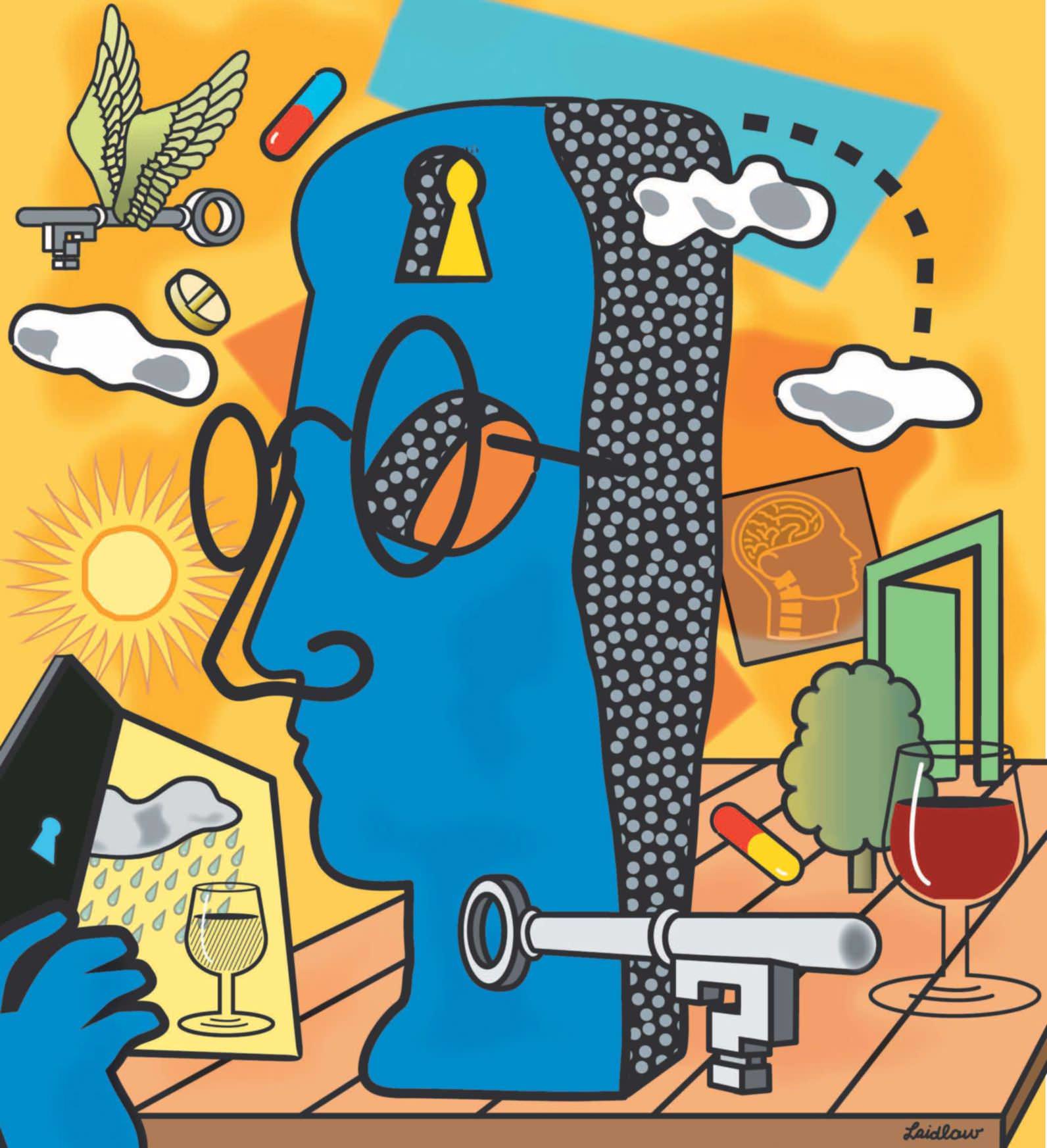
Imagine a device which will give you any experience you desire. This is what Robert Nozick asks us to do in his Anarchy, State and Utopia. The only thing you need to do is to let some neuropsychologists put you (or just your brain) in a tank and work their magic. Whatever pleasant experiences you are looking for, the machine will provide them, and they would feel completely real.
To plug into the experience machine will provide you with the greatest possible amount of happiness. Yet there is something deeply counter-intuitive about the idea that plugging into the machine is the best life you can have. Perhaps the debate is captured best in the argument between Trinity and Cypher in The Matrix (1999), when Cypher claims, “If I had to choose between that [the depressing real world] and the Matrix… I choose the Matrix.” Trinity then stresses the fact that “The Matrix isn’t real.” This seems also to be Nozick’s guiding thought as he gives us three reasons why we would not plug into his experience machine. First, he says that people want to do things, not only have the experience of doing them. For example, most people would agree that something is lost if you are only experiencing what it is like to make a friend without actually making one. Second, we want to be a certain way. Once you’ve plugged in, there is no reality to who the person in the machine is; it’s just a brain floating in a tank experiencing pleasant things. You have turned into an “indeterminate blob” as Nozick puts it. Third, if you plug into the machine you would only be able to experience a man-made reality. As a blob in the machine you have “no actual contact with any deeper reality” (p.44, 3rd Edition) as Nozick puts it. These three points explain why it would be deeply counter-intuitive to plug into the machine.

هذه القصة من طبعة October/November 2017 من Philosophy Now.
اشترك في Magzter GOLD للوصول إلى آلاف القصص المتميزة المنسقة، وأكثر من 9000 مجلة وصحيفة.
هل أنت مشترك بالفعل؟ تسجيل الدخول
المزيد من القصص من Philosophy Now

Philosophy Now
Bilbo Theorizes About Wellbeing
Eric Comerford overhears Bilbo and Gandalf discussing happiness.

9 mins
December 2025 / January 2026

Philosophy Now
What Women?
Marcia Yudkin remembers almost choking at Cornell
11 mins
December 2025 / January 2026

Philosophy Now
Islamic Philosophers On Tyranny
Amir Ali Maleki looks at tyranny from an Islamic perspective.
4 mins
December 2025 / January 2026

Philosophy Now
Peter Singer
The controversial Australian philosopher defends the right to choose to die on utilitarian grounds
5 mins
December 2025 / January 2026

Philosophy Now
Another Conversation with Martin Heidegger?
Raymond Tallis talks about communication problems.
7 mins
December 2025 / January 2026

Philosophy Now
Letters
When inspiration strikes, don't bottle it up. Email me at rick.lewis@philosophynow.org Keep them short and keep them coming!
17 mins
December 2025 / January 2026
Philosophy Now
The Philosophy of William Blake
Mark Vernon looks at the imaginative thinking of an imaginative artist.
9 mins
December 2025 / January 2026

Philosophy Now
Philosophical Haiku
Peering through life’s lens God in nature is deduced: The joy of being.
1 mins
December 2025 / January 2026

Philosophy Now
Philosophy Shorts
More songs about Buildings and Food' was the title of a 1978 album by the rock band Talking Heads. It was about all the things rock stars normally don't sing about. Pop songs are usually about variations on the theme of love; tracks like Rose Royce's 1976 hit 'Car Wash' are the exception. Philosophers, likewise, tend to have a narrow focus on epistemology, metaphysics and trifles like the meaning of life. But occasionally great minds stray from their turf and write about other matters, for example buildings (Martin Heidegger), food (Hobbes), tomato juice (Robert Nozick), and the weather (Lucretius and Aristotle). This series of Shorts is about these unfamiliar themes; about the things philosophers also write about.
2 mins
December 2025 / January 2026

Philosophy Now
Hedonic Treadmills in the Vale of Tears
Michael Gracey looks at how philosophers have pursued happiness.
8 mins
December 2025 / January 2026
Translate
Change font size