
استمتع بـUnlimited مع Magzter GOLD
احصل على وصول غير محدود إلى أكثر من 9000 مجلة وصحيفة وقصة مميزة مقابل
يحاول ذهب - حر
The Man Who Shot Liberty Valance
October/November 2019
|Philosophy Now
Thomas E. Wartenberg sees current concerns about truth in the news spotlighted by a classic Western.

It’s rare that current events change our appreciation of a classic Hollywood film, but that’s exactly what’s happened over the past two years with regard to my perception of John Ford’s Western, The Man Who Shot Liberty Valance (1962). In the age of ‘fake news’, this film’s examination of the transformation of the role of the newspaper from a courageous purveyor of truth to an ignominious peddler of falsehoods demands our attention.
So engaging are the central scenes of the film’s narrative that viewers sometimes forget that what they’re watching is an extended flashback narrated by Senator Ranse Stoddard (Jimmy Stewart), in which he explains why he and his wife Hallie (Vera Miles) have returned to Shinbone for the funeral of town drunk Tom Doniphon (John Wayne). In a great sequence in which the outlaw Liberty Valance’s death is depicted in the film for a second time – this time from a point of view that establishes who actually fired the shot that killed him – Doniphon explains to Stoddard that he gunned down Valance in cold blood from an alley. Everyone had assumed that Stoddard himself had killed Valance in self-defense on the main street – including us viewers, when we first watch the event from a viewpoint on the street. Because he had murdered Valance, rather than shooting him in self-defence, Doniphon had to conceal his role, lest he be prosecuted. As a result, Stoddard gains an unearned reputation as the man who heroically shot Liberty Valance – a reputation that eventually propels him into the US Senate.
Important as the events in the body of the film are, it’s the frame that interests me here. For the frame, which depicts events taking place decades after Valance’s death, has an uncanny contemporary relevance.

هذه القصة من طبعة October/November 2019 من Philosophy Now.
اشترك في Magzter GOLD للوصول إلى آلاف القصص المتميزة المنسقة، وأكثر من 9000 مجلة وصحيفة.
هل أنت مشترك بالفعل؟ تسجيل الدخول
المزيد من القصص من Philosophy Now

Philosophy Now
Nosferatu
Stefan Bolea considers two very different artistic approaches to love and death.

6 mins
April/May 2025

Philosophy Now
Heidegger's Ghost
Raymond Tallis wonders where Heidegger's body went when he was philosophising.
7 mins
April/May 2025
Philosophy Now
Is Comedy Good For Us?
Damaris Stock has a laugh with Plato and friends.
10 mins
April/May 2025
Philosophy Now
In Defense of Idleness
Wendell O'Brien says, 'Just Don't Do It'.
10 mins
April/May 2025
Philosophy Now
Leaving Nothing to Chance by Carl Knight
LEAVING NOTHING TO Chance (2025) by Carl Knight, is an informed, proficient and lucid defence of luck egalitarianism.
3 mins
April/May 2025

Philosophy Now
Star Maker by Olaf Stapledon
THE 1937 SCIENCE FICTION novel Star Maker was written by philosophy professor Olaf Stapledon in the dark days as Europe awaited the onslaught of Nazi Germany. This casts a shadow over the whole book.
6 mins
April/May 2025
Philosophy Now
Love & Emptiness in the Sufi Tradition
Medha Ninad Tambe meditates on Rumi, love and self-negation.
7 mins
April/May 2025

Philosophy Now
The Hedgehog's Dilemma: A Metaphor About the Challenges of Human Intimacy
Krishna Chaubey explains Arthur Schopenhauer's poignant thought experiment.
4 mins
April/May 2025
Philosophy Now
The Mirror & the Flame
Rebwar Fatah imagines Attar's & Hegel's shared path.
4 mins
April/May 2025
Philosophy Now
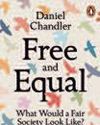
Free and Equal by Daniel Chandler
DANIEL CHANDLER, AN economist and philosopher based at the London School of Economics, begins Free and Equal: What Would a Fair Society Look Like? (2023) by asking an intriguing question. How is it, he wonders, that the most influential political philosopher of the last century has had almost no practical impact on politics or policy? The philosopher in question is John Rawls, whose magnum opus was A Theory of Justice (1971).
5 mins
April/May 2025
Translate
Change font size