يحاول ذهب - حر
The Pakistan Trap
March 2018
|The Atlantic
How Afghanistan’s neighbor has subverted U.S. policy in America’s longest war

TWO MONTHS AFTER the 2008 U.S. presidential election, Vice President–elect Joe Biden sat with Afghanistan’s president, Hamid Karzai, in the Arg Palace, an 83-acre compound in Kabul that had become a gilded cage for the mercurial and isolated leader. The discussion was already tense as Karzai urged Washington to help root out Taliban sanctuaries in Pakistan, implying that more pressure needed to be exerted on Pakistani leaders. Biden’s answer stunned Karzai into silence. Biden let Karzai know how Barack Obama’s incoming administration saw its priorities. “Mr. President,” Biden said, “Pakistan is fifty times more important than Afghanistan for the United States.”
It was an undiplomatic moment for sure, but also a frank expression of the devastating paradox at the heart of the longest war in American history. In 16 years, the United States has spent billions of dollars fighting a war that has killed thousands of soldiers and an untold number of civilians in a country that Washington considers insignificant to its strategic interests in the region. Meanwhile, the country it has viewed as a linchpin, Pakistan—a nuclear-armed cauldron of volatile politics and long America’s closest military ally in South Asia—has pursued a covert campaign in Afghanistan designed to ensure that the money and the lives have been spent in vain. The stakes in Pakistan have been considered too high to break ties with Islamabad or take other steps that would risk destabilizing the country. The stakes in Afghanistan have been deemed low enough that careening from one failed strategy to another has been acceptable.
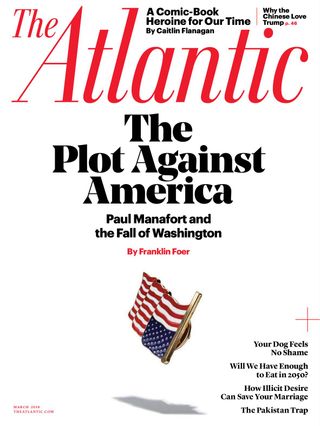

هذه القصة من طبعة March 2018 من The Atlantic.
اشترك في Magzter GOLD للوصول إلى آلاف القصص المتميزة المنسقة، وأكثر من 9000 مجلة وصحيفة.
هل أنت مشترك بالفعل؟ تسجيل الدخول
المزيد من القصص من The Atlantic
The Atlantic
Deadlier Than Gettysburg
How the cruelty of the Confederacy's prison camps gave rise to the rules of war

10 mins
March 2026

The Atlantic
THE MAN WHO BROKE PHYSICS
One of the pleasures of watching Ilia Malinin, apart from his indifference to gravity, is to witness him becoming.
16 mins
March 2026

The Atlantic
How Toni Morrison Saw History
In her novels, she located the missing story of Black America.
12 mins
March 2026

The Atlantic
The Madness of Lord Tennyson
The Victorian poet was startlingly modern.
5 mins
March 2026

The Atlantic
THE PLOT AGAINST THE HUMANITIES
What is the Andrew W. Mellon Foundation doing to higher education?
22 mins
March 2026
The Atlantic
Why Do Democrats Hate Winning?
Ken Martin has one of those resting dread faces, as if he's bracing for someone to dump a bucket of rocks on his head.
37 mins
March 2026

The Atlantic
ROD DREHER'S DEMONS
HE DERIDES THE ENLIGHTENMENT, SECULARISM, AND THE MODERN WORLD. CONSERVATIVES-INCLUDING THE VICE PRESIDENT-ARE JOINING HIM ON A MARCH BACK TO THE MIDDLE AGES.
20 mins
March 2026

The Atlantic
Every Nation for Itself
President Trump wants to return to the 19th century's international order. He will leave America less prosperous—and the whole world less secure.
19 mins
March 2026

The Atlantic
The Secrets of Indigenous Art
Major exhibits are upending the way people understand Native American and Aboriginal artists.
14 mins
March 2026

The Atlantic
The Novel as Extended Op-Ed
If anyone could write good fiction about immigration, it would probably be Lionel Shriver. Instead, her latest book goes off the rails.
10 mins
March 2026
Translate
Change font size