
استمتع بـUnlimited مع Magzter GOLD
احصل على وصول غير محدود إلى أكثر من 9000 مجلة وصحيفة وقصة مميزة مقابل
يحاول ذهب - حر
INSTALLING A NEW AGE OF HUMANITY
June 2021
|BBC Focus - Science & Technology
FROM REALITY-ENHANCING IMPLANTS TO BRAIN-CONTROLLED EXOSKELETONS, BREAKTHROUGHS IN BIO-TECH HAVE FUELLED A NEW FUSION OF MACHINERY AND ORGANIC MATTER. HERE WE SPEAK TO THE CYBORGS WHO ARE HELPING HUMANITY TRANSCEND ITS BIOLOGICAL LIMITS, ONE DEVICE AT A TIME

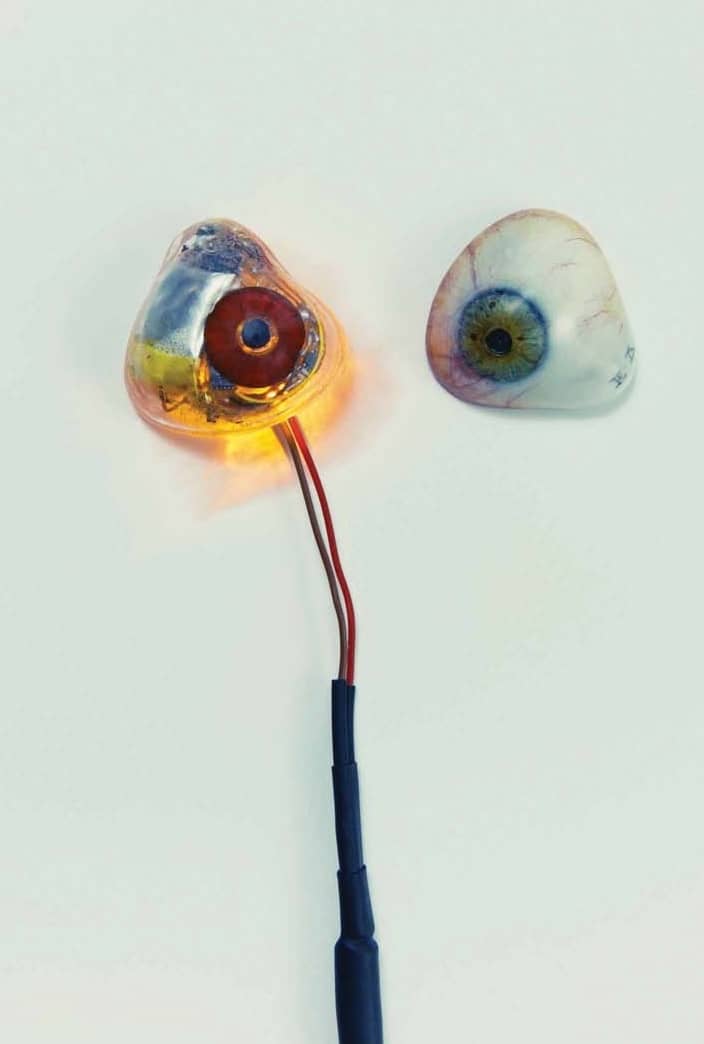
Humans are integrating with technology. Not in the future – now. With the emergence of custom prosthetics that make us stronger and faster, neural implants that change how our brains work, and new senses and abilities that you’ve never dreamed of having, it’s time to start imagining what a better version of you might look like.
Some call it transhumanism. It’s not a philosophy cybernetics expert Kevin Warwick associates himself with, but he can’t deny he’s a cyborg… or was. Warwick had a 2.5cm-long radio frequency identification (RFID) chip implanted in his arm in 1998. Back then it was considered risky, even reckless. He went ahead anyway, creating a media circus as he demonstrated how the chip made him remotely traceable to a computer and allowed him to open the automated security doors at his University of Sheffield lab without touching them.
Four years later, despite warnings from the surgeon, he had neural interfaces implanted that allowed him to control a robotic arm on another continent and communicate, nervous system to nervous system, with his wife, Irena, via electrodes in her arm. “That was the most profound thing I did,” he says, recalling how he first felt the pulses of her transmitted signals in his finger.

هذه القصة من طبعة June 2021 من BBC Focus - Science & Technology.
اشترك في Magzter GOLD للوصول إلى آلاف القصص المتميزة المنسقة، وأكثر من 9000 مجلة وصحيفة.
هل أنت مشترك بالفعل؟ تسجيل الدخول
المزيد من القصص من BBC Focus - Science & Technology

BBC Science Focus
ARE PSYCHOPATHS REALLY THAT GOOD AT LYING?
Picture infamous psychopaths from fiction, such as the eerily cold and calculating Patrick Bateman in the film adaptation of American Psycho, and they certainly seem like master deceivers. But what about real-life psychopaths? Research confirms that psychopaths are more inclined to lie to get what they want, and that they typically display a striking fearlessness - as if they have ice running through their veins.

1 min
January 2026
BBC Science Focus
WHY DO WE HAVE TWO OF SOME ORGANS, BUT ONLY ONE OF OTHERS?
The majority of animals on Earth, humans included, are bilaterally symmetrical. It means we can be divided roughly into two mirror-image sides. Evolutionary biologists believe that it has been like that for at least 300 million years, and because life organised this way survived, so did symmetrical design. Hence, two eyes, two ears, two lungs and two kidneys.
1 min
January 2026

BBC Science Focus
WHY DO CATS PREFER TO SLEEP ON THEIR LEFT?
I've said it before, and I'll keep saying it again and again and again: who knows why cats do anything?
1 min
January 2026

BBC Science Focus
FORGET COUNTING CALORIES TRY THIS INSTEAD...
Calorie counting isn't just difficult, it's riddled with problems that make it practically useless for anyone trying to lose weight.But there are alternatives
9 mins
January 2026

BBC Science Focus
SIGNS OF LIFE
The more planets we find outside our Solar System, the better our chances are of finding life on one of them. But if there really is life out there, how do we spot it?
8 mins
January 2026
BBC Science Focus
WHAT ACTUALLY MAKES SOMEBODY COOL?
Most of us have probably wanted to be cool at some point in our lives, and these efforts can have a big influence on the things we buy, the way we dress, the hobbies we invest in, the people we look up to and even the words we use.
2 mins
January 2026

BBC Science Focus
It's TIME to WAKE UP and SMELL the roses
What if the pursuit of happiness in the traditional sense – chasing wealth or power – is the very thing stopping you from being happy? Researchers are beginning to understand that spending time enjoying the simple things might be the secret ingredient to enjoying a happy, healthy life
8 mins
January 2026

BBC Science Focus
THE AARDVARK
In a time when people are being asked to consider eating insects, we should, perhaps, learn a thing or two from the aardvark (Orycteropus afer), Africa’s ant-guzzling gourmand. On an average night, the big-schnozzed mammal devours up to 50,000 of the crunchy critters.
2 mins
January 2026

BBC Science Focus
ADD WEIGHT TO LOSE WEIGHT
A very basic kind of wearable could make your New-Year-weight-loss plans stick
3 mins
January 2026

BBC Science Focus
AHEAD OF THEIR TIME
The Maya civilisation is known for its art and architecture.
8 mins
January 2026
Translate
Change font size