
استمتع بـUnlimited مع Magzter GOLD
احصل على وصول غير محدود إلى أكثر من 9000 مجلة وصحيفة وقصة مميزة مقابل
يحاول ذهب - حر
BRONZE AGE POWER PLAYERS
September/October 2023
|Archaeology
How Hittite kings forged diplomatic ties with a shadowy Greek city-state

THE NAME PIYAMARADU has faded from history, but for some 40 years in the thirteenth century B.C., he was the nemesis of three successive rulers of the Hittite Empire, a Bronze Age kingdom that once spread across much of Anatolia, or present-day Turkey. At least a dozen cuneiform tablets unearthed in the royal archive of the Hittite capital of Hattusa speak darkly of this renegade. A powerful warlord, he was a disaffected Anatolian noble who had pledged fealty to the king before turning to banditry.
According to Hittite records, he pillaged the empire's westernmost possessions with impunity, carrying out devastating raids and then retreating to the shores of the Aegean, where he remained out of the Hittite rulers' reach. At some point, King Hattusili III (reigned ca. 1267-1237 B.C.) had had enough of Piyamaradu's predatory forays and lodged a firm diplomatic request with a fellow ruler to bring the meddlesome figure to heel. He addressed this missive to the king of Ahhiyawa, a great land to the west of Anatolia. In a surviving draft of the letter, he insists that his fellow ruler capture Piyamaradu or otherwise put an end to his attacks. Hattusili III further notes that earlier requests that the king of Ahhiyawa stop Piyamaradu had gone unheeded. What was not evident to Hattusili III-but is to modern scholars-is that the king of Ahhiyawa was likely powerless to stop Piyamaradu. "The Hittite kings fundamentally misunderstood what Ahhiyawa was," says Indiana University archaeologist Nicholas Blackwell.
Twenty-eight known Hittite tablets invoke the name Ahhiyawa, which scholars are now all but certain is related to "Achaean," a term Homer uses in the epic poem the Iliad to refer to all Greeks. Most now believe that the word was used by Hittites to describe the Mycenaean city-states of Late Bronze Age Greece, which flourished from around 1600 to 1200 B.C.

هذه القصة من طبعة September/October 2023 من Archaeology.
اشترك في Magzter GOLD للوصول إلى آلاف القصص المتميزة المنسقة، وأكثر من 9000 مجلة وصحيفة.
هل أنت مشترك بالفعل؟ تسجيل الدخول
المزيد من القصص من Archaeology
Archaeology
THE EGYPTIAN SEQUENCE
Until now, the earliest Egyptians to have even part of their DNA sequenced were three people who lived between 787 and 544 B.C.

1 mins
November/December 2025
Archaeology
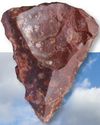
SOURCE MATERIAL
As early as 40,000 years ago, some hunter-gatherers in southern Africa ventured long distances to procure special types of stone to make their tools.
1 min
November/December 2025

Archaeology
Secrets of the Seven Wonders
How archaeologists are rediscovering the ancient world's most marvelous monuments
13 mins
November/December 2025
Archaeology
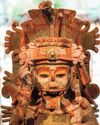
ACTS OF FAITH
Evidence emerges of the day in 1562 when an infamous Spanish cleric tried to destroy Maya religion
12 mins
November/December 2025
Archaeology
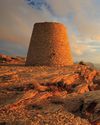
OASIS MAKERS OF ARABIA
Researchers are just beginning to understand how people thrived in the desert of Oman some 5,000 years ago
8 mins
November/December 2025
Archaeology
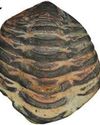
FOSSIL FORCE
One of the planet's most successful arthropods, trilobites, abounded in the oceans from about 520 million to 250 million years ago.
1 min
November/December 2025
Archaeology
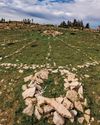
BIGHORN MEDICINE WHEEL, WYOMING
Perched almost 9,700 feet above sea level on Medicine Mountain in Wyoming's Bighorn Range, the Medicine Wheel is an 80-foot-diameter circular structure made from limestone boulders.
2 mins
November/December 2025
Archaeology
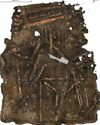
ANCIENT LOOK BOOK
A young woman buried in China's Tarim Basin some 2,000 years ago went to the afterlife accompanied by the height of fashion.
1 mins
November/December 2025
Archaeology
A FAMILIAR FACE
In the early eleventh century, a landslide on the island of Ostrów Lednicki in western Poland caused a hillfort to collapse and slip to the bottom of Lake Lednica.
1 min
November/December 2025
Archaeology
Temples to Tradition
A looted cache of bronzes compels archaeologists to explore Celtic sanctuaries across Burgundy
13 mins
November/December 2025
Translate
Change font size