
استمتع بـUnlimited مع Magzter GOLD
احصل على وصول غير محدود إلى أكثر من 9000 مجلة وصحيفة وقصة مميزة مقابل
يحاول ذهب - حر
DANCING DAYS OF THE MAYA
January/February 2025
|Archaeology
In the mountains of Guatemala, murals depict elaborate performances combining Catholic and Indigenous traditions

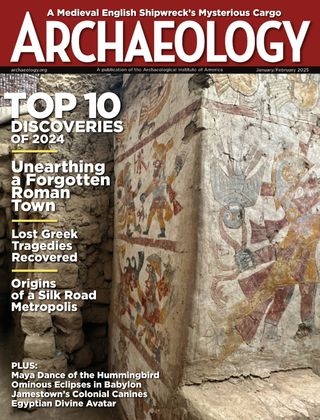
WHEN LUCAS ASICONA, a farmer and local historian living in the small city of Chajul in Guatemala's western highlands, decided to renovate his three-room adobe house in 2003, he could hardly have expected to make a major artistic discovery. In one of the rooms, which contained a kitchen and several beds, fragments of plaster had been falling off the walls, revealing patches of paintings underneath. As Asicona removed more plaster using a machete, he was stunned to find a tableau covering three walls. The artwork featured a range of people dressed in outfits that mixed elements associated with both the Spaniards, who colonized the territory in the early sixteenth century, and the area's Indigenous Ixil Maya. Researchers have come to recognize that the murals uncovered in Asicona's house, as well as in a number of other residences in Chajul, are the product of a complex cultural amalgamation that took place in the city after the Spaniards arrived.
On the room's western wall is a pair of seated musicians. One plays a short instrument, likely a flute or chirimía, an oboe-like woodwind introduced by the Spanish; the other beats a large rectangular drum. The musicians are trailed by a person who might be a dwarf carrying a long stick and they face a man who appears to be dancing while holding out a green bottle. The dwarf and the musicians wear typically Spanish attire-broadbrimmed hats, short mantles over one shoulder, caftans with puffed sleeves and ruffs, broad belts, slim trousers, and heeled shoes with pointed toes. By contrast, the dancer wears an outfit that blends Spanish trousers and heeled shoes with festive accoutrements associated with the Ixil Maya: a tasseled mantle made of feathers, a shirt with dangling strings, a long cloak sporting a representation of a white bird, and a decorative headdress.

هذه القصة من طبعة January/February 2025 من Archaeology.
اشترك في Magzter GOLD للوصول إلى آلاف القصص المتميزة المنسقة، وأكثر من 9000 مجلة وصحيفة.
هل أنت مشترك بالفعل؟ تسجيل الدخول
المزيد من القصص من Archaeology
Archaeology
THE EGYPTIAN SEQUENCE
Until now, the earliest Egyptians to have even part of their DNA sequenced were three people who lived between 787 and 544 B.C.

1 mins
November/December 2025

Archaeology
SOURCE MATERIAL
As early as 40,000 years ago, some hunter-gatherers in southern Africa ventured long distances to procure special types of stone to make their tools.
1 min
November/December 2025

Archaeology
Secrets of the Seven Wonders
How archaeologists are rediscovering the ancient world's most marvelous monuments
13 mins
November/December 2025
Archaeology
ACTS OF FAITH
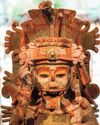
Evidence emerges of the day in 1562 when an infamous Spanish cleric tried to destroy Maya religion
12 mins
November/December 2025

Archaeology
OASIS MAKERS OF ARABIA
Researchers are just beginning to understand how people thrived in the desert of Oman some 5,000 years ago
8 mins
November/December 2025

Archaeology
FOSSIL FORCE
One of the planet's most successful arthropods, trilobites, abounded in the oceans from about 520 million to 250 million years ago.
1 min
November/December 2025
Archaeology
BIGHORN MEDICINE WHEEL, WYOMING
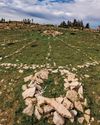
Perched almost 9,700 feet above sea level on Medicine Mountain in Wyoming's Bighorn Range, the Medicine Wheel is an 80-foot-diameter circular structure made from limestone boulders.
2 mins
November/December 2025
Archaeology
ANCIENT LOOK BOOK
A young woman buried in China's Tarim Basin some 2,000 years ago went to the afterlife accompanied by the height of fashion.
1 mins
November/December 2025
Archaeology
A FAMILIAR FACE
In the early eleventh century, a landslide on the island of Ostrów Lednicki in western Poland caused a hillfort to collapse and slip to the bottom of Lake Lednica.
1 min
November/December 2025
Archaeology
Temples to Tradition
A looted cache of bronzes compels archaeologists to explore Celtic sanctuaries across Burgundy
13 mins
November/December 2025
Listen
Translate
Change font size