يحاول ذهب - حر
The Future of Embedded Chip Design Navigating the Chip Creation Space
December 2024
|Circuit Cellar
Custom Silicon at Lower Cost, Reduced Development Time

Empowering a new generation of developers to create more specialized, efficient and innovative chips opens paths for smaller enterprises to take on the challenges of machine learning, IoT, artificial intelligence and automation.
The proliferation of embedded systems has reshaped industries by providing intelligence to products, thereby improving ease of use, functionality and life cycle cost. Historically, embedded systems providers could meet most customers' requirements using standard, off-the-shelf components, providing differentiation through software. In certain cases, the embedded systems had particularly demanding performance, cost, or power requirements (or some combination of all three) and required tailored hardware in the form of customizable silicon solutions, most notably FPGAs or custom silicon such as ASICS.
We are now moving to the next generation of embedded systems, one powered by machine learning (ML). These new ML-enabled systems are expanding the applications served and the value that microelectronics provide in traditional embedded markets.
Importantly, they also bring the power of embedded intelligence to a wide array of existing and new consumer markets. In this new world, the benefit of tailored hardware becomes more broadly relevant, often making the difference between products that serve a market's needs and those that do not.
As such, enabling simple, fast and affordable customizing of chips has emerged as a critical differentiator among OEM's, software and service providers. Once again, FPGAs are one choice. They are relatively easy to implement by non-chip experts but are not energy efficient and do not integrate the extensive analog functionality necessary for cost-sensitive or sensor driven applications.
Alternatively, ASICS give engineers a wide
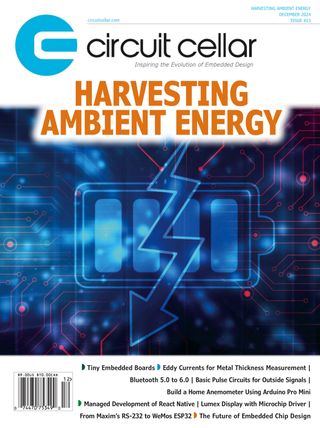

هذه القصة من طبعة December 2024 من Circuit Cellar.
اشترك في Magzter GOLD للوصول إلى آلاف القصص المتميزة المنسقة، وأكثر من 9000 مجلة وصحيفة.
هل أنت مشترك بالفعل؟ تسجيل الدخول
المزيد من القصص من Circuit Cellar

Circuit Cellar
Sensors: From Canned Tuna to Caviar
In the first installment of a new Circuit Cellar column on sensors, Brian Chee looks at how sensors figure into larger application packages and when can be the perfect solution.

10 mins
February 2026

Circuit Cellar
Bosch Sensortec Launches BMI423 Inertial Measurement Unit
Smart wearables are always on the move-and so is their sensing technology. Bosch Sensortec introduced the BMI423, a new-generation Inertial Measurement Unit (IMU) that combines extended measurement range with low power consumption.
1 mins
February 2026

Circuit Cellar
Renesas Releases its First Wi-Fi 6 and Wi-Fi/Bluetooth LE Combo MCUs for IoT and Connected Home Applications
Renesas Electronics Corp., a premier supplier of advanced semiconductor solutions, has introduced the RA6W1 dual-band Wi-Fi 6 wireless microcontroller (MCU), along with the RA6W2 MCU that integrates both Wi-Fi 6 and Bluetooth Low Energy (LE) technologies.
1 mins
February 2026

Circuit Cellar
Airborne Embedded Software: Simplifying Safety and Security
With modern airborne systems no longer isolated computing environments, any vulnerabilities introduced into these increasingly connected devices can quickly become much more than just a cybersecurity issue, but a safety risk no one can afford.
4 mins
February 2026

Circuit Cellar
Wearable LIDAR Spatial Audio Navigator for Visually-Impaired Individuals
Built with a Raspberry Pi Pico, a TF-Luna LiDAR Sensor, and a Hand-Held Potentiometer
13 mins
February 2026

Circuit Cellar
ADRs: The Missing Memory in Embedded Projects
Remembering and communicating why design decisions were made and the reasons behind their particular implementations can be critical when it comes to developing software as a team and maintaing that software in the future. This time Jacob shares his thoughts on and experience with one of the most valuable tools to extend the reach of software development memories.
9 mins
February 2026

Circuit Cellar
Sensors: From Canned Tuna to Caviar
In the first installment of a new Circuit Cellar column on sensors, Brian Chee looks at how sensors figure into larger application packages and when \"just enough sensors\" can be the perfect solution.
10 mins
February 2026
Circuit Cellar
Embedded DSP with the RT1010 MCU
Part 2: Delay, Flanger, IIR, and Overdrive
15 mins
February 2026
Circuit Cellar
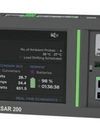
Omnion Power Provides Modular, Scalable DC Power System Monitoring and Control with New Pulsar 200 Controller
Omnion Power is helping to redefine the role of the DC power system controller with its next-generation Pulsar 200 platform.
1 mins
February 2026

Circuit Cellar
Robot Operating System 2 (ROS 2): Core Concepts, Architecture, and Real-World Capabilities
The Robot Operating System 2 (ROS 2) is an open-source, middleware framework that addresses the communication and coordination challenges inherent in modern, distributed robotic systems. In this article, Pedro details how ROS 2's architectural foundations successfully address the core limitations of its predecessor, ROS 1, using real-world scenarios, and steps for setting up the ROS 2 Foxy environment on Ubuntu Linux distro, and cross-platform communication between a host PC and a Raspberry Pi module.
14 mins
February 2026
Listen
Translate
Change font size