يحاول ذهب - حر
Here we go round the mulberry tree
August 16, 2023
|Country Life UK
Familiar from the famous nursery rhyme, the mulberry tree is so prized for the silkworms that feed on its luscious fruit that, long ago, the Chinese would execute anyone exporting a specimen

IF medieval England had wool, France had silk. Across the Channel, people had been weaving imported silk thread since the 11th century and, in 1466, the then King, Louis XI, ordered a new industry set up in Lyon, staffed by Italian weavers, in a bid to dominate European silk-cloth manufacture. The city duly became the silk capital of the Continent and, towards the end of the 16th century, the reigning French monarch, Henry IV, emphasised his country’s prominent role in silk production by establishing mulberry groves for the domestic breeding and feeding of silkworms.
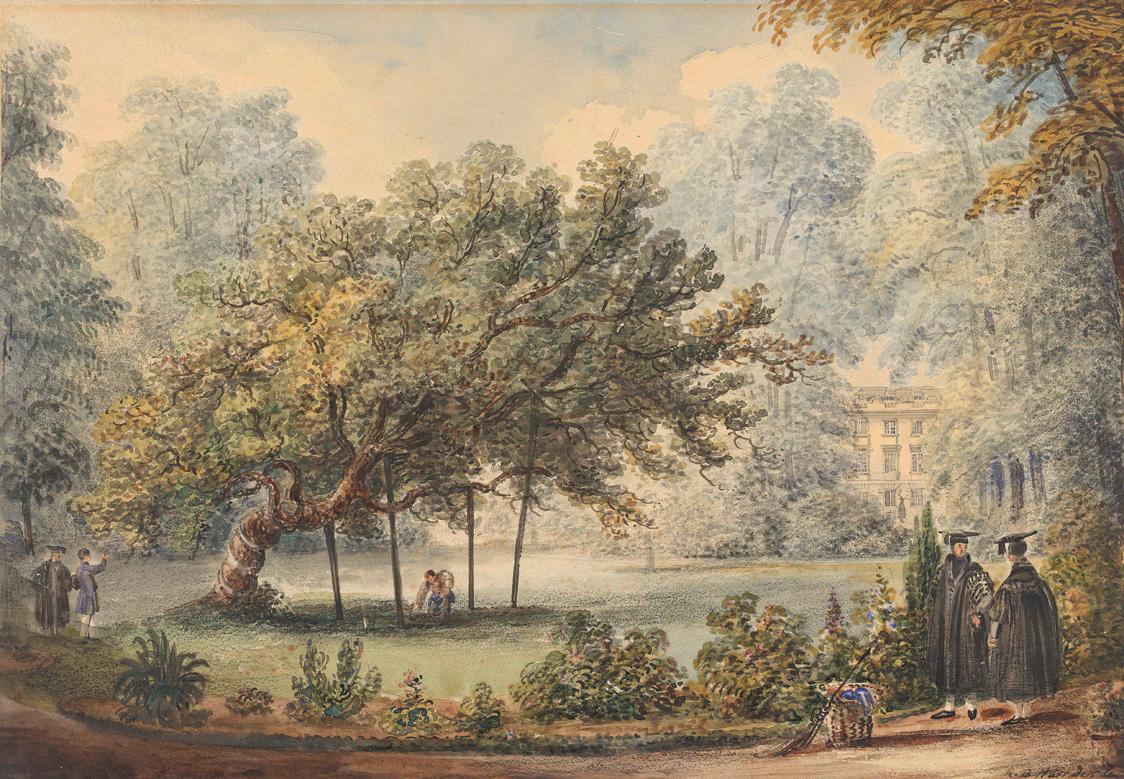
In London, a peeved James I responded with a rival plan to breed ‘English’ silkworms. In 1607, he bade his Lord Lieutenants order landowners across the country to plant mulberry trees. Some 100,000 saplings were brought from the Netherlands and made available at three farthings a plant or six shillings for 100. The King also planted his own four-acre mulberry plot in what is now the north-west corner of Buckingham Palace garden, as well as establishing a silkworm nursery and mulberry garden at Greenwich Palace. Alas, despite the royal edict, the scheme foundered, partly because of untutored silkworm breeding and partly because of some viciously cold winters in which even the Thames froze over.
The tree variety the King chose to import may have also made matters worse. Silkworms prefer the white mulberry Morus alba, whereas the English project involved

هذه القصة من طبعة August 16, 2023 من Country Life UK.
اشترك في Magzter GOLD للوصول إلى آلاف القصص المتميزة المنسقة، وأكثر من 9000 مجلة وصحيفة.
هل أنت مشترك بالفعل؟ تسجيل الدخول
المزيد من القصص من Country Life UK
Country Life UK
Glazed expressions
Why glass can offer the secret to creating multifunctional spaces

1 mins
January 14, 2026

Country Life UK
Charlotte Mullins comments on Crucifixion Mural
THE Hungarian-Jewish artist George Mayer-Marton spent the interwar years as part of the progressive art group Vienna Hagenbund, before fleeing to Britain in 1938 after the Anschluss, the German annexation of Austria.
1 min
January 14, 2026

Country Life UK
Artificial sweeteners
AI is now reaching into every corner of our lives. We can -and must-very carefully choose how we engage with it
4 mins
January 14, 2026
Country Life UK
Peak performance
Tartiflette is one of the most gloriously indulgent après-ski centrepieces, but you don't need to have spent the day bombing down black runs to enjoy it
3 mins
January 14, 2026

Country Life UK
Setting the cat among the pigeons
LAST summer was one of the best I can remember for all those North American perennials that fill our herbaceous borders with colour.
3 mins
January 14, 2026

Country Life UK
Material success as tweed turns 200
TWEED manufacturer Lovat Mill, renowned for its vibrant colour-mixed yarns, has launched a new collection to celebrate 200 years since the warm woven woollen fabric that is de rigueur for many countryside activities was given its name by accident.
1 min
January 14, 2026

Country Life UK
Tales from an African farm
WEDGED in the front of the dugout, I could not swing my upper body round quickly enough to shoot.
6 mins
January 14, 2026

Country Life UK
The designer's room.
The design of Alice Palmer's kitchen was influenced by her foreign travels
1 mins
January 14, 2026

Country Life UK
Faraway, so close
Ties between Britain and Hawai'i ran deep, so much that the Union Jack was included in the Pacific country's new flag and its coat of arms was designed in London, as a British Museum exhibition highlights
8 mins
January 14, 2026

Country Life UK
A genius of the first class
To mark the tercentenary of Sir John Vanbrugh's death, Charles Saumarez Smith considers the changing reactions to one of his greatest creations, Blenheim Palace in Oxfordshire
8 mins
January 14, 2026
Translate
Change font size