
استمتع بـUnlimited مع Magzter GOLD
احصل على وصول غير محدود إلى أكثر من 9000 مجلة وصحيفة وقصة مميزة مقابل
Technologists & Ethicists
February/March 2024
|Philosophy Now
Stephen L. Anderson laments inadequate moral insight among tech leaders.
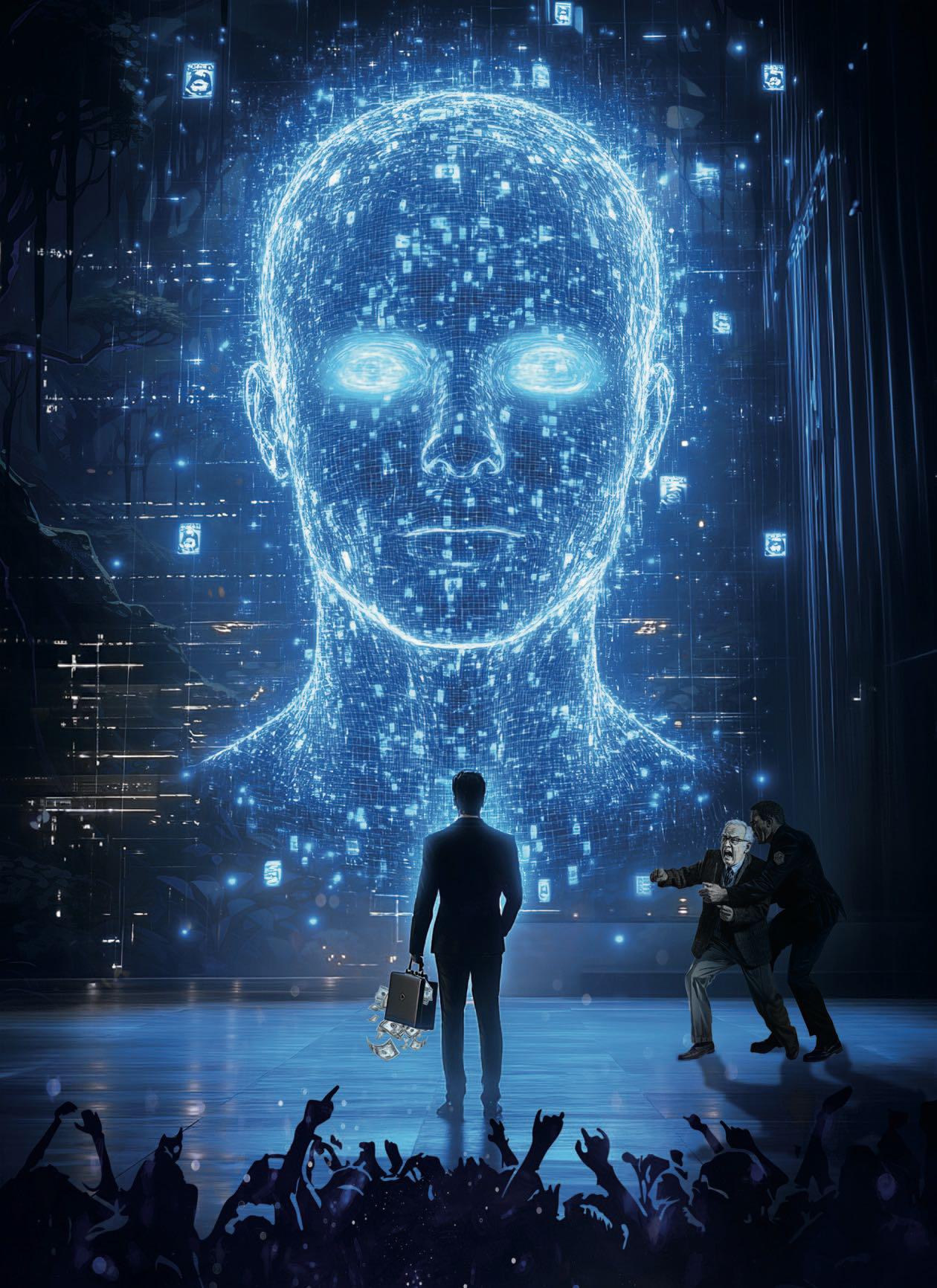
For many of us the world's first global pandemic for a century was a watershed moment. The Covid-19 crisis was plausibly claimed to have been caused by risky 'gain-of-function research': that is, through the deliberate enhancing of viruses. That would be a tremendous technological achievement, but also an ominous one. It would also be a global example of what can happen when human technical ability is untethered from adequate moral reflection: global disaster. Nor is this the first time we've glimpsed how terrifying human invention can be. As Robert Oppenheimer famously exclaimed when the first nuclear bomb was detonated, "Now I am become Death, the destroyer of worlds." He wasn't kidding. Due partly to his assistance, we are now indeed capable of destroying all life on this planet. None of us can doubt anymore that the entire world has a stake in seeing technology managed well.
I was reminded of this again when reading two books about AI: Michael Kanaan's T-Minus AI (2020) and John Lennox's 2084 (2024). The central concern of both is the disconnect between the impact of our global computer technologies and the ethics required to manage them. Kanaan is more guardedly positive about the possibilities of AI, whereas Lennox is less enthused; but both express similar serious hesitancies about where AI is about to take us all.

هذه القصة من طبعة February/March 2024 من Philosophy Now.
اشترك في Magzter GOLD للوصول إلى آلاف القصص المتميزة المنسقة، وأكثر من 9000 مجلة وصحيفة.
هل أنت مشترك بالفعل؟ تسجيل الدخول
المزيد من القصص من Philosophy Now

Philosophy Now
Bilbo Theorizes About Wellbeing
Eric Comerford overhears Bilbo and Gandalf discussing happiness.

9 mins
December 2025 / January 2026

Philosophy Now
What Women?
Marcia Yudkin remembers almost choking at Cornell
11 mins
December 2025 / January 2026

Philosophy Now
Islamic Philosophers On Tyranny
Amir Ali Maleki looks at tyranny from an Islamic perspective.
4 mins
December 2025 / January 2026

Philosophy Now
Peter Singer
The controversial Australian philosopher defends the right to choose to die on utilitarian grounds
5 mins
December 2025 / January 2026

Philosophy Now
Another Conversation with Martin Heidegger?
Raymond Tallis talks about communication problems.
7 mins
December 2025 / January 2026

Philosophy Now
Letters
When inspiration strikes, don't bottle it up. Email me at rick.lewis@philosophynow.org Keep them short and keep them coming!
17 mins
December 2025 / January 2026

Philosophy Now
The Philosophy of William Blake
Mark Vernon looks at the imaginative thinking of an imaginative artist.
9 mins
December 2025 / January 2026

Philosophy Now
Philosophical Haiku
Peering through life’s lens God in nature is deduced: The joy of being.
1 mins
December 2025 / January 2026

Philosophy Now
Philosophy Shorts
More songs about Buildings and Food' was the title of a 1978 album by the rock band Talking Heads. It was about all the things rock stars normally don't sing about. Pop songs are usually about variations on the theme of love; tracks like Rose Royce's 1976 hit 'Car Wash' are the exception. Philosophers, likewise, tend to have a narrow focus on epistemology, metaphysics and trifles like the meaning of life. But occasionally great minds stray from their turf and write about other matters, for example buildings (Martin Heidegger), food (Hobbes), tomato juice (Robert Nozick), and the weather (Lucretius and Aristotle). This series of Shorts is about these unfamiliar themes; about the things philosophers also write about.
2 mins
December 2025 / January 2026

Philosophy Now
Hedonic Treadmills in the Vale of Tears
Michael Gracey looks at how philosophers have pursued happiness.
8 mins
December 2025 / January 2026
Listen
Translate
Change font size