
Mit Magzter GOLD unbegrenztes Potenzial nutzen
Erhalten Sie unbegrenzten Zugriff auf über 9.000 Zeitschriften, Zeitungen und Premium-Artikel für nur
Versuchen GOLD - Frei
Correlation between Urbanisation and Economic Development
Businessworld
|June 04, 2022
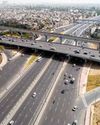
THE WORLD BANK ESTIMATES that about 4.2 billion people, or 55 per cent of the world’s population, live in the cities. By 2050, this number will rise to 70 per cent. Urbanisation is often seen as inevitable when a country transforms from a ‘traditional society’ to one which is geared toward ‘high mass consumption’. These familiar terms are the first and last ‘stages of economic growth’ propounded by Walt Whitman Rostow.

THE WORLD BANK ESTIMATES that about 4.2 billion people, or 55 per cent of the world’s population, live in the cities. By 2050, this number will rise to 70 per cent. Urbanisation is often seen as inevitable when a country transforms from a ‘traditional society’ to one which is geared toward ‘high mass consumption’. These familiar terms are the first and last ‘stages of economic growth’ propounded by Walt Whitman Rostow.
Often, urbanisation is also correlated with economic development. The proof of the pudding is in the eating. Already, 80 per cent of global GDP is generated in cities. There exists a positive correlation between the higher GDP per capita income and urban population (as a percentage of the total population).
The level of the urban population in countries like Switzerland (73.92 per cent), Norway (82.97 per cent), US (82.66 per cent), Denmark (88.12 per cent), Sweden (87.98 per cent), Australia (86.24 per cent) and Canada (81.56 per cent) is significantly high.
Conversely, countries with lower levels of GDP per capita have lower levels of urban population. Burundi (13.1 per cent urban population), South Sudan (20.20 per cent), Afghanistan (26.03 per cent), Rwanda (17.43 per cent), Ethiopia (21.70 per cent), Kenya (28 per cent) and Myanmar (31 per cent) are some examples.
Let us look at the case of India. The Union Ministry of Statistics and Programme Implementation (MoSPI) had in 2019 estimated urban and rural per capita income in terms of Net Value Added (NVA) to be Rs 98,435 in urban areas and Rs 40,925 in rural areas, respectively. It is more than double in urban areas.


Diese Geschichte stammt aus der June 04, 2022-Ausgabe von Businessworld.
Abonnieren Sie Magzter GOLD, um auf Tausende kuratierter Premium-Geschichten und über 9.000 Zeitschriften und Zeitungen zuzugreifen.
Sie sind bereits Abonnent? Anmelden
WEITERE GESCHICHTEN VON Businessworld
BW Businessworld
BUILDING BIG
India built big and priced higher in 2025. Can execution, affordability, and delivery finally catch up in 2026?

5 mins
December 27, 2025
BW Businessworld
Thumb Rules for Compelling Communication
What distinguishes Ravishankar lyer's Story Rules from the crowded field of business communication guides, is its commitment to practical application. The book features over 300 real-life examples drawn from diverse contexts, from Silicon Valley startups to Fortune 500 boardrooms and from nonprofit fundraising to political campaigns,
3 mins
December 27, 2025

BW Businessworld
THE STRONGEST MARKETING TOOL
As consumers grow more cautious, brands are winning trust by letting performance speak before promotion, says Gupta
3 mins
December 27, 2025

BW Businessworld
Healthcare Trends in 2026
AI is enhancing diagnostic abilities, hybrid care models are improving patient access and operational efficiency, and efforts are focused on supporting the healthcare workforce
3 mins
December 27, 2025

BW Businessworld
UP, UP AND AWAY
India's transport sectors surged in 2025, but numbers reveal momentum, strain, and large investment bets waiting to mature
5 mins
December 27, 2025

BW Businessworld
GROWTH WITH CAVEATS
India's economy looks resilient on paper for FY26, but do the numbers hide deeper fiscal and trade stresses ahead?
5 mins
December 27, 2025

BW Businessworld
AI Rewiring Indian Healthcare Industry
From smart documentation and imaging to predictive analytics and telehealth, hospital leaders say AI is set to become the invisible backbone of India's care delivery
3 mins
December 27, 2025

BW Businessworld
Redefining India's Pre-owned Car Market In 2026
If the current signals stay on course, 2026 could be the point when the pre-owned segment becomes the most visible marker of India's move toward cleaner propulsion
3 mins
December 27, 2025

BW Businessworld
Our evolving relationship with luxury
For some time now, the Indian luxury market has been showing promise, despite sluggish demand across core global markets due to economic headwinds and geopolitical uncertainties. The way we consume luxury is shifting; consumers are preferring luxury experiences, such as holidays and dining out, over traditional luxury products. Accessible luxury and resale are also part of the luxury sector pie
4 mins
December 27, 2025

BW Businessworld
MARKETING FOR THE INDIA THAT'S EMERGING
Abbi decodes what goes behind building trust, relevance and scale in a hyperconnected nation
3 mins
December 27, 2025
Translate
Change font size