
Mit Magzter GOLD unbegrenztes Potenzial nutzen
Erhalten Sie unbegrenzten Zugriff auf über 9.000 Zeitschriften, Zeitungen und Premium-Artikel für nur
Versuchen GOLD - Frei
Investments You Can Do Without
Kiplinger's Personal Finance
|July 2017
This column, like most articles about investing, usually tells you where to put your money—which stocks, bonds, sectors or asset classes are likely to yield superior returns in the future. What the pundits typically ignore is where not to put your money. Which investments should you shun? But I take up the challenge and identify four categories that you should avoid.

High-fee funds. Stay far away from mutual funds that charge exorbitant fees. A recent study found that 92% of mutual funds that focus on large U.S. companies failed to beat their benchmark, Standard & Poor’s 500-stock index, over the 15-year period that ended in 2016. The common media take on this story ran along the lines of “Index Funds Beat Managed Funds” or “Algorithms Vanquish Humans.” The real lesson is simpler: Because relatively few actively managed funds can top the benchmark (especially in the area of large-capitalization stocks), and because it’s difficult to guess which active funds will win, you should invest in funds that require you to forfeit the least for the privilege of owning them.
On average, actively managed largecap U.S. stock funds charge 1.19% annually for expenses. But many good ones are considerably cheaper. Two of my longtime favorites in that category are DODGE & COX STOCK (SYMBOL DODGX), which charges 0.52%, and MAIRS & POWER GROWTH (MPGFX), which charges 0.65%. (Both are members of the Kiplinger 25; see page 59.) Another solid fund, PRIME-CAP ODYSSEY STOCK (POSKX), charges 0.67%. FIDELITY CONTRAFUND (FCNTX), which I have called the best mutual fund on the planet, charges 0.68%.
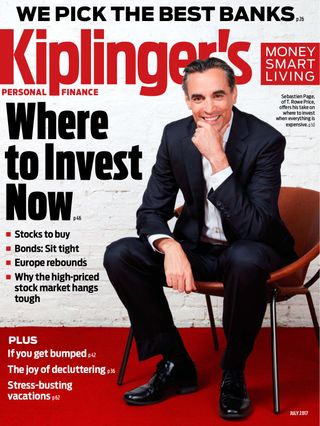

Diese Geschichte stammt aus der July 2017-Ausgabe von Kiplinger's Personal Finance.
Abonnieren Sie Magzter GOLD, um auf Tausende kuratierter Premium-Geschichten und über 9.000 Zeitschriften und Zeitungen zuzugreifen.
Sie sind bereits Abonnent? Anmelden
WEITERE GESCHICHTEN VON Kiplinger's Personal Finance

Kiplinger's Personal Finance
A TAX BREAK FOR MEDICAL EXPENSES
The editor of The Kiplinger Tax Letter responds to readers asking about health care write-offs.

2 mins
February 2026

Kiplinger's Personal Finance
Volunteering to Help Others at Tax Time
Through an IRS program, qualifying individuals can get free assistance with their tax returns.
2 mins
February 2026

Kiplinger's Personal Finance
CATCH-UP SAVERS FACE A TAXING 401(K) CHANGE
Under new rules, you may lose an up-front deduction but gain tax-free income once you retire.
2 mins
February 2026

Kiplinger's Personal Finance
The Case for Emerging Markets
Economic growth, earnings acceleration and bargain prices favor EM stocks.
3 mins
February 2026

Kiplinger's Personal Finance
THE NEW RULES OF RETIREMENT
Popular guidelines about how to save, invest and spend need to be updated and personalized to ensure you'll never run out of money.
15 mins
February 2026

Kiplinger's Personal Finance
Smart Ways to Share a Credit Card
Adding an authorized user has its benefits, but make sure you set the ground rules.
2 mins
February 2026

Kiplinger's Personal Finance
THE BEST AFFORDABLE FITNESS TRACKERS
These devices monitor your exercise, sleep patterns and more- and they don't cost an arm and a leg.
4 mins
February 2026
Kiplinger's Personal Finance
A VALUE FOCUS CLIPS RETURNS
THERE'S more to Mairs & Power Growth than its name implies. The managers favor firms with above-average earnings growth. But a durable, competitive position in their market- “a number-one or number-two position and gaining share,” says comanager Andrew Adams—and a reasonable stock price matter even more.
1 mins
February 2026

Kiplinger's Personal Finance
Look Beyond the Tech Giants
I am hooked on a podcast called Acquired, in which two smart guys do a deep analytical dive, typically lasting three or four hours, on a single successful company such as Coca-Cola or Trader Joe's. Ben Gilbert and David Rosenthal, a pair of venture capitalists, are especially adept at explaining what's behind the success of such tech giants as Alphabet (symbol GOOGL, $320), the former Google, which recently merited 11 hours and 42 minutes of dialogue all by itself.
4 mins
February 2026

Kiplinger's Personal Finance
How to Pay for Long-Term Care
A couple of months ago, I wrote that many Americans significantly underestimate how long they could live in retirement (see “Living in Retirement,” Dec.). With the possibility of a 30-year retirement becoming more common, retirees need to plan for so-called longevity risk to make sure their assets last a lifetime. And the longer you live, the more likely you'll need to pay for some form of long-term care. That can range from assistance with activities of daily living to in-home care to a nursing home stay.
2 mins
February 2026
Translate
Change font size