Mit Magzter GOLD unbegrenztes Potenzial nutzen
Erhalten Sie unbegrenzten Zugriff auf über 9.000 Zeitschriften, Zeitungen und Premium-Artikel für nur
Versuchen GOLD - Frei
The Truth About Our Fish
Reader's Digest International
|June 2017
Fish is supposed to be good for us. But is it? And can we always be sure what it is we’re eating?

TO THE INEXPERT EYE, one piece of fish can often look much like any other. And the color, shape and texture of fish and other marine species can also be changed beyond recognition by modern processing techniques. So can we be sure that the fish on our plate is really what we think it is? Not too long ago, the answer would probably have been no. But thanks to tighter EU regulations,improvements in scientific testing and increased vigilance by major supermarket chains and manufacturers, the chances of our cod being cod and our hake being hake are these days considerably higher.
Yet the fact remains that as the most commonly traded foodstuff in the world, worth more than $130bn a year, seafood is big business, and policing the whole market is a huge task.
As one recent survey showed, even at the heart of the European Union, in the very canteens where its legislators eat, not every fish is what it’s meant to be. And as we discovered, the consequences of this so-called “seafood substitution” can sometimes be serious…
WHY FISH ISN’T ALWAYS GOOD FOR YOU
According to Professor Chris Elliott, an expert in food safety at Queen’s University, Belfast, Northern Ireland, a growing number of people have allergies to fish. “But it tends to be very species-specific,” he says. “So if you know that you’re allergic to a particular species, then you avoid it in your diet. But if it’s coming into your diet by other means, then you are susceptible.”
In other words, if the fish you’re eating turns out not to be the fish described on the menu or the label, there could be a serious health issue.
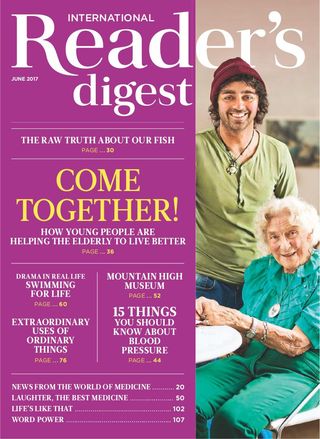

Diese Geschichte stammt aus der June 2017-Ausgabe von Reader's Digest International.
Abonnieren Sie Magzter GOLD, um auf Tausende kuratierter Premium-Geschichten und über 9.000 Zeitschriften und Zeitungen zuzugreifen.
Sie sind bereits Abonnent? Anmelden
WEITERE GESCHICHTEN VON Reader's Digest International

Reader's Digest International
Tendinopathy Or Bursitis?
How to spot—and treat—these troublesome conditions

2 mins
November 2017

Reader's Digest International
An Evening Drive
If you could catch fatherhood in a bottle, it would be filled with moments like these
4 mins
November 2017

Reader's Digest International
Storm Trooper
The small Coast Guard outpost received an emergency call: a hurricane was raging, and a freighter with a crew of 12 was going down
12 mins
November 2017

Reader's Digest International
10 Signs That Your Husband's Past His Use-by Date
Just the two of you being together in bed made him happy.
1 mins
November 2017

Reader's Digest International
Good News
Some of the Positive Stories Coming Our Way
2 mins
November 2017

Reader's Digest International
8 Things Dermatologists Do Every Summer
Insider advice for glowing, low-cancer-risk skin.
2 mins
June 2017

Reader's Digest International
Mastering Your Metabolism
What you should know about thyroid health.
2 mins
June 2017

Reader's Digest International
Medical Mystery
Medical Mystery
3 mins
June 2017
Reader's Digest International
The Truth About Our Fish
Fish is supposed to be good for us. But is it? And can we always be sure what it is we’re eating?
7 mins
June 2017

Reader's Digest International
Greed, Guile & Lies
Some of the world’s most respected corporations have gone out of their way to deceive us. Here’s how they got caught.
10 mins
July 2017
Translate
Change font size