Versuchen GOLD - Frei
The Limits Of Argument
Philosophy Now
|February/March 2021
Howard Darmstadter asks why rational debate doesn’t often change minds.

Political and religious opinions often seem bedded in mental concrete, immune from polite rational attempts at persuasion. (My mother cautioned me to avoid talking politics or religion with strangers.) But lately, all sorts of ostensibly non-political issues have been politicized. People with fringe politics tend to become climate change deniers, flat earthers, or anti-vaxxers. What’s wrong with these people? How can they deny the obvious facts? Don’t they care about the evidence?
I can’t explain why extremisms wax and wane, though there’s no shortage of explanations floating about. What I’ll try to do here is offer some reasons why the usual processes of argument seldom convince people on the other side. Given what philosophers and psychologists have learned about the structure of our beliefs, clinging to extreme views is what we should expect. To see why, we need to understand some belief basics.
Logic & Context
Our beliefs aren’t logically coherent. No one believes all of even the obvious logical consequences of their beliefs, and we all believe some logical contradictions.
For example, suppose your car won’t start. After a few simple tests – you try the horn and lights – you conclude that the battery is dead, and that you should try connecting the car to a live battery. So apparently, you believe that (1) ‘You cannot start a car with a dead battery’, and (2) ‘You can start a car with a dead battery’ (for example, by connecting it to a live battery). The two beliefs appear logically contradictory. Perhaps what you really believe is not that you can’t
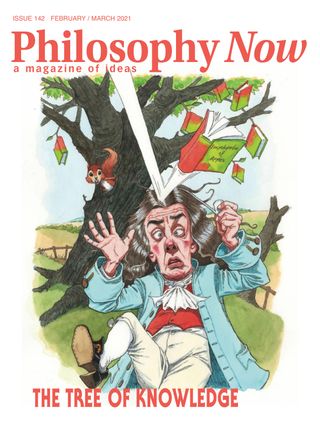

Diese Geschichte stammt aus der February/March 2021-Ausgabe von Philosophy Now.
Abonnieren Sie Magzter GOLD, um auf Tausende kuratierter Premium-Geschichten und über 9.000 Zeitschriften und Zeitungen zuzugreifen.
Sie sind bereits Abonnent? Anmelden
WEITERE GESCHICHTEN VON Philosophy Now

Philosophy Now
Nosferatu
Stefan Bolea considers two very different artistic approaches to love and death.

6 mins
April/May 2025

Philosophy Now
Heidegger's Ghost
Raymond Tallis wonders where Heidegger's body went when he was philosophising.
7 mins
April/May 2025

Philosophy Now
Is Comedy Good For Us?
Damaris Stock has a laugh with Plato and friends.
10 mins
April/May 2025

Philosophy Now
In Defense of Idleness
Wendell O'Brien says, 'Just Don't Do It'.
10 mins
April/May 2025
Philosophy Now
Leaving Nothing to Chance by Carl Knight
LEAVING NOTHING TO Chance (2025) by Carl Knight, is an informed, proficient and lucid defence of luck egalitarianism.
3 mins
April/May 2025

Philosophy Now
Star Maker by Olaf Stapledon
THE 1937 SCIENCE FICTION novel Star Maker was written by philosophy professor Olaf Stapledon in the dark days as Europe awaited the onslaught of Nazi Germany. This casts a shadow over the whole book.
6 mins
April/May 2025
Philosophy Now
Love & Emptiness in the Sufi Tradition
Medha Ninad Tambe meditates on Rumi, love and self-negation.
7 mins
April/May 2025

Philosophy Now
The Hedgehog's Dilemma: A Metaphor About the Challenges of Human Intimacy
Krishna Chaubey explains Arthur Schopenhauer's poignant thought experiment.
4 mins
April/May 2025

Philosophy Now
The Mirror & the Flame
Rebwar Fatah imagines Attar's & Hegel's shared path.
4 mins
April/May 2025
Philosophy Now
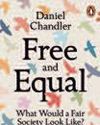
Free and Equal by Daniel Chandler
DANIEL CHANDLER, AN economist and philosopher based at the London School of Economics, begins Free and Equal: What Would a Fair Society Look Like? (2023) by asking an intriguing question. How is it, he wonders, that the most influential political philosopher of the last century has had almost no practical impact on politics or policy? The philosopher in question is John Rawls, whose magnum opus was A Theory of Justice (1971).
5 mins
April/May 2025
Translate
Change font size