
Mit Magzter GOLD unbegrenztes Potenzial nutzen
Erhalten Sie unbegrenzten Zugriff auf über 9.000 Zeitschriften, Zeitungen und Premium-Artikel für nur
Versuchen GOLD - Frei
Any Baggage around Everything Genetically Modified!
TerraGreen
|April 2022
Being a biotechnologist is fun when the discussion is just about lac operon, cosmid vectors, growing some organ in a lab or what it's like to be in tomorrow's business but not when I am asked why people are averse towards genetically modified food.

Genetic modification must be lauded because it saves lives. From therapies using monoclonal antibodies to an array of life-saving insulin products, the successes of somatostatin, insulin and human growth hormone and the concept of bugs as drugs', genetic modification dumbfounds the world. But when it's used to produce food, we hear an outcry. Three main concerns being the possible escape of an alien gene from GM plant into a wild population of a related species, the impact of genetically modified organisms (GMOs) on biodiversity and technologies that enslave farmers.
Even though the vast majority of the research on genetically modified (GM) crops suggests that they are safe to eat, many people appear to hold soft views about the health effects of GM foods. India has always been reluctant to bring GMOs in because we strongly believe GM plants are very likely to bring problems for the environment along with health problems for the population as a whole. Protests were also held outside the Environment Ministry in 2017 when initial approval was granted to allow the commercial introduction of India's first GM food crop, Dhara Mustard Hybrid-11, otherwise known as DMH - 11.
As the prevalence of GMOs continues to rise, we hunt for information concerning the safety of these products. Even scientists appear divided over the safety of GM foods. Not just fruits and vegetables, but also food grains, pulses, tea, spices and even oilseeds were on people's radar screens. A round green label or five-digit codes starting with an eight are causes for alarm. Decades of monitoring by countries and researchers around the world to address the suspicions surrounding the effects of GMOs on human health, environment, and our DNA have not slowed down people from returning to how things used to be-old fashioned way.
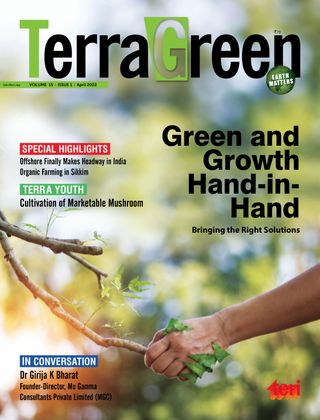

Diese Geschichte stammt aus der April 2022-Ausgabe von TerraGreen.
Abonnieren Sie Magzter GOLD, um auf Tausende kuratierter Premium-Geschichten und über 9.000 Zeitschriften und Zeitungen zuzugreifen.
Sie sind bereits Abonnent? Anmelden
WEITERE GESCHICHTEN VON TerraGreen

TerraGreen
Motor Efficiency
The Silent Catalyst of India's Green Industrial Revolution

4 mins
January 2026

TerraGreen
Beauty That Betrays!
The Quiet Invasion of An Ornamental Plant
3 mins
January 2026
TerraGreen
Farming Innovation Addresses Food Shortages
Also Halves Methane Emissions
4 mins
January 2026

TerraGreen
Aravalli on the Edge
Saving India's Ancient Green Shield from Collapse
3 mins
January 2026

TerraGreen
From Orchard to Table
Apple Picking, Family Time, and Fall Colours
4 mins
January 2026

TerraGreen
Coral Reefs Could Feed Millions
If We Let Them Rebuild
3 mins
January 2026

TerraGreen
Resting on Deodars
How Fallen Trees are Being Reimagined as Urban Assets in Shimla
3 mins
January 2026

TerraGreen
India's Clean-Air Innovation at Risk
Nationwide Assessment by WeNaturalists
2 mins
January 2026

TerraGreen
CNFF-25
Highlights Environmental Concern Amid India's Cultural Heritage
3 mins
January 2026

TerraGreen
Green Farming through Circular Economy
Sustainable Practices for Waste Reduction
8 mins
January 2026
Translate
Change font size