
Mit Magzter GOLD unbegrenztes Potenzial nutzen
Erhalten Sie unbegrenzten Zugriff auf über 9.000 Zeitschriften, Zeitungen und Premium-Artikel für nur
Versuchen GOLD - Frei
Artemis takes aim at the Moon
BBC Sky at Night Magazine
|April 2022
As Artemis I goes through its final preparations, Niamh Shaw looks at this first step in a programme to return humanity to the Moon permanently

Back in 2019, the year of the 50th anniversary of the Apollo lunar human space programme, Jim Bridestine, then NASA Administrator announced details of Project Artemis and with it the commitment to a single monumental goal: to establish a permanent human Moon base. With the project costing an estimated $93 billion by 2025, NASA's first milestone in this programme is the Artemis I mission, which is due to launch from Kennedy Space Center in mid 2022.
A four-week return mission to the Moon, Artemis I will be the first integrated test flight of NASA's Deep Space Exploration System, which includes the Orion spacecraft, Space Launch System (SLS) rocket and the Exploration Ground Systems (EGS) at Kennedy Space Center. There will be no lunar landing for Artemis I, but it will lay the foundation for the future Artemis missions to build on.
The Artemis spacecraft has a launch window of two weeks every month when the Moon is in the right position relative to Earth. As of writing, the earliest of these runs from 7-21 May, but launch windows from 6-16 June and 29 June to 12 July are also being seriously considered.
Once the mission has made its way off the launch pad at the Kennedy Space Center, though, it won't be short of objectives. Over the course of the mission Artemis I will deploy science CubeSats, the Orion craft will travel thousands of kilometres beyond the Moon in a retrograde orbit as well as conducting two flybys, skimming just 100km over the surface.


Diese Geschichte stammt aus der April 2022-Ausgabe von BBC Sky at Night Magazine.
Abonnieren Sie Magzter GOLD, um auf Tausende kuratierter Premium-Geschichten und über 9.000 Zeitschriften und Zeitungen zuzugreifen.
Sie sind bereits Abonnent? Anmelden
WEITERE GESCHICHTEN VON BBC Sky at Night Magazine
BBC Sky at Night Magazine
The Giant Leap: Why Space is the Next Frontier in the Evolution of Life
“Earth is the cradle of humanity, but one cannot live in the cradle forever,” wrote Konstantin Tsiolkovsky in 1911.

1 mins
February 2026
BBC Sky at Night Magazine
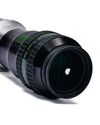
Tele Vue Nagler Type-7 series eyepieces
These premium optics were inspired by Apollo - and deliver a giant leap to your views
4 mins
February 2026
BBC Sky at Night Magazine
Once Upon a Time in Space
While the Space Race of the Cold War years was ultimately a geopolitical contest between the USA and the Soviet Union, the rivalry sparked rapid innovation and inspired multiple generations to look skyward.
1 mins
February 2026
BBC Sky at Night Magazine
The Multiverse: When One Universe Isn't Enough
The concept of a 'multiverse' – the idea that our Universe may be just one of many – is widespread in science fiction and a common thread of online discussions.
1 mins
February 2026
BBC Sky at Night Magazine
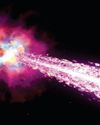
Q&A WITH A GAMMA RAY SPECIALIST
In 2025, astronomers detected a blast from space that lasted seven hours. Now they're uncovering the strange processes behind the exceptional outburst
3 mins
February 2026
BBC Sky at Night Magazine
Astronomy Photographer of the Year
The world-leading astrophotography competition returns. Could your image take the top prize of £10,000?
2 mins
February 2026
BBC Sky at Night Magazine
MOONWATCH
February's top lunar feature to observe
2 mins
February 2026
BBC Sky at Night Magazine
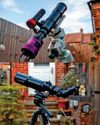
NOVAStar Scarlet A62Q 62mm f/8.4 quadruplet achromatic refractor
Well-built and capable, this beginner scope punches well above its bargain price
4 mins
February 2026
BBC Sky at Night Magazine
STAR OF THE MONTH
Rasalas, Leo the Lion's metal-rich crown
1 min
February 2026
BBC Sky at Night Magazine
Comet 24P/Schaumasse
Having reached perihelion on 8 January, comet 24P/ Schaumasse is now fading. Starting the month at a small-telescope-friendly mag. +10.5, it dims throughout February to below 12th magnitude.
1 min
February 2026
Translate
Change font size