
Mit Magzter GOLD unbegrenztes Potenzial nutzen
Erhalten Sie unbegrenzten Zugriff auf über 9.000 Zeitschriften, Zeitungen und Premium-Artikel für nur
Versuchen GOLD - Frei
Pythagoras (570-495 BCE)
Philosophy Now
|February/March 2024
Daniel Toré looks beyond the mathematician to the philosopher.
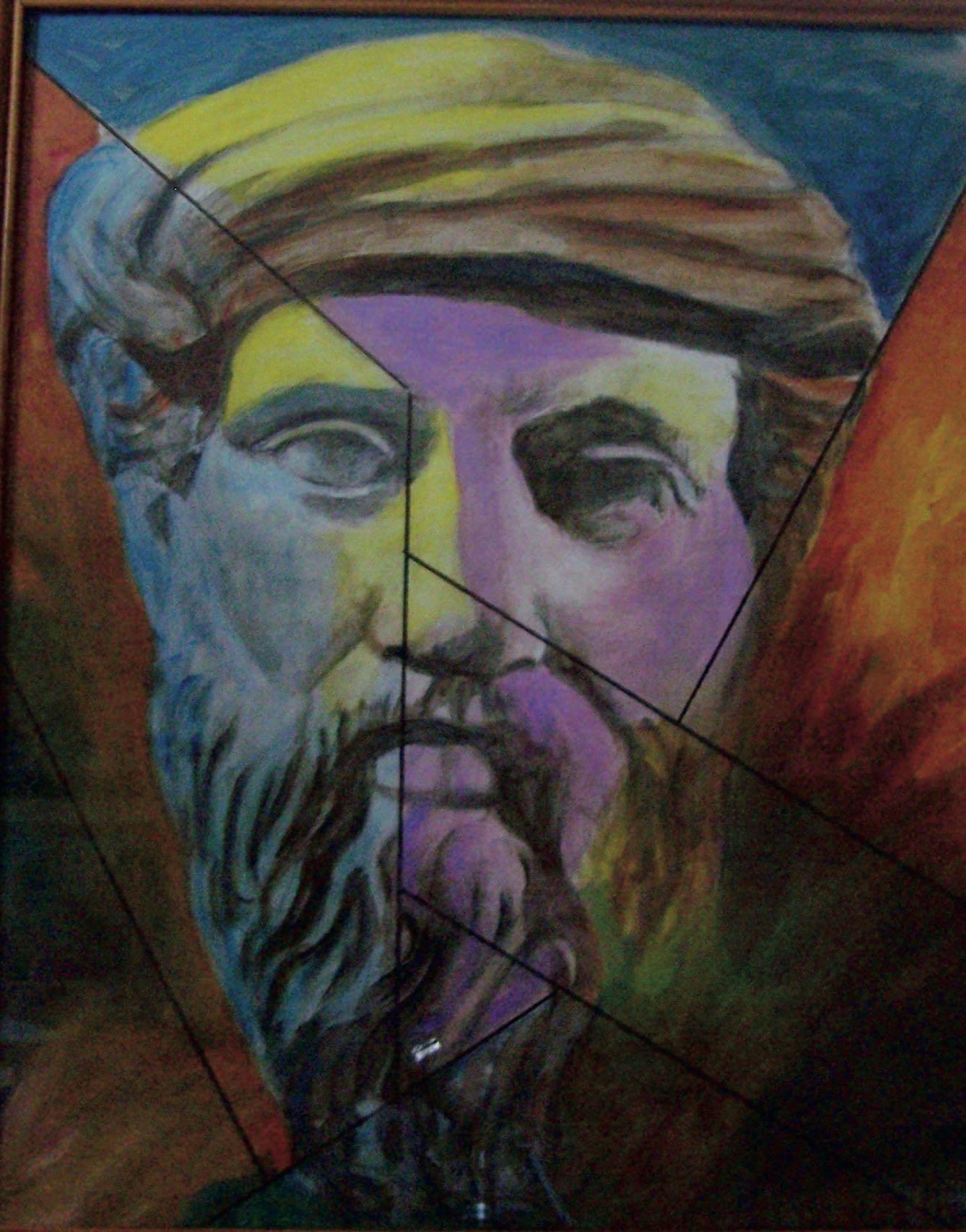
"Isn't he the guy that invented triangles?" - Student of mine, 2023
Pythagoras of Samos is, without dispute, one of the towering figures of ancient philosophy. Any first-time reader of classical philosophy will inevitably be welcomed by the Big Three: Socrates, Plato, and Aristotle, and before leaving, they may give a polite glance at the Presocratics, before never looking back. However, in that over-the-shoulder moment, they will see some of the most intriguing and unique thinkers philosophy has to offer: Anaximander, Heraclitus, Parmenides, and amongst their number, the only deer in the herd with horns: Pythagoras. Considered more than merely human by some of his followers, Plato described him as 'a semi-divine master'. Or to quote Anthony Kenny, he is “honoured in antiquity as the first to bring philosophy to the Greek world...” (An Illustrated Brief History of Western Philosophy, 1998, p.1). Pythagoras also holds the VIP distinction of being a name recognised even by non-philosophers. However, even historians of philosophy might have a hard time describing his philosophical work, without just simply recalling how he was an influence on Plato. Still, it cannot be denied that the ripples created by this obscure character roughly 2,500 years ago are still moving today - although he himself is still a mystery.
How can somebody be that famous, and yet still unknown? That influential, and yet still ignored?
Simply put: just who exactly was Pythagoras?
Simply answered: we don't really know. In terms of both his work and biography, it's difficult to tell what can be accurately attributed to him and what's just a product of his fame.

Diese Geschichte stammt aus der February/March 2024-Ausgabe von Philosophy Now.
Abonnieren Sie Magzter GOLD, um auf Tausende kuratierter Premium-Geschichten und über 9.000 Zeitschriften und Zeitungen zuzugreifen.
Sie sind bereits Abonnent? Anmelden
WEITERE GESCHICHTEN VON Philosophy Now
Philosophy Now
Bilbo Theorizes About Wellbeing
Eric Comerford overhears Bilbo and Gandalf discussing happiness.

9 mins
December 2025 / January 2026

Philosophy Now
What Women?
Marcia Yudkin remembers almost choking at Cornell
11 mins
December 2025 / January 2026
Philosophy Now
Islamic Philosophers On Tyranny
Amir Ali Maleki looks at tyranny from an Islamic perspective.
4 mins
December 2025 / January 2026

Philosophy Now
Peter Singer
The controversial Australian philosopher defends the right to choose to die on utilitarian grounds
5 mins
December 2025 / January 2026

Philosophy Now
Another Conversation with Martin Heidegger?
Raymond Tallis talks about communication problems.
7 mins
December 2025 / January 2026

Philosophy Now
Letters
When inspiration strikes, don't bottle it up. Email me at rick.lewis@philosophynow.org Keep them short and keep them coming!
17 mins
December 2025 / January 2026
Philosophy Now
The Philosophy of William Blake
Mark Vernon looks at the imaginative thinking of an imaginative artist.
9 mins
December 2025 / January 2026

Philosophy Now
Philosophical Haiku
Peering through life’s lens God in nature is deduced: The joy of being.
1 mins
December 2025 / January 2026

Philosophy Now
Philosophy Shorts
More songs about Buildings and Food' was the title of a 1978 album by the rock band Talking Heads. It was about all the things rock stars normally don't sing about. Pop songs are usually about variations on the theme of love; tracks like Rose Royce's 1976 hit 'Car Wash' are the exception. Philosophers, likewise, tend to have a narrow focus on epistemology, metaphysics and trifles like the meaning of life. But occasionally great minds stray from their turf and write about other matters, for example buildings (Martin Heidegger), food (Hobbes), tomato juice (Robert Nozick), and the weather (Lucretius and Aristotle). This series of Shorts is about these unfamiliar themes; about the things philosophers also write about.
2 mins
December 2025 / January 2026

Philosophy Now
Hedonic Treadmills in the Vale of Tears
Michael Gracey looks at how philosophers have pursued happiness.
8 mins
December 2025 / January 2026
Listen
Translate
Change font size