Versuchen GOLD - Frei
DIGITAL HEALTHCARE: ARE THE MOST IN NEED BEING EXCLUDED?
BBC Science Focus
|March 2024
Tech is being used to make it easier for people to access healthcare services. But it's not working for everyone

From artificial intelligence algorithms that spot early cancers, to the 'doctor-in-your-pocket' smartphone video consultation, a string of next-generation healthcare technologies are being unveiled at a rapid rate.
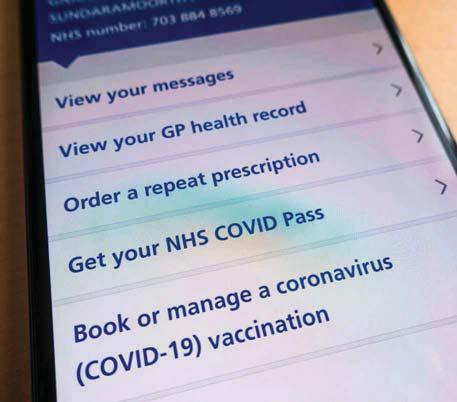
For instance, as recently announced in England, users of the NHS app can now collect medications from a pharmacy without having to visit a healthcare centre - the usual paper slip given by doctors being replaced by an in-app barcode.
Such innovations have brought huge benefits to millions of patients. But the advantages of such digitisation are not distributed equally. According to a 2023 Ofcom report, one household in 13 has no access to the internet and a similar proportion has no home computer. Yet even within connected households, the so-called 'digital skills gap' means many people could still struggle.
Imagine this typical case. Dorothy and Bill are retired factory workers in their mid-70s. They have a home computer that plugs into the TV, a machine that can (just about) send emails to their daughter who lives abroad.
It's clunky to use, but they love to see news of the family coming through on the TV screen. Websites take a long time to load, however, so they don't use the computer for much else. Bill has a smartphone and receives photos of the grandchildren on an instant messenger app, but he hasn't worked out how to send any back.

Diese Geschichte stammt aus der March 2024-Ausgabe von BBC Science Focus.
Abonnieren Sie Magzter GOLD, um auf Tausende kuratierter Premium-Geschichten und über 9.000 Zeitschriften und Zeitungen zuzugreifen.
Sie sind bereits Abonnent? Anmelden
WEITERE GESCHICHTEN VON BBC Science Focus
BBC Science Focus
HOW FISH COULD SAVE MILLIONS OF PEOPLE'S SIGHT
There's nowhere near enough donors to meet the demand for corneal transplants. A pioneering treatment that relies on fish scales could change that

3 mins
May 2026
BBC Science Focus
Your Wi-Fi is lying to you
Wi-Fi 7's giant speed claims might look impressive, but the realities of our homes – and the laws of physics – mean that real-world performance will never get close
6 mins
May 2026
BBC Science Focus
WHICH ANIMAL IS MOST LIKELY TO ESCAPE FROM THE ZOO?
Have you heard the one about the monkey and the Yorkshire pudding?
2 mins
May 2026
BBC Science Focus
THE BLACK SERVAL
The black serval (Leptailurus serval) is an unusual, melanistic version of the African serval, a medium-sized wild cat that's native to Africa.
2 mins
May 2026
BBC Science Focus
Cryosleep vs hibernation: What's the difference?
When hibernating animals, such as hedgehogs and dormice, disappear for winter, they don't freeze like the Siberian salamander.
1 mins
May 2026
BBC Science Focus
Space brain
The greatest names in science are often said to be 'big-brained', but this cosmic wonder puts them all to shame. Nebula PMR 1 - otherwise known as the 'Exposed Cranium' nebula for its distinctive shape - measures around 3.2 light-years across.
1 min
May 2026
BBC Science Focus
Your most draining relationships are taking years off your life, study suggests
Difficult people don't just zap your energy - they may also accelerate your biological ageing
4 mins
May 2026

BBC Science Focus
DOES EARTH HAVE A HEARTBEAT?
Move over, Ringo Starr.
1 mins
May 2026
BBC Science Focus
WEIGHT-LOSS DRUGS FOR ALL?
The obesity crisis is ruining lives and costing governments trillions. But some healthcare experts think there's now a radical solution: roll out GLP-1 jabs to everyone who needs them for free. Could it work?
9 mins
May 2026
BBC Science Focus
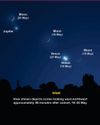
HOW TO SEE VENUS ON APPROACH TO JUPITER
Venus has been slowly moving away from the Sun's glare over the past few weeks, heading into the evening twilight after sunset.
1 mins
May 2026
Listen
Translate
Change font size