Try GOLD - Free
KOSHER SALT IS ACTUALLY JUST BIG SALT
The Atlantic
|April 2025
How did it become so popular?
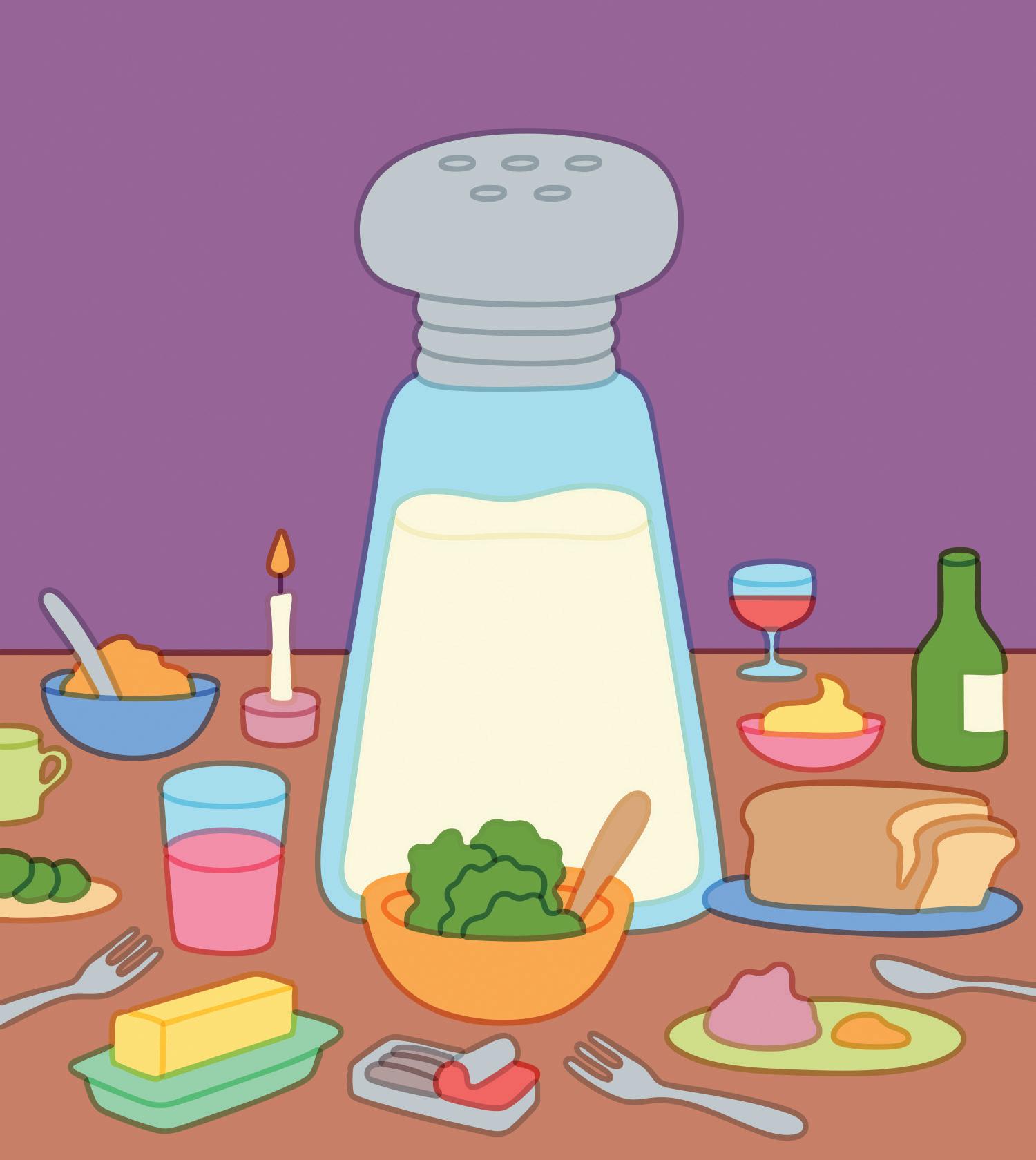
When I was a child, in the 1990s, there was only one kind of salt; we called it “salt.” It came in a blue cylindrical container—you probably know the one—and we dumped it into pasta water and decanted it into shakers. I didn’t know that any other kind existed, and the women who taught me to cook didn’t seem to, either: Joy of Cooking, Mastering the Art of French Cooking, and Moosewood Cookbook all call, simply, for “salt” in their recipes.
But about a decade ago, I started buying coarse kosher salt instead of the fine, uniform, iodized table salt I’d grown up with. I do not remember why. As my friends grew up and started building their own pantries, many of them also made kosher salt their default. These days, The New York Times calls explicitly for kosher salt in nearly all of its recipes, as does Bon Appétit. Two of the most influential cookbooks of the past decade, The Food Lab, by J. Kenji López-Alt, and Salt, Fat, Acid, Heat, by Samin Nosrat, both devote paragraphs to the benefits of kosher over table salt. It is now “the lingua franca of restaurant kitchens”—as Mark Bitterman, who has written four books about cooking with salt, put it—and a cheffy shibboleth in home kitchens, too. You can find Diamond Crystal, the coolest brand, in the background of the famously verisimilitudinous restaurant show The Bear, and on cooking influencers’ beautiful countertops; in 2023, when Trader Joe’s started carrying it, chef Reddit exploded in enthusiastic all caps.
Pretty much everyone eats salt, every day, and it’s different now. Yet even kosher salt’s most fervent converts may not entirely understand how it’s different.

This story is from the April 2025 edition of The Atlantic.
Subscribe to Magzter GOLD to access thousands of curated premium stories, and 10,000+ magazines and newspapers.
Already a subscriber? Sign In
MORE STORIES FROM The Atlantic
The Atlantic
You Had to Be There
An emerging field of history asks if we can ever really understand how our forebears experienced love, anger, fear, and sorrow.

23 mins
January 2026

The Atlantic
By the Horns
The week before the biggest bullfight of her career, in Cádiz, Spain, this past July, 24-year-old Miriam Cabas posted a carefully produced video on Instagram.
1 mins
January 2026

The Atlantic
The New German War Machine
After World War II, Germany embraced pacifism as a form of atonement. Now the country is arming itself again.
18 mins
January 2026
The Atlantic
The Eloquence
The prime minister was watching a disaster movie when we found him.
4 mins
January 2026

The Atlantic
What's for Dinner, Mom?
The women who want to change the way America eats
12 mins
January 2026

The Atlantic
How Terror Works
A 1947 German novel explores the sometimes corrosive, sometimes energizing nature of fear.
8 mins
January 2026

The Atlantic
Yesterday's Idea of a Modern Man
Sam Shepard, a self-made cowboy, was also a poet of masculine angst.
7 mins
January 2026

The Atlantic
ACCOMMODATION NATION
America's colleges have an extra-time-on-tests problem.
11 mins
January 2026

The Atlantic
Respect the Drummer
A new history of rock, told through its overlooked heroes
5 mins
January 2026

The Atlantic
THE MOST POWERFUL MAN IN SCIENCE
WHY IS ROBERT F. KENNEDY JR. SO CONVINCED HE'S RIGHT?
42 mins
January 2026
Listen
Translate
Change font size