
Vuélvete ilimitado con Magzter GOLD
Obtenga acceso ilimitado a más de 9000 revistas, periódicos e historias Premium por solo
Intentar ORO - Gratis
How Many Stocks Should You Own?
Kiplinger's Personal Finance
|July 2022
With this year's rough ride, you don't need reminding that stocks are volatile.
-

Their prices bounce up and down, sometimes in extreme ways. The U.S. market as a whole has produced average annual returns of about 10% over the past century, but it doesn't go up 10% every year. In roughly one out of four years, it declines-sometimes a lot.
If stocks returned the same amount every year, then, like bonds, they would yield gains of only a few percentage points. High returns are the reward you get for enduring the fear (often the sheer terror) of watching pieces of your nest egg disappear into thin air. People like me tell you to hold on. History shows that markets bounce back. But enduring sickening declines isn't easy.
The best way to smooth the ride is through diversification. I'm not talking here about portfolio diversification-the allocation of your assets to stocks, bonds, cash and maybe more. Portfolio diversification is a necessity but a subject for another day. The topic today is diversification in the part of your portfolio that consists of stocks and stock funds.
The value of diversification seems awfully obvious. Morningstar data in June 2021 showed that about 39% of all U.S. stocks had ever suffered three-month losses of 50% or more, but fewer than 1% of diversified stock funds had incurred losses that severe.
Consider the sad tale of Enron, once a high-flying Houston energy company. When it collapsed in 2001, thousands of investors, including Enron employees whose retirement plans were heavily invested in the stock, suffered huge losses. Enron was the seventh-largest company in the Fortune 500, but in 2000 its market capitalization (price times shares outstanding) represented less than 1% of the value of the S&P 500 index. If you had put $10,000 in an S&P 500 index fund and all the other stocks maintained their prices, then Enron's trip to zero would have cost you just $100.
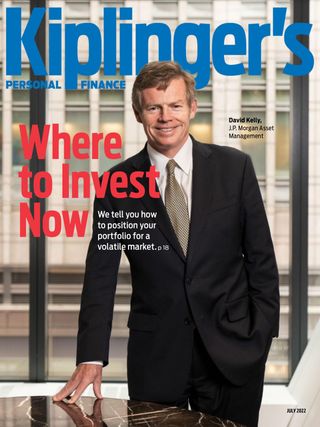

Esta historia es de la edición July 2022 de Kiplinger's Personal Finance.
Suscríbete a Magzter GOLD para acceder a miles de historias premium seleccionadas y a más de 9000 revistas y periódicos.
¿Ya eres suscriptor? Iniciar sesión
MÁS HISTORIAS DE Kiplinger's Personal Finance

Kiplinger's Personal Finance
A TAX BREAK FOR MEDICAL EXPENSES
The editor of The Kiplinger Tax Letter responds to readers asking about health care write-offs.

2 mins
February 2026

Kiplinger's Personal Finance
Volunteering to Help Others at Tax Time
Through an IRS program, qualifying individuals can get free assistance with their tax returns.
2 mins
February 2026

Kiplinger's Personal Finance
CATCH-UP SAVERS FACE A TAXING 401(K) CHANGE
Under new rules, you may lose an up-front deduction but gain tax-free income once you retire.
2 mins
February 2026

Kiplinger's Personal Finance
The Case for Emerging Markets
Economic growth, earnings acceleration and bargain prices favor EM stocks.
3 mins
February 2026
Kiplinger's Personal Finance
THE NEW RULES OF RETIREMENT
Popular guidelines about how to save, invest and spend need to be updated and personalized to ensure you'll never run out of money.
15 mins
February 2026

Kiplinger's Personal Finance
Smart Ways to Share a Credit Card
Adding an authorized user has its benefits, but make sure you set the ground rules.
2 mins
February 2026
Kiplinger's Personal Finance
THE BEST AFFORDABLE FITNESS TRACKERS
These devices monitor your exercise, sleep patterns and more- and they don't cost an arm and a leg.
4 mins
February 2026
Kiplinger's Personal Finance
A VALUE FOCUS CLIPS RETURNS
THERE'S more to Mairs & Power Growth than its name implies. The managers favor firms with above-average earnings growth. But a durable, competitive position in their market- “a number-one or number-two position and gaining share,” says comanager Andrew Adams—and a reasonable stock price matter even more.
1 mins
February 2026

Kiplinger's Personal Finance
Look Beyond the Tech Giants
I am hooked on a podcast called Acquired, in which two smart guys do a deep analytical dive, typically lasting three or four hours, on a single successful company such as Coca-Cola or Trader Joe's. Ben Gilbert and David Rosenthal, a pair of venture capitalists, are especially adept at explaining what's behind the success of such tech giants as Alphabet (symbol GOOGL, $320), the former Google, which recently merited 11 hours and 42 minutes of dialogue all by itself.
4 mins
February 2026

Kiplinger's Personal Finance
How to Pay for Long-Term Care
A couple of months ago, I wrote that many Americans significantly underestimate how long they could live in retirement (see “Living in Retirement,” Dec.). With the possibility of a 30-year retirement becoming more common, retirees need to plan for so-called longevity risk to make sure their assets last a lifetime. And the longer you live, the more likely you'll need to pay for some form of long-term care. That can range from assistance with activities of daily living to in-home care to a nursing home stay.
2 mins
February 2026
Translate
Change font size