Intentar ORO - Gratis
Cultural Colonialism & Aesthetic Injustice
Philosophy Now
|April/May 2022
Gustavo Dalaqua on decolonizing minds.
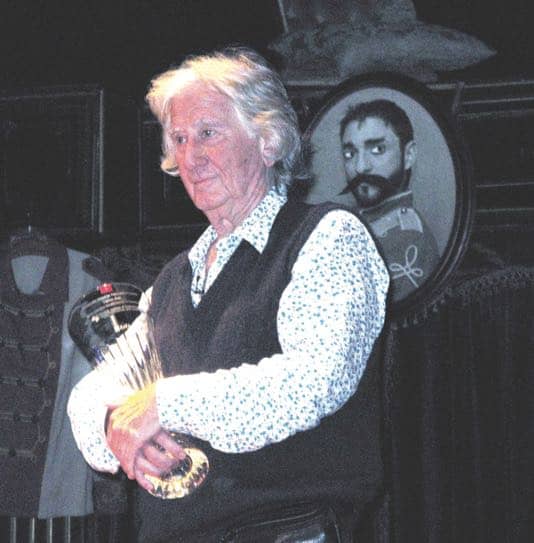
My first sight of an openly gay man was on television. In my early teens back in the late Nineties, almost every Saturday evening, my family and I would watch A praça é nossa, one of the most famous comedy shows in Brazil. Vera Verão, played by Jorge Lafond (1952-2003), a black gay man, was one of our favorite characters. Her sketches varied considerably. Sometimes, her race was the main reason for mockery. In other sketches, what led viewers to chuckle was Vera Verão’s fights with the women whose men she wanted to have. Yet despite their differences, a common event present in all sketches that Vera Verão played is that someone with disgust calls Lafond ‘bicha’ (‘faggot’). This was the moment my parents, my sisters, and I laughed the most: the moment when Lafond was humiliated for being gay. It is not surprising, then, that the Grupo de Gays Negros da Bahia (Group of Black Gay Men from Bahia) protested when the government announced that Lafond was chosen to advertise a public campaign against STDs among homosexuals. According to them, Lafond should not have been chosen because his work as a performer disseminated racism and homophobia.
What does Vera Verão have to do with ‘cultural colonialism and aesthetic injustice’? To answer this question, it is necessary to first explain what each term means.
Cultural Colonialism & Aesthetic Injustice

Esta historia es de la edición April/May 2022 de Philosophy Now.
Suscríbete a Magzter GOLD para acceder a miles de historias premium seleccionadas y a más de 9000 revistas y periódicos.
¿Ya eres suscriptor? Iniciar sesión
MÁS HISTORIAS DE Philosophy Now

Philosophy Now
Bilbo Theorizes About Wellbeing
Eric Comerford overhears Bilbo and Gandalf discussing happiness.

9 mins
December 2025 / January 2026

Philosophy Now
What Women?
Marcia Yudkin remembers almost choking at Cornell
11 mins
December 2025 / January 2026

Philosophy Now
Islamic Philosophers On Tyranny
Amir Ali Maleki looks at tyranny from an Islamic perspective.
4 mins
December 2025 / January 2026

Philosophy Now
Peter Singer
The controversial Australian philosopher defends the right to choose to die on utilitarian grounds
5 mins
December 2025 / January 2026

Philosophy Now
Another Conversation with Martin Heidegger?
Raymond Tallis talks about communication problems.
7 mins
December 2025 / January 2026

Philosophy Now
Letters
When inspiration strikes, don't bottle it up. Email me at rick.lewis@philosophynow.org Keep them short and keep them coming!
17 mins
December 2025 / January 2026

Philosophy Now
The Philosophy of William Blake
Mark Vernon looks at the imaginative thinking of an imaginative artist.
9 mins
December 2025 / January 2026

Philosophy Now
Philosophical Haiku
Peering through life’s lens God in nature is deduced: The joy of being.
1 mins
December 2025 / January 2026

Philosophy Now
Philosophy Shorts
More songs about Buildings and Food' was the title of a 1978 album by the rock band Talking Heads. It was about all the things rock stars normally don't sing about. Pop songs are usually about variations on the theme of love; tracks like Rose Royce's 1976 hit 'Car Wash' are the exception. Philosophers, likewise, tend to have a narrow focus on epistemology, metaphysics and trifles like the meaning of life. But occasionally great minds stray from their turf and write about other matters, for example buildings (Martin Heidegger), food (Hobbes), tomato juice (Robert Nozick), and the weather (Lucretius and Aristotle). This series of Shorts is about these unfamiliar themes; about the things philosophers also write about.
2 mins
December 2025 / January 2026

Philosophy Now
Hedonic Treadmills in the Vale of Tears
Michael Gracey looks at how philosophers have pursued happiness.
8 mins
December 2025 / January 2026
Translate
Change font size