Intentar ORO - Gratis
Care For Nature - To Stop Future Pandemics
TerraGreen
|March 2022
In this article, Monika Chhimwal says not only is the coronavirus existent in nature, but there are many more unknown and highly dangerous microbes that live peacefully in their niches, such as those found beneath glaciers and vast ice sheets in the polar area, as well as those found in the deep oceans. They will not come out unless their ecology undergoes significant changes. But, with the looming danger of climate change and global warming due to population growth and urbanization, these viruses could come into contact with humans and the results could be disastrous.

The extraordinary influence we humans are having on the globe is not only putting the environment in jeopardy, but also our own lives. According to scientists, our detrimental relationship with the environment puts us in danger of pandemic sickness. Nature loves us, but our irresponsible behaviour has enraged her, and the result is a pandemic that began in 2020 and continues for third year in a row.
We have seen an increase in pandemic emergence; we have had swine flu, SARS, and Ebola. When we looked back at every emerging disease and asked where it came from on the planet, we discovered that we’re responsible for every single pandemic and its human impact on the environment, which drives emerging diseases. Animals, like humans, have a variety of viruses that circulate throughout their systems, and one of the most obvious ways that make it more possible for a virus to leap is by coming in contact with these directly.
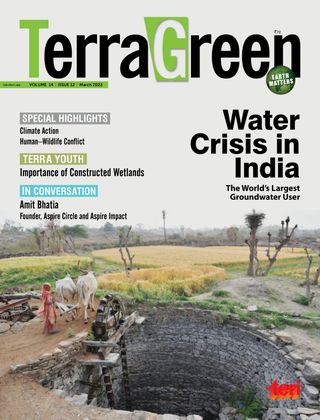

Esta historia es de la edición March 2022 de TerraGreen.
Suscríbete a Magzter GOLD para acceder a miles de historias premium seleccionadas y a más de 9000 revistas y periódicos.
¿Ya eres suscriptor? Iniciar sesión
MÁS HISTORIAS DE TerraGreen

TerraGreen
Pollution Rises in Bengaluru Lakes Post Monsoon: Study
A new lake health study, covering three major water bodies in Bengaluru-Ulsoor, Doddabommasandra and Shivapura-has revealed dangerous levels of pollution and a clear link between rapid urbanization and deteriorating water quality.

1 min
November 2025
TerraGreen
Seven-month Fishing Ban Along Three River Mouths in Odisha for Olive Ridley Nesting
In a bid to ensure safe and harmonious mass nesting of Olive Ridley turtles, Odisha has imposed a seven-month fishing ban from November, 2025 to May 31, 2026 at three river mouths along the coastline.
1 min
November 2025

TerraGreen
A New Track Record
Formula 1, long defined by speed, spectacle, and cutting-edge engineering, is now racing towards a different kind of victory—sustainability.
4 mins
November 2025

TerraGreen
Extreme Floods are Slashing Global Rice Yields Faster than Expected
WMO Report Highlights Increasingly Erratic Water Cycle
3 mins
November 2025

TerraGreen
Renewable Energy Adoption and Corporate Sustainability
Future of Responsible Enterprise
5 mins
November 2025
TerraGreen
Nature-based Solutions for Delhi's Pollution Crisis
Delhi's annual struggle with toxic air has become an unfortunate ritual. Each winter, the Air Quality Index (AQI) spikes to hazardous levels often above 300, amid school shut downs, masks returning, and public outrage-only to fade until the next smog season.
1 min
November 2025

TerraGreen
Your Pumpkin Might Be Hiding a Toxic Secret
Pumpkins, squash, zucchini, and other members of the gourd family have a surprising trait-they can take up pollutants from the soil and store them in their edible parts.
1 min
November 2025

TerraGreen
Echoes of Love
Why the Forest Can't Live Without Its Hornbills
4 mins
November 2025

TerraGreen
Forests on the Fence
Can Uttarakhand's Van Panchayats Take Root Again?
6 mins
November 2025

TerraGreen
Sacred Tank, Sinking City The Urban Threat to 'Mini-Kashi'
Nestled amid the urban sprawl of Malabar Hill, Mumbai's Banganga Tank stands as a living relic where myth, memory, and modernity intersect.
4 mins
November 2025
Translate
Change font size