
Vuélvete ilimitado con Magzter GOLD
Obtenga acceso ilimitado a más de 9000 revistas, periódicos e historias Premium por solo
Intentar ORO - Gratis
E-Waste Management In India - Challenges And Opportunities
TerraGreen
|November 2019
Growth in the IT and communication sectors has enhanced the usage of the electronic equipment exponentially. Faster upgradation of electronic product is forcing consumers to discard old electronic products very quickly, which in turn accumulates huge e-waste to the solid waste stream. In this article, Akanksha Manish and Dr Paromita Chakraborty discuss the growing problem of e-waste in India and globally while throwing light on the impact of recycling e-waste in the developing world. They succinctly dwell on the challenges and opportunities of e-waste management in India.
-

"E-waste poses a huge risk to humans, animals, and the environment. The presence of heavy metals and highly toxic substances such as mercury, lead, beryllium, and cadmium pose a significant threat to the environment even in minute quantities."
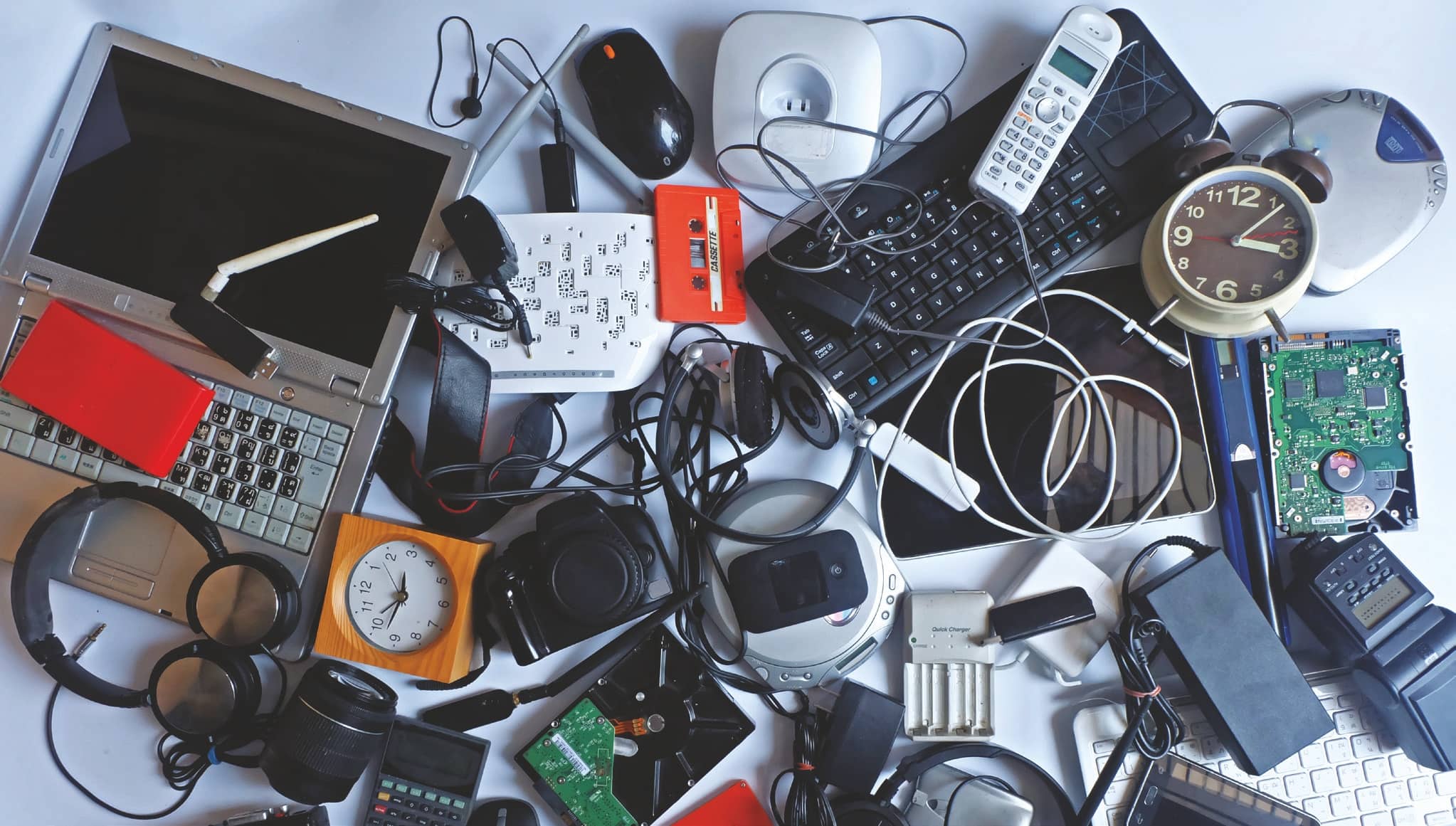
Electronic waste or e-waste is generated when electronic and electrical equipment become unfit for their originally intended use or have crossed the expiry date. Computers, servers, mainframes, monitors, compact discs (CDs), printers, scanners, copiers, calculators, fax machines, battery cells, cellular phones, transceivers, TVs, iPods, medical apparatus, washing machines, refrigerators, and air conditioners are examples of e-waste (when unfit for use). These electronic equipments get fast replaced with newer models due to the rapid technology advancements and production of newer electronic equipment. This has led to an exponential increase in e-waste generation. People tend to switch over to the newer models and the life of products has also decreased.
E-waste typically consists of metals, plastics, cathode ray tubes (CRTs), printed circuit boards, cables, and so on. Valuable metals such as copper, silver, gold, and platinum could be recovered from e-wastes, if they are scientifically processed. The presence of toxic substances such as liquid crystal, lithium, mercury, nickel, polychlorinated biphenyls (PCBs), selenium, arsenic, barium, brominated flame retardants, cadmium, chrome, cobalt, copper, and lead, makes it very hazardous, if e-waste is dismantled and processed in a crude manner with rudimentary techniques. E-waste poses a huge risk to humans, animals, and the environment. The presence of heavy metals and highly toxic substances such as mercury, lead, beryllium, and cadmium pose a significant threat to the environment even in minute quantities.

Esta historia es de la edición November 2019 de TerraGreen.
Suscríbete a Magzter GOLD para acceder a miles de historias premium seleccionadas y a más de 9000 revistas y periódicos.
¿Ya eres suscriptor? Iniciar sesión
MÁS HISTORIAS DE TerraGreen
TerraGreen
Motor Efficiency
The Silent Catalyst of India's Green Industrial Revolution

4 mins
January 2026

TerraGreen
Beauty That Betrays!
The Quiet Invasion of An Ornamental Plant
3 mins
January 2026

TerraGreen
Farming Innovation Addresses Food Shortages
Also Halves Methane Emissions
4 mins
January 2026

TerraGreen
Aravalli on the Edge
Saving India's Ancient Green Shield from Collapse
3 mins
January 2026

TerraGreen
From Orchard to Table
Apple Picking, Family Time, and Fall Colours
4 mins
January 2026

TerraGreen
Coral Reefs Could Feed Millions
If We Let Them Rebuild
3 mins
January 2026

TerraGreen
Resting on Deodars
How Fallen Trees are Being Reimagined as Urban Assets in Shimla
3 mins
January 2026

TerraGreen
India's Clean-Air Innovation at Risk
Nationwide Assessment by WeNaturalists
2 mins
January 2026

TerraGreen
CNFF-25
Highlights Environmental Concern Amid India's Cultural Heritage
3 mins
January 2026

TerraGreen
Green Farming through Circular Economy
Sustainable Practices for Waste Reduction
8 mins
January 2026
Translate
Change font size