
Vuélvete ilimitado con Magzter GOLD
Obtenga acceso ilimitado a más de 9000 revistas, periódicos e historias Premium por solo
Intentar ORO - Gratis
From Well to Wheels
Successful Farming
|January 2025
A look at ethanol's life cycle emissions.
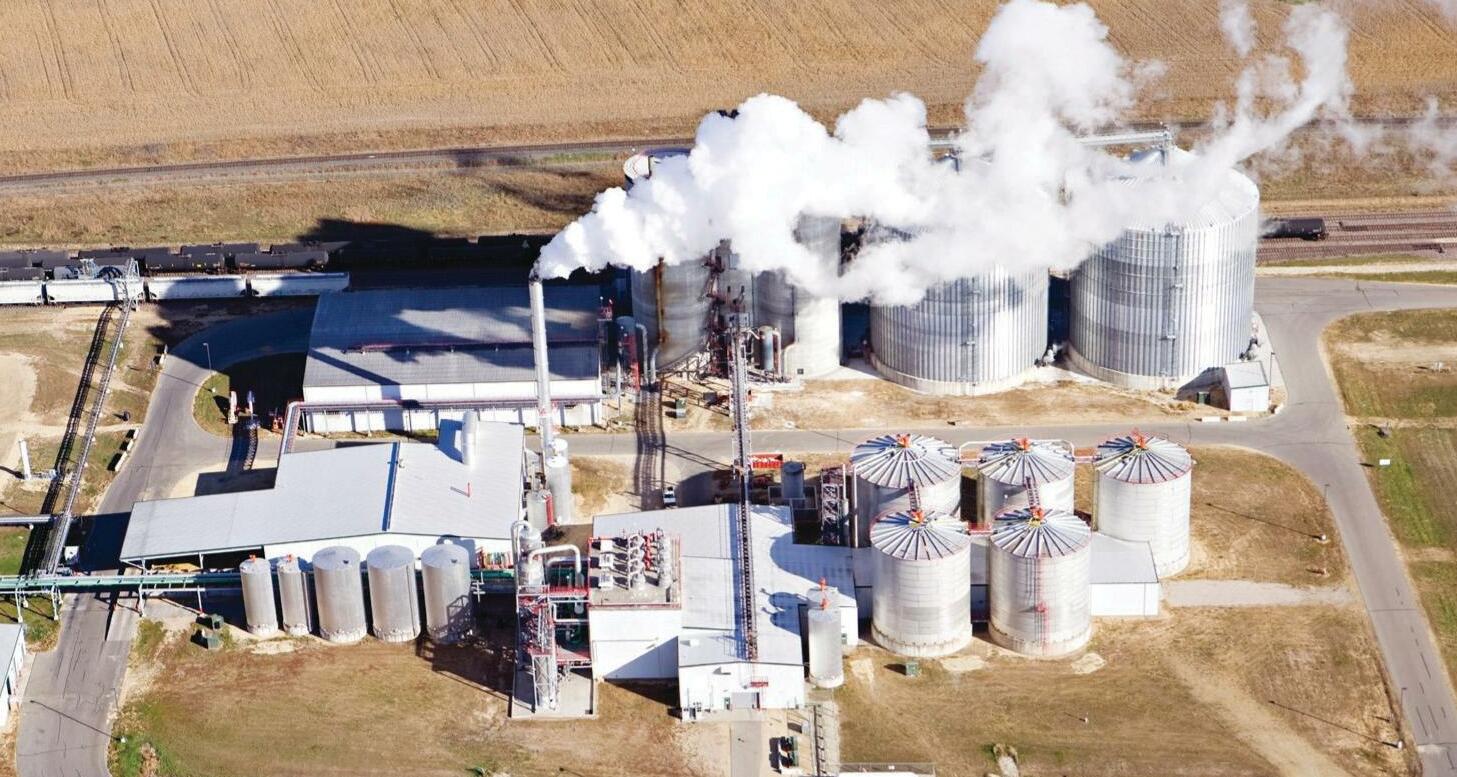
Corn ethanol has been the standard for biofuels in the United States since the Renewable Fuel Standard (RFS) was introduced in 2005. Carbon pipelines have been positioned as the next step the ethanol industry needs to sequester carbon, receive tax credits, and be poised for growth, including in new areas such as sustainable aviation fuel. In our series on carbon pipelines, we have covered how companies are working to establish pipelines across the Midwest. We also looked at how farmers can navigate eminent domain use when pipeline construction comes closer to reality.
For this story, we set out to directly compare the life cycle of greenhouse gas (GHG) emissions — from well to wheels — of ethanol and gasoline, and how carbon pipelines factor into the future of ethanol as a viable, low-emission fuel. This turned out to be more difficult than expected. Few recent independent studies have been conducted removed from the goal of adopting ethanol as a clean energy source in the U.S. There are so many different approaches to measure well-to-wheel emissions, it's almost impossible to find an agreed-upon carbon intensity (CI) score among various studies and stakeholders. The U.S. government uses the Department of Energy's Greenhouse Gases, Regulated Emissions, and Energy Use in Technologies (GREET) model.
Mark Heckman is vice president of sales and marketing at Edeniq, Inc., a California-based biotechnology company, and formerly ethanol services director at EcoEngineers, an Iowa-based engineering consultant. “In the carbon world, people talk about system boundaries — the handoff of where emission measurement starts and when it stops,” Heckman said. “The GREET model is a quick tool that pulls all these emission factors into it, and uses the science that's coming out of the Department of Energy and Argonne National Laboratory to state acceptable practices or levels to use, if you take farm practices as a whole.”

Esta historia es de la edición January 2025 de Successful Farming.
Suscríbete a Magzter GOLD para acceder a miles de historias premium seleccionadas y a más de 9000 revistas y periódicos.
¿Ya eres suscriptor? Iniciar sesión
MÁS HISTORIAS DE Successful Farming

Successful Farming
When Fire Backfires
Controlled burns and field fires are part of farm life. But when flames or smoke drift beyond your fence line, you could be on the hook for major damages.

4 mins
March 2026
Successful Farming
Planter Calibration Sets Yield Potential
Preparing, calibrating, and verifying planter performance help ensure uniform emergence.
4 mins
March 2026
Successful Farming
all around THE FARM
I built this rolling cart out of two Harbor Freight scissor-lift transmission jacks.
1 mins
March 2026
Successful Farming
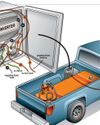
Pickup Box Power Utility Center
An easy-access portable energy source serves multiple functions.
1 mins
March 2026
Successful Farming
6 Tips for a Tighter Calving Window
Experts say a shorter calving season can optimize your barn’s productivity and your checkbook.
4 mins
March 2026

Successful Farming
Are We Too Young for an Estate Plan?
Problem: A young couple with children doesn’t have an estate plan, but their assets may change with future inheritance and acquisitions.
2 mins
March 2026
Successful Farming
New Holland PowerStar Electro Command Tractors
High-power machines feature utility size.
2 mins
March 2026
Successful Farming
Claas Jaguar 1000 Forage Harvester for Wide Crop Flow
The 1000 series is launching with four new models.
2 mins
March 2026

Successful Farming
Mark Crave
At this Wisconsin dairy, sustainability and family farming go hand in hand, from milking 2,300 cows to powering the farm with manure.
3 mins
March 2026
Successful Farming
Insuring Against Fire
Being fully covered in case of fire is critical after a disaster.
3 mins
March 2026
Listen
Translate
Change font size