Vuélvete ilimitado con Magzter GOLD
Obtenga acceso ilimitado a más de 9000 revistas, periódicos e historias Premium por solo
Intentar ORO - Gratis
"In an inclusive public culture, Blake's is a great, passionate human voice"
BBC History UK
|September 2023
PUTTING AWAY THE CAMPING GEAR AFTER THIS year's Glastonbury Festival, I found myself reflecting on the idea of alternative cultures. Since its origins, Glastonbury has always been political, and hosts a huge number of side discussions, concerts and seminars. It still gives money to Greenpeace, WaterAid and Oxfam, in addition to a host of local charities. As a festival of music and arts, it plays an important part in public discourse in these deeply polarised times - when, for instance, a journalist from The Times recently argued that the humanities are a waste of effort.

I was involved with festival founder Michael Eavis's Woods Stage this year, collaborating with West Country singer-songwriter Steve Knightley on a show exploring the Diggers, Peterloo, the Tolpuddle Martyrs and the Chartists. During it, Steve sang part of William Blake's poetry collection Songs of Innocence and Experience'. (Blake, we are told, often sang his own poems to friends.)
I like to see Blake (1757-1827) as a spiritual godfather of the Glastonbury Festival. Artist, illustrator, engraver, poet and activist, he conversed with spirits and saw angels in trees. Jacob Bronowski's 1965 book William Blake and the Age of Revolution sets Blake's voice in the context of the age of revolution. Often ridiculed, Blake sank into oblivion after his death, until the biography by Alexander Gilchrist, completed by his widow, Anne, and published in 1863. Since then, his status has only grown, confirmed by a stunning exhibition at Tate Britain not long ago.
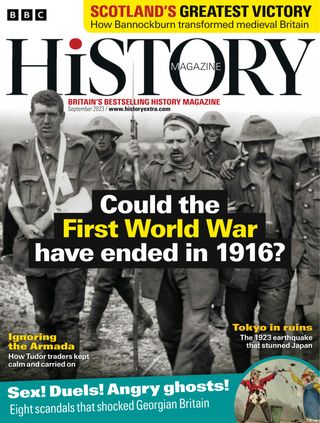

Esta historia es de la edición September 2023 de BBC History UK.
Suscríbete a Magzter GOLD para acceder a miles de historias premium seleccionadas y a más de 9000 revistas y periódicos.
¿Ya eres suscriptor? Iniciar sesión
MÁS HISTORIAS DE BBC History UK

History Extra
Personal stories
Few shows have enjoyed the longevity of Who Do You Think You Are? and it's easy to understand why it has endured.

1 min
June 2026
History Extra
Tidal change
Southern mythos notwithstanding, there exists no static, exceptional American South.
1 mins
June 2026

History Extra
Marriage story
Emily Howes on her novel about Catherine Dickens' relationship with her famous husband
1 mins
June 2026
History Extra
Sexual her-story
A witty, wide-ranging account of the myths and power structures behind female sexuality impresses SARAH JONES
2 mins
June 2026
History Extra
History man
According to Tom Hanks, during his childhood 'The War' was a recurring topic in the conversations of the adults around him.
1 min
June 2026
History Extra
How to be a master of disguise
10 do's and don'ts when attending a masquerade
2 mins
June 2026
History Extra
Age of indulgence
Our content producer Charlotte Vosper picks episodes of the HistoryExtra podcast about Georgian Britain
1 min
June 2026
History Extra
Gaffer tape
While Bobby Robson and Gareth Southgate both led England to World Cup semi-finals, Alf Ramsey remains the only manager to actually win the trophy.
1 mins
June 2026
History Extra
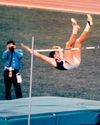
What's the origin of the Fosbury Flop?
Like the Salchow in ice skating, the Fosbury Flop is a sport technique that immortalises the name of its creator.
1 min
June 2026

History Extra
EXHIBITIONS
In 1776, the United States of America was born - heralded by the Declaration of Independence.
1 min
June 2026
Translate
Change font size