Intentar ORO - Gratis
Butterfly Ecology and Conservation - A Review
TerraGreen
|September 2022
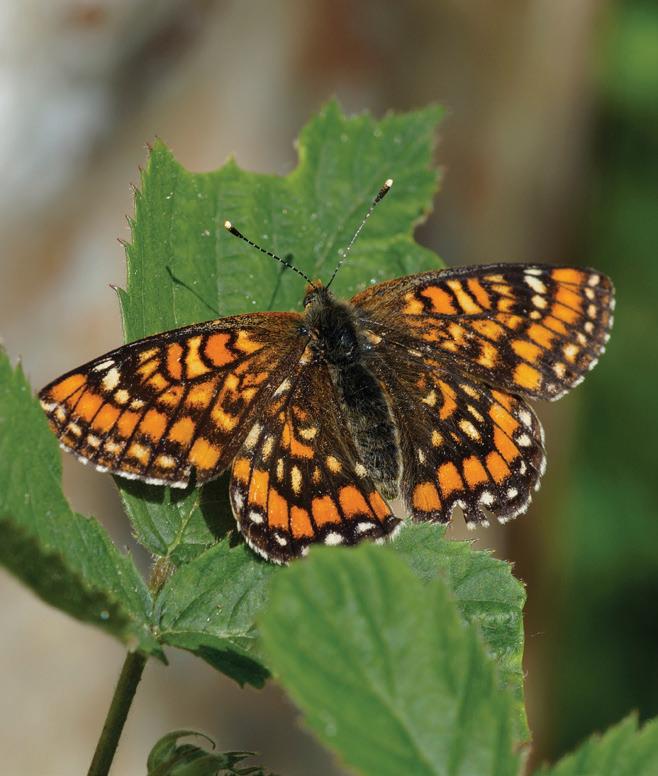
In this article, Onam Vaid throws light on the fact that butterflies play an important role in the ecosystem as they are pollinators and components of the food chain. Butterflies help scientists in ascertaining the health of environment. But, the research studies on butterflies are very limited. Further research should be conducted to obtain details and documentation on butterfly diversity for their conservation.
-

Butterflies are a beautiful creation of God. Butterflies are wonderfully diverse in shape, size, and colour. The life span of butterflies is approximately 12 months. They are found everywhere around the world and are also good indicators of climatic conditions, seasonal and ecological changes; butterflies can also serve in formulating strategies for conservation.
However, butterflies have largely been ignored by conservation biologists and policymakers as well. Hence, butterflies play a prominent role in ecosystem and co-evolutionary relationship between them and plants as well as their lives are interlinked. The research studies on butterflies are very limited. Further research could be conducted to obtain details and documentation on butterfly diversity for the conservation and butterfly parks.
India harboured total 1504 of butterfly species, which accounted for 8.74 per cent of the world's butterfly and 285 species found in Southern India. The Peninsular India and Western Ghats have 351 and 334 species, respectively.¹ Butterflies provide many vital and economically important services within terrestrial ecosystems such as nutrients recycling, soil formation, food resources, and pollination.
Butterflies are arguably the world's most popular insects but in many parts of the world butterfly faunas are suffering strong declines in diversity and abundance. Studies on butterfly ecology and behaviour have provided us with myriad insights into life histories, adaptation, defense, migration, evolution, and host-plant relationships. These studies have in turn provided information critical to the development of plans and strategies needed for conservation of threatened butterfly species.


Esta historia es de la edición September 2022 de TerraGreen.
Suscríbete a Magzter GOLD para acceder a miles de historias premium seleccionadas y a más de 9000 revistas y periódicos.
¿Ya eres suscriptor? Iniciar sesión
MÁS HISTORIAS DE TerraGreen

TerraGreen
Motor Efficiency
The Silent Catalyst of India's Green Industrial Revolution

4 mins
January 2026

TerraGreen
Beauty That Betrays!
The Quiet Invasion of An Ornamental Plant
3 mins
January 2026
TerraGreen
Farming Innovation Addresses Food Shortages
Also Halves Methane Emissions
4 mins
January 2026

TerraGreen
Aravalli on the Edge
Saving India's Ancient Green Shield from Collapse
3 mins
January 2026

TerraGreen
From Orchard to Table
Apple Picking, Family Time, and Fall Colours
4 mins
January 2026

TerraGreen
Coral Reefs Could Feed Millions
If We Let Them Rebuild
3 mins
January 2026

TerraGreen
Resting on Deodars
How Fallen Trees are Being Reimagined as Urban Assets in Shimla
3 mins
January 2026

TerraGreen
India's Clean-Air Innovation at Risk
Nationwide Assessment by WeNaturalists
2 mins
January 2026

TerraGreen
CNFF-25
Highlights Environmental Concern Amid India's Cultural Heritage
3 mins
January 2026

TerraGreen
Green Farming through Circular Economy
Sustainable Practices for Waste Reduction
8 mins
January 2026
Translate
Change font size