Intentar ORO - Gratis
Sacred Groves - Cultural and Environmental Significance
TerraGreen
|September 2022
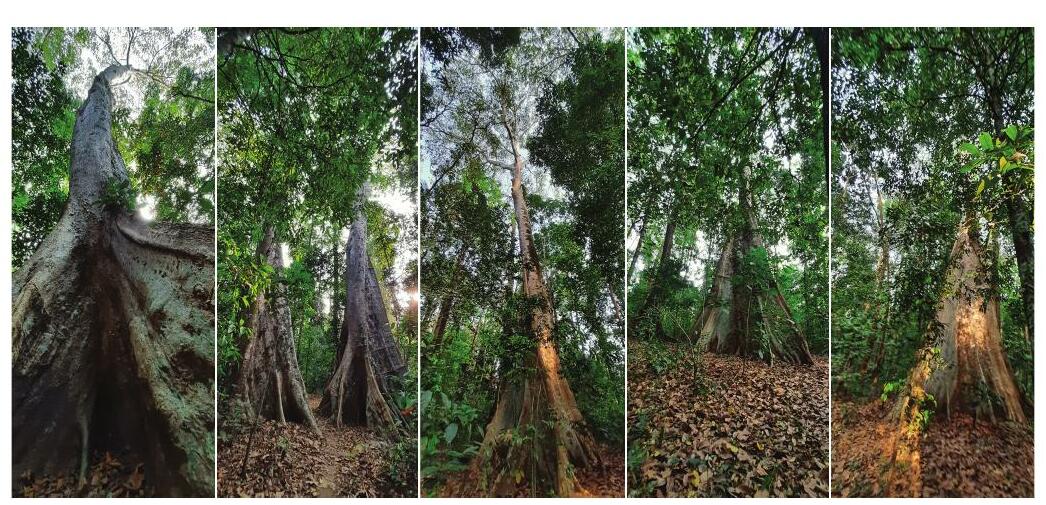
Sacred groves are forest fragments of varying sizes, which are protected, and which usually have a significant religious connotation for the protecting community. Hunting and logging are usually strictly prohibited within these areas. In this article, Shakti Bishnoi and A S Bishnoi discuss about the cultural and ecological significance of sacred groves in Indian culture.

Sacred groves are a piece of natural vegetation protected by various communities due to religious reasons. Local communities take responsibility to protect and nurture the area. It could be only a few trees or an entire forest. Sacred grove can be a forest of single native plant or variety of native plants of that region.
Traditionally, the sacred groves were a repository for various Ayurvedic medicines, fruits, deadwood, and honey. Every household knew the uses of herbs needed for basic diseases. Herbs were daily used in food for healthy life. The motive of our ancestors was to make ecological balance a way of life.
Being home to very diverse and strong religious practices, India contains many sacred groves. Before the Mughals and British rulers arrived, the entire country was covered by sacred groves. One of the many benefits is the ether content from the groves, which keeps our body, mind, and spirit healthy. As a result, our forefathers led a blissful life. Our values and principles were based on sustainable lifestyle. Our ancestors intelligently imbibed those practices as part of their daily chores.
Shipin is the largest deodar grove in Himachal Pradesh and contains trees that are hundreds of years old. Energy in sacred groves is 700 times more than a usual forest. The Military Institute of Technology (MILIT) planted the first sacred grove of Pune City at Naval jetty of MILIT. Under the able guidance of Mr Raghunath Dhole (The Tree man of India), MILIT was able to plant the sacred grove. Dhole gives saplings for free. He is working towards planting 75 sacred groves in our country this year, as we have completed 75 years of independence on August 15, 2022. It was his 33rd sacred grove plantation and he has planted 35 sacred groves so far.


Esta historia es de la edición September 2022 de TerraGreen.
Suscríbete a Magzter GOLD para acceder a miles de historias premium seleccionadas y a más de 9000 revistas y periódicos.
¿Ya eres suscriptor? Iniciar sesión
MÁS HISTORIAS DE TerraGreen

TerraGreen
Motor Efficiency
The Silent Catalyst of India's Green Industrial Revolution

4 mins
January 2026
TerraGreen
Beauty That Betrays!
The Quiet Invasion of An Ornamental Plant
3 mins
January 2026
TerraGreen
Farming Innovation Addresses Food Shortages
Also Halves Methane Emissions
4 mins
January 2026

TerraGreen
Aravalli on the Edge
Saving India's Ancient Green Shield from Collapse
3 mins
January 2026
TerraGreen
From Orchard to Table
Apple Picking, Family Time, and Fall Colours
4 mins
January 2026

TerraGreen
Coral Reefs Could Feed Millions
If We Let Them Rebuild
3 mins
January 2026

TerraGreen
Resting on Deodars
How Fallen Trees are Being Reimagined as Urban Assets in Shimla
3 mins
January 2026

TerraGreen
India's Clean-Air Innovation at Risk
Nationwide Assessment by WeNaturalists
2 mins
January 2026

TerraGreen
CNFF-25
Highlights Environmental Concern Amid India's Cultural Heritage
3 mins
January 2026
TerraGreen
Green Farming through Circular Economy
Sustainable Practices for Waste Reduction
8 mins
January 2026
Translate
Change font size