Intentar ORO - Gratis
Is creating a 'woolly mammoth mouse' a step too far for biotechnology?
BBC Science Focus
|March 2025
Are scientists so preoccupied with whether or not they could bring back mammoths, that they're not concerned with whether they should?
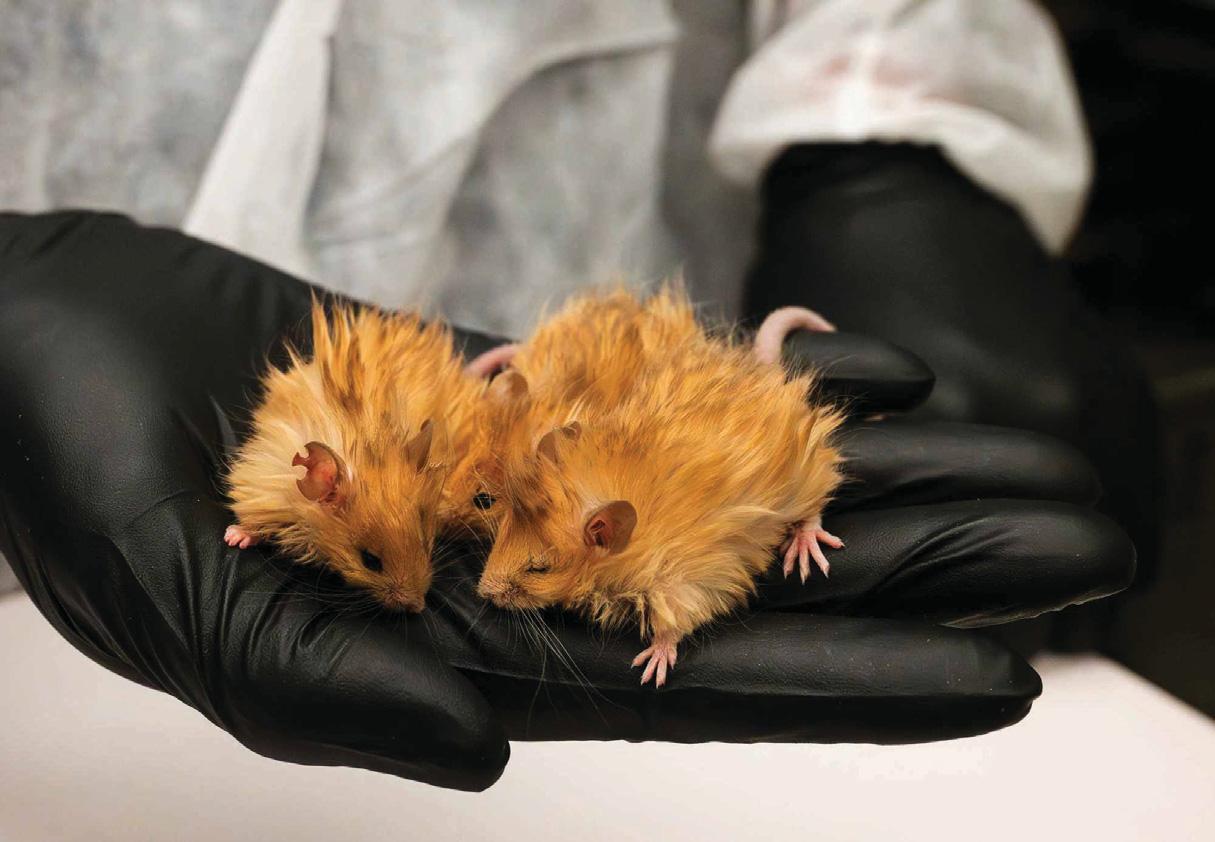
Colossal Biosciences, a US biotech start-up, has announced the birth of what it calls a “woolly mouse” – the world’s first animal genetically altered to express key genes from a woolly mammoth. The company says the luxuriously haired rodents are living proof that it’s making progress in its mission to resurrect the woolly mammoth from extinction within a matter of years.
To make the mice, scientists used the latest genetic technologies to introduce eight simultaneous edits to the genomes of laboratory mice. These include the addition of genes that cause its fur to grow up to three times longer than normal, and others that make the hairs wavy and golden. Other edits targeted genes associated with fat metabolism that are thought to have helped mammoths increase in size.
The mice are the result of years of painstaking work by scientists to reconstruct key parts of the mammoth genome. The last woolly mammoths are thought to have died around 3,000 years ago, and scientists have been piecing together bits of degraded mammoth DNA from remains between 3,500 and 1.2 million years old. This is the first time that some of the key genes identified through that work have been expressed in a living animal.
 MAMMOTH 2.0
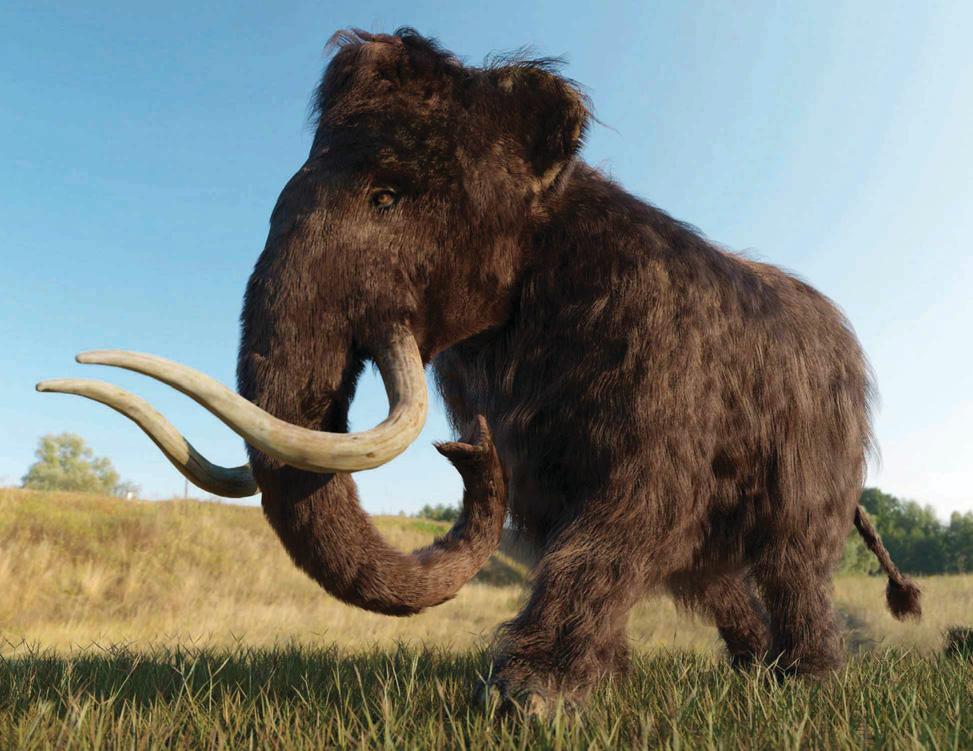
Colossal’s ambitious long-term plan is to add lots of these mammoth genes to embryos of modern-day elephants to create mammoth-like hybrids.
Despite its claims to be resurrecting the woolly mammoth, the original Mammuthus primigenius, with all its original genetic complexity and population diversity, isn’t being brought back to life. The creatures are more accurately described as “cold-resistant elephants”.

Esta historia es de la edición March 2025 de BBC Science Focus.
Suscríbete a Magzter GOLD para acceder a miles de historias premium seleccionadas y a más de 9000 revistas y periódicos.
¿Ya eres suscriptor? Iniciar sesión
MÁS HISTORIAS DE BBC Science Focus
BBC Science Focus
World's biggest cobweb is home to 100,000 spiders
Spiders don't normally create such large colonies, so there's no need to worry about finding one in your basement

1 min
February 2026

BBC Science Focus
A dementia vaccine could be gamechanging – and available already
Getting vaccinated against shingles could protect you from getting dementia, or slow the progression of the disease
1 mins
February 2026

BBC Science Focus
DATA IN SPACE
An unusual spacecraft reached orbit in November 2025, one that might herald the dawn of a new era.
7 mins
February 2026

BBC Science Focus
Climate change is already shrinking your salary
No matter where you live, a new study has found warmer temperatures are picking your pocket
4 mins
February 2026

BBC Science Focus
A MENTAL HEALTH GLOW-UP
Forget fine lines. Could Botox give you an unexpected mental health tweakment?
3 mins
February 2026
BBC Science Focus
Most people with high cholesterol gene don't know they have it
Standard testing struggles to detect the condition
1 mins
February 2026

BBC Science Focus
HOW CAN I BOOST MY IQ?
If you're serious about getting smarter, it's time to ditch the brain-training apps
4 mins
February 2026

BBC Science Focus
Humans are absolutely terrible at reading dogs' emotions
Think you can tell how our furry friends are feeling? Think again
1 mins
February 2026

BBC Science Focus
HOW TO TEACH AI RIGHT FROM WRONG
If we want to get good responses from AI, we may need to see what it does when we ask it to be evil
3 mins
February 2026

BBC Science Focus
What Australia's social media ban could really mean for under-16s
Many people think social media is bad for our kids. Australia is trying to prove it
5 mins
February 2026
Listen
Translate
Change font size