Intentar ORO - Gratis
An astronomer at the BOTTOM OF THE WORLD
BBC Sky at Night Magazine
|August 2022
Georgina Dransfield has just returned from months at the South Pole, working to expand our understanding of exoplanets - and dreaming of a pair of jeans

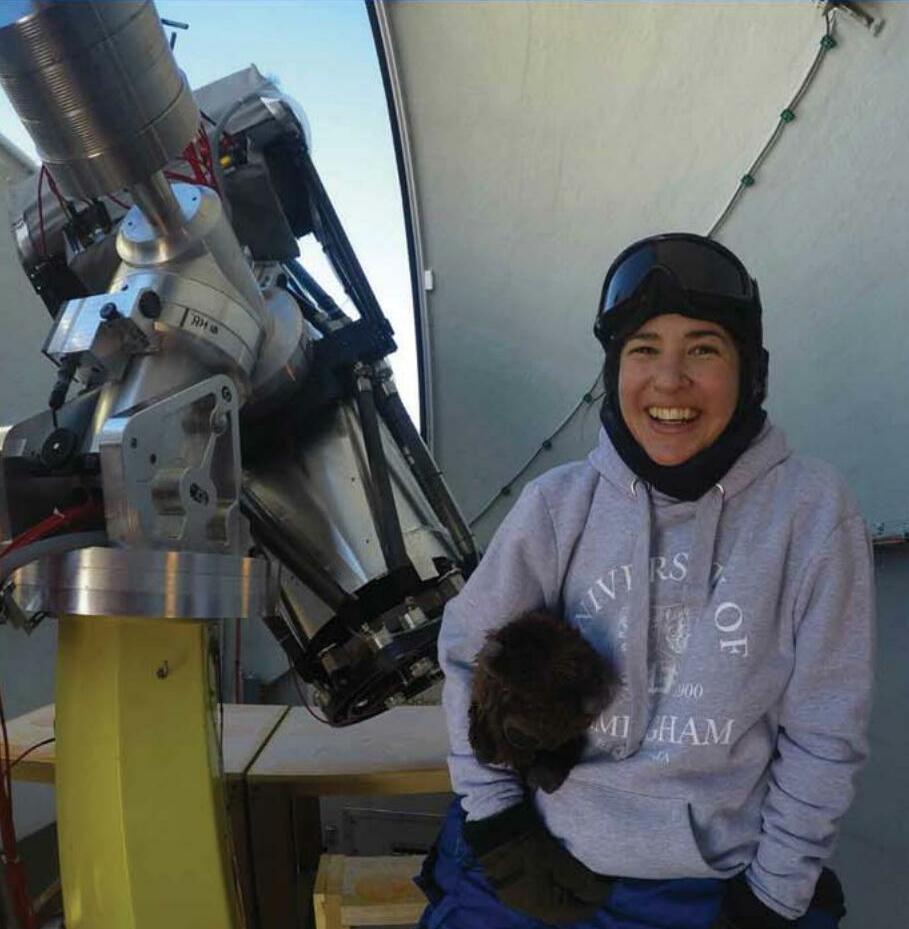
There's genuinely not a lot I'd change if I could do my mission to Antarctica again. The science I went there to do went as well as I hoped it would and I made it back without losing any body parts to frostbite. The only real regret I have is that I didn't pack a pair of jeans; somehow this most inane of oversights managed to cause me a not-insignificant amount of frustration that only grew as the weeks ticked on by.
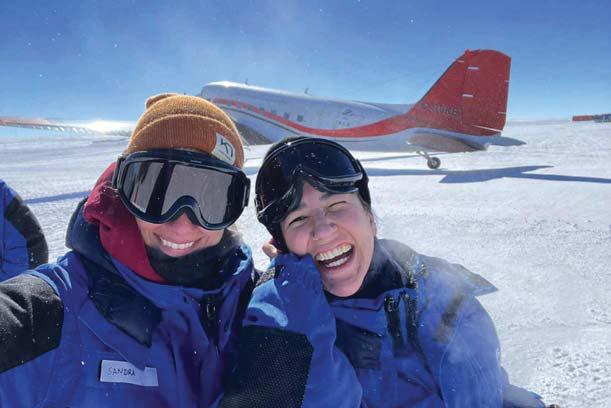
I began my jeans-less journey in Great Malvern, Worcestershire on 17 November 2021. Four trains, five planes, two quarantines and 31 days later I arrived at Concordia Station on Dome Cin Antarctica, where I would be working for the next seven weeks as part of the Antarctic Search for Transiting Exoplanets (aka ASTEP) telescope summer team.
Goodbye to sunsets
The group I travelled with, mostly glaciologists and seismologists, were all itching to get to Concordia to begin data collection, and they were understandably curious as to why astronomers were headed there during the months of neverending daylight. It's a fair point. Antarctica is a brilliant astronomical site because of the long nights and dry air, but we only get to observe for half the year. So, why bother going in the summer when it never gets dark? Simple: for ASTEP, our annual summer campaigns represent our only opportunity to access the telescope for maintenance and upgrades.


Esta historia es de la edición August 2022 de BBC Sky at Night Magazine.
Suscríbete a Magzter GOLD para acceder a miles de historias premium seleccionadas y a más de 9000 revistas y periódicos.
¿Ya eres suscriptor? Iniciar sesión
MÁS HISTORIAS DE BBC Sky at Night Magazine

BBC Sky at Night Magazine
Crush: Close Encounters with Gravity
Gravity is something that we're all innately familiar with. It keeps our feet on the ground, fights against a rocket trying to leave Earth and governs the movement of the planets and stars.

1 mins
April 2026

BBC Sky at Night Magazine
Exploring the Universe
There's no shortage of children's books about astronomy.
2 mins
April 2026
BBC Sky at Night Magazine
Make your Milky Way images pop
Simple, free processing techniques using FastStone Image Viewer
3 mins
April 2026
BBC Sky at Night Magazine
Nightfaring: In Search of the Disappearing Darkness
This book is a manifesto for dark skies, written as a travel memoir.
1 mins
April 2026
BBC Sky at Night Magazine
Flying saucers- The making of a modern myth
Our obsession with UFOs goes back further than you might think. Robert Pateman traces how early science fiction, dubious sightings and an alien-mad media led to the 1950s saucer fever
9 mins
April 2026
BBC Sky at Night Magazine
STAR OF THE MONTH
Alphecca, the brightest jewel in the Crown
1 min
April 2026

BBC Sky at Night Magazine
How to use a planisphere
Navigate the sky with the original stargazer's tool. No batteries, apps or Wi-Fi required!
3 mins
April 2026
BBC Sky at Night Magazine
Why rockets don't launch straight up
For a rocket to get its payload into space, it has to follow a curved path. But what would happen if it didn't?
2 mins
April 2026

BBC Sky at Night Magazine
Q&A WITH A DARK MATTER SPECIALIST
Dark matter makes up 27 per cent of all matter in the Universe. So why is it so hard to find? Meet one of the people making a map that leads us to it
3 mins
April 2026

BBC Sky at Night Magazine
Why I want to put a hotel on the Moon
Bored of the beach? Sick of city breaks? Step this way. Space entrepreneur Skyler Chan explains how he'll build a holiday destination on the Moon by 2030
2 mins
April 2026
Translate
Change font size