Essayer OR - Gratuit
How Americans Lost Faith In The Presidency
The Atlantic
|October 2017
The Vietnam War opened the credibility gap. What we’ve learned since has only widened it.
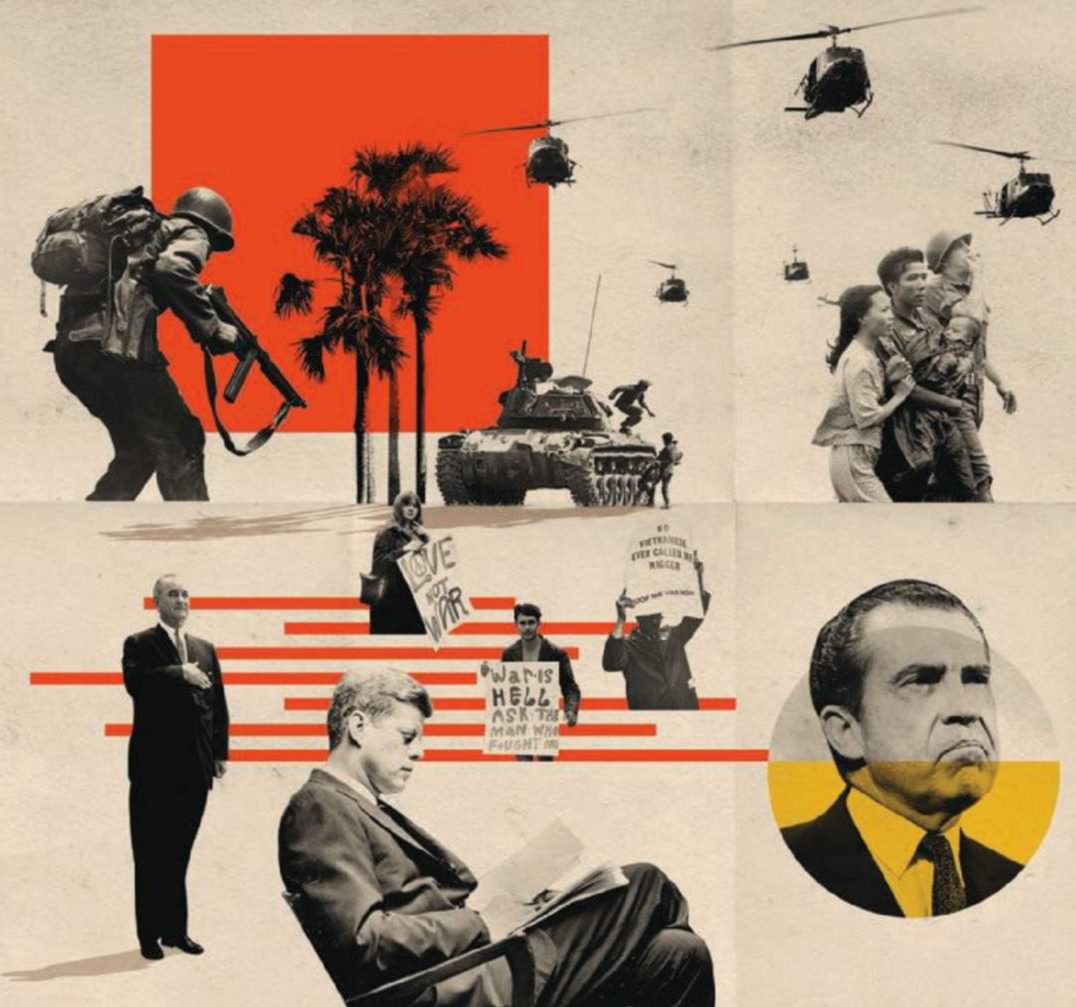
ON APRIL 30, 1975, when the last helicopter lifted off the roof of the U.S. Embassy in Saigon, the Vietnam War, the most consequential event in American history since World War II, ended in failure. More than 58,000 Americans and as many as 3 million Vietnamese had died in the conflict. America’s illusions of invincibility had been shattered, its moral confidence shaken. The war undermined the country’s faith in its most respected institutions, particularly the military and the presidency. The military eventually recovered. The presidency never has.
It did not happen all at once, this radical diminution of trust. Over more than a decade, the accumulated weight of critical reporting about the war, the publication of the Pentagon Papers in 1971, and the declassification of military and intelligence reports tarnished the office. Nor did the process stop when that last chopper took o›. New evidence of hypocrisy has continued to appear, an acidic drip, drip, drip on the image of the presidency. The three men who are most responsible for the war, John F. Kennedy, Lyndon B. Johnson, and Richard Nixon, each made the fateful decision to record their deliberations about it. The tapes they left behind—some of them still newly public, others long obscured by the sheer volume of the material—are extraordinary. They expose the presidents’ secret motives and fears, at once humanizing the men and deepening the disillusionment with the office they held.


Cette histoire est tirée de l'édition October 2017 de The Atlantic.
Abonnez-vous à Magzter GOLD pour accéder à des milliers d'histoires premium sélectionnées et à plus de 9 000 magazines et journaux.
Déjà abonné ? Se connecter
PLUS D'HISTOIRES DE The Atlantic
The Atlantic
Deadlier Than Gettysburg
How the cruelty of the Confederacy's prison camps gave rise to the rules of war

10 mins
March 2026

The Atlantic
THE MAN WHO BROKE PHYSICS
One of the pleasures of watching Ilia Malinin, apart from his indifference to gravity, is to witness him becoming.
16 mins
March 2026

The Atlantic
How Toni Morrison Saw History
In her novels, she located the missing story of Black America.
12 mins
March 2026

The Atlantic
The Madness of Lord Tennyson
The Victorian poet was startlingly modern.
5 mins
March 2026

The Atlantic
THE PLOT AGAINST THE HUMANITIES
What is the Andrew W. Mellon Foundation doing to higher education?
22 mins
March 2026
The Atlantic
Why Do Democrats Hate Winning?
Ken Martin has one of those resting dread faces, as if he's bracing for someone to dump a bucket of rocks on his head.
37 mins
March 2026

The Atlantic
ROD DREHER'S DEMONS
HE DERIDES THE ENLIGHTENMENT, SECULARISM, AND THE MODERN WORLD. CONSERVATIVES-INCLUDING THE VICE PRESIDENT-ARE JOINING HIM ON A MARCH BACK TO THE MIDDLE AGES.
20 mins
March 2026

The Atlantic
Every Nation for Itself
President Trump wants to return to the 19th century's international order. He will leave America less prosperous—and the whole world less secure.
19 mins
March 2026

The Atlantic
The Secrets of Indigenous Art
Major exhibits are upending the way people understand Native American and Aboriginal artists.
14 mins
March 2026

The Atlantic
The Novel as Extended Op-Ed
If anyone could write good fiction about immigration, it would probably be Lionel Shriver. Instead, her latest book goes off the rails.
10 mins
March 2026
Translate
Change font size