
Passez à l'illimité avec Magzter GOLD
Obtenez un accès illimité à plus de 9 000 magazines, journaux et articles Premium pour seulement
Essayer OR - Gratuit
Dead as a dodo...alive soon
THE WEEK India
|April 06, 2025
Bringing back birds and beasts that slipped into extinction
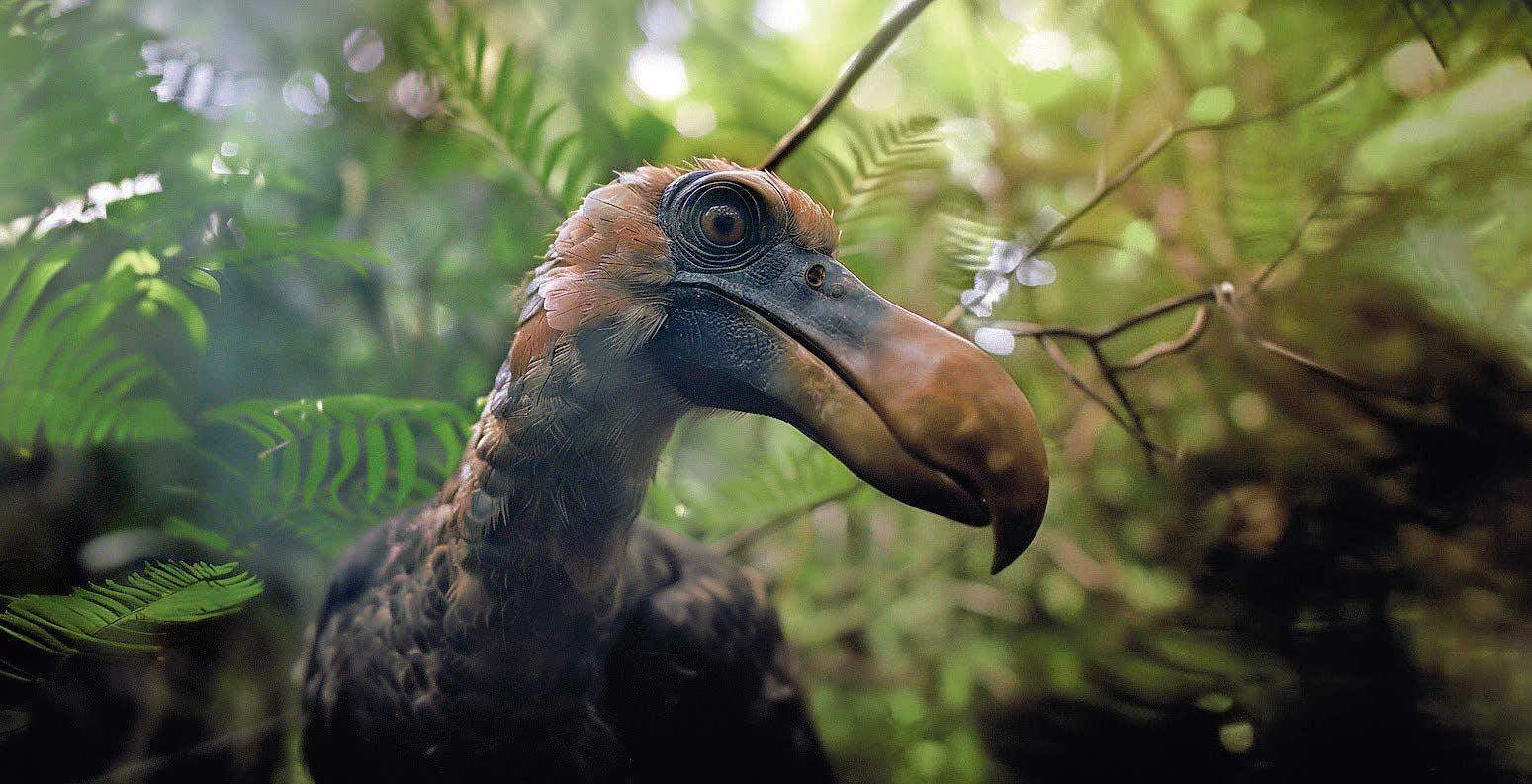
The year 1681 was the last time mankind saw the dodo before it became the universal symbol for extinction. The flightless bird, endemic to Mauritius, was said to be so trusting that it would walk right up to Dutch sailors—who found it on the island in the early 1600s—and offer them its nest. As it had no natural predators, it had no reason to doubt the humans. It was wrong. Within decades, hunting, deforestation and damage caused by animals that the humans introduced to the island wiped out the dodo.
Now, centuries later, the same humans are trying to create a new version of the dodo, one that is not “dumb”. And, it won't be alone. Scientists are also working on bringing back the woolly mammoth and the thylacine, a Tasmanian marsupial last seen in the early 19th century. Colossal Biosciences, a Texas-based “de-extinction company” that uses genetic engineering to “revive” extinct species, says the dodo will be with us in 2028. Its team of scientists has been assembling and sequencing the dodo genome (the total amount of DNA in an organism) using DNA extracted from a skull in the collection of the Natural History Museum of Denmark. Children of the 1990s will remember how scientists used mosquito DNA to bring back dinosaurs in Michael Crichton's Jurassic Park. This, though, seems more realistic.
“Our mission is to make extinction a thing of the past,” Beth Shapiro, an evolutionary biologist and chief science officer at Colossal, tells THE WEEK. “About half of the species on earth are threatened with extinction in the next 50 to 100 years, and much of this is due to changes in habitat because of humans. We should be improving and increasing the number of tools and options available to us in terms of how we might protect species, genetic diversity and ecosystems.”



Cette histoire est tirée de l'édition April 06, 2025 de THE WEEK India.
Abonnez-vous à Magzter GOLD pour accéder à des milliers d'histoires premium sélectionnées et à plus de 9 000 magazines et journaux.
Déjà abonné ? Se connecter
PLUS D'HISTOIRES DE THE WEEK India

THE WEEK India
Travails of a trial
With a second set of accused, too, being discharged in the 2006 Malegaon blasts case, victims and their kin have only questions, no closure

8 mins
June 07, 2026

THE WEEK India
FIRST-WORLD CUP
US-Mexico-Canada 2026 could leave behind working-class fans who make football what it is
8 mins
June 07, 2026

THE WEEK India
Friction over fission
A year after Operation Sindoor, the space for conventional warfare between India and Pakistan has increased, even as the neighbour is expected to continue its mixed signals on nuclear weapons
4 mins
June 07, 2026

THE WEEK India
The southern test
With the leadership transition in Karnataka, the Congress has to work really hard to retain its AHINDA vote bank
3 mins
June 07, 2026

THE WEEK India
WE NEED TO FIGHT SMARTER, SHORTER WARS
Having seen through an eventful and turbulent phase of India’s military history, Chief of Defence Staff General Anil Chauhan will now return to his world of intellectual and academic rigour.
11 mins
June 07, 2026

THE WEEK India
The corpus callosum
The first sign that something was wrong was not weakness, or seizures, or memory loss. It was an argument between her hands.
3 mins
June 07, 2026

THE WEEK India
WAR AND PEACE
Iranian society has largely returned to normal life, although the trauma of the war has not gone away completely
2 mins
June 07, 2026

THE WEEK India
When you launch a product today, you cannot think only of India
INTERVIEW A.V. ANOOP, CHAIRMAN, AVA GROUP
4 mins
June 07, 2026
THE WEEK India
EYE OF THE NEEDLE
In Bikaner, scientists and herders are on a mission to preserve Rajasthan's disappearing camel breeds
4 mins
June 07, 2026

THE WEEK India
Future of exams will emphasise skills that AI cannot easily replicate
AS INDIA PUSHES to position itself as a global artificial intelligence powerhouse, a parallel crisis is unfolding within one of its most critical public institutions—the education system.
3 mins
June 07, 2026
Listen
Translate
Change font size