Essayer OR - Gratuit
Apocalypse, Constantly
The Atlantic
|February 2025
Humans love to imagine their own demise.
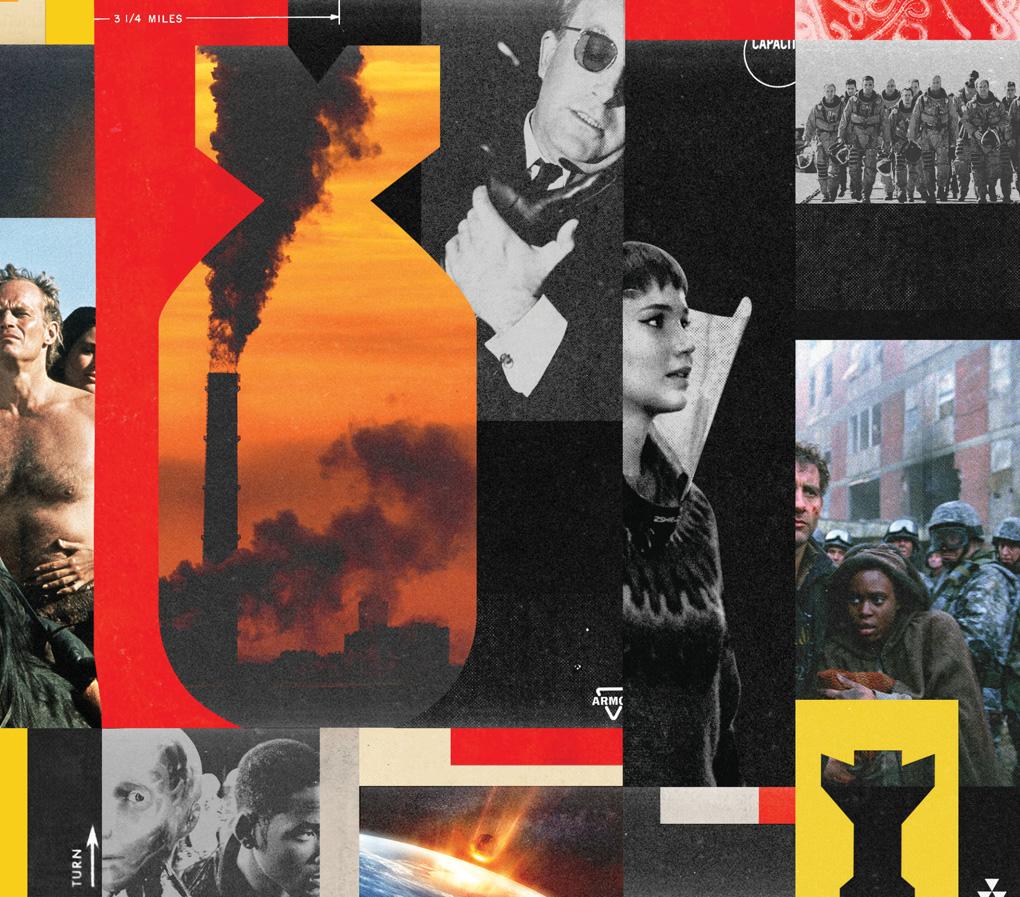
In 1985, when I was 9 years old, I watched the first episode of the new Twilight Zone, a reboot of the classic early-1960s TV series. People rarely talk about the '80s version, which ran for just three seasons. But there must be other viewers around my age who have never forgotten "A Little Peace and Quiet," the second story in that debut episode. It's about a woman who discovers a magic pendant in the shape of a sundial that gives her the power to stop time. Whenever she says "Shut up," everyone and everything in the world except her comes to a halt, resuming only when she says, "Start talking."
At first she uses the device to give herself a break from her irritating husband and chattering children. But at the end of the episode, she hears an announcement that the Soviets have launched a nuclear attack on the United States, and she deploys the magic phrase to arrest time.
In the last scene, she walks out of her house and looks up to see ICBMs frozen in midair, leaving her with an impossible choice: to unfreeze time and be destroyed along with all of humanity, or to spend eternity as the sole living person in the world.
I remember that TV image better than most of the things I saw in real life as a child. It was the perfect symbol of an understanding of history that Generation X couldn't help but absorb-if not from The Twilight Zone, then from movies such as The Day After and WarGames. The nuclear-arms race meant that humanity's destruction was imminent, even though no one actually wanted it, because we were collectively too stupid and frivolous to prevent it. We were terrified of the future, like the woman in the TV show yet we also secretly longed for the arrival of the catastrophe because only it could release us from the anxiety of waiting.

Cette histoire est tirée de l'édition February 2025 de The Atlantic.
Abonnez-vous à Magzter GOLD pour accéder à des milliers d'histoires premium sélectionnées et à plus de 9 000 magazines et journaux.
Déjà abonné ? Se connecter
PLUS D'HISTOIRES DE The Atlantic

The Atlantic
You Had to Be There
An emerging field of history asks if we can ever really understand how our forebears experienced love, anger, fear, and sorrow.

23 mins
January 2026

The Atlantic
By the Horns
The week before the biggest bullfight of her career, in Cádiz, Spain, this past July, 24-year-old Miriam Cabas posted a carefully produced video on Instagram.
1 mins
January 2026

The Atlantic
The New German War Machine
After World War II, Germany embraced pacifism as a form of atonement. Now the country is arming itself again.
18 mins
January 2026
The Atlantic
The Eloquence
The prime minister was watching a disaster movie when we found him.
4 mins
January 2026

The Atlantic
What's for Dinner, Mom?
The women who want to change the way America eats
12 mins
January 2026

The Atlantic
How Terror Works
A 1947 German novel explores the sometimes corrosive, sometimes energizing nature of fear.
8 mins
January 2026

The Atlantic
Yesterday's Idea of a Modern Man
Sam Shepard, a self-made cowboy, was also a poet of masculine angst.
7 mins
January 2026

The Atlantic
ACCOMMODATION NATION
America's colleges have an extra-time-on-tests problem.
11 mins
January 2026

The Atlantic
Respect the Drummer
A new history of rock, told through its overlooked heroes
5 mins
January 2026

The Atlantic
THE MOST POWERFUL MAN IN SCIENCE
WHY IS ROBERT F. KENNEDY JR. SO CONVINCED HE'S RIGHT?
42 mins
January 2026
Listen
Translate
Change font size