Magzter GOLDで無制限に
10,000以上の雑誌、新聞、プレミアム記事に無制限にアクセスできます。
試す 金 - 無料
How should history remember Fidel Castro?
BBC History Magazine
|January 2017

He inspired everyone from Black Power activists to South African freedom fighters - SIMON HALL
Castro was a revolutionary who symbolised his age. In December 1956, he returned from exile in Mexico, determined to overthrow the dictatorship of Fulgencio Batista, Cuba’s American-backed strongman. Arriving on 2 December aboard the Granma, Castro boldly predicted that “we will be free or we will be martyrs”.
It was a cry that resonated with the times: 1956 saw a historic victory for African Americans in Montgomery, following a year-long boycott of the city’s segregated buses, while, in South Africa, tens of thousands of women took to the streets of Pretoria to denounce apartheid.
The year also ushered in independence for Sudan, Tunisia, Morocco and the Gold Coast – the first surrender of colonial power in sub-Saharan Africa – and witnessed a popular uprising against Stalinist rule in Hungary. In the decade that followed Castro’s triumphant march into Havana, in January 1959, the Cuban Revolution proved an inspiration for Black Power activists, opponents of the war in Vietnam, South African freedom fighters, Latin American revolutionaries, and radical students in Britain, Europe and the United States.
Castro’s death at the end of a year whose highlights (so far) include Brexit and the election of Donald Trump, is a reminder that, today, the forces of history appear to be marching to a very different beat.
In 1980, more than 125,000 Cubans fled what had become a poverty-stricken Marxist hell-hole - ANDREW ROBERTS
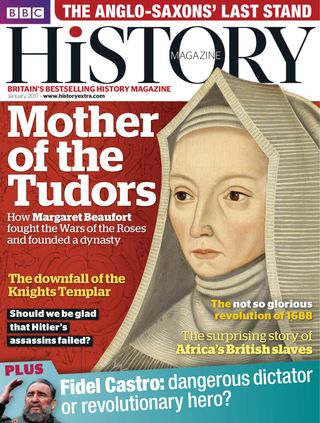

このストーリーは、BBC History Magazine の January 2017 版からのものです。
Magzter GOLD を購読すると、厳選された何千ものプレミアム記事や、10,000 以上の雑誌や新聞にアクセスできます。
すでに購読者ですか? サインイン
BBC History Magazine からのその他のストーリー
BBC History UK
Royal progress
Alice Loxton's new book begins with a compelling premise.

1 mins
January 2026

BBC History UK
"Leaving Muslim contributions out of European history has allowed Islamophobic sentiment to flourish"
THARIK HUSSAIN speaks to Danny Bird about the long but often overlooked and distorted history of Muslims in Europe - and the enduring resistance to its reappraisal
9 mins
January 2026
BBC History UK
7 UNMISSABLE TRIPS IN 2026
With new routes, big anniversaries and fresh ways of discovering familiar favourites, TOM HALL highlights historical destinations to explore this year
4 mins
January 2026

BBC History UK
SOPHIE SCHOLL
Novelist Simon Scarrow chooses
2 mins
January 2026
BBC History UK
Portrait of the artists
TRACY BORMAN is enraptured by a beautifully written and richly illustrated exploration of early modern English art
2 mins
January 2026
BBC History UK
Humble heroes
Statues celebrate monarchs, rulers and conquerors - but who remembers the brave folk who gave their lives to save others? Anna Maria Barry recounts stories of selfsacrificing but otherwise ordinary people from the 19th and 20th centuries who are commemorated in one London park.
9 mins
January 2026
BBC History UK
BACK FROM THE DEAD
Britain’s War Office thanked the SAS for its remarkable efforts in WW2 by abolishing it – yet soon realised the error of its ways. Gavin Mortimer tells the story of how the elite unit reinvented itself to confront the challenges of the postwar world
8 mins
January 2026
BBC History UK
Q&A - A selection of historical conundrums answered by experts
Were Roman gladiators vegetarian?
8 mins
January 2026
BBC History UK
Martha McGill on a pioneering study of folk beliefs in early modern England
I was recently chatting with a handful of early modernists about the history book we'd take to a desert island.
1 min
January 2026
BBC History UK
Independent empires
Viewing the British empire through an American lens provides an intriguing alternative perspective on the 'Land of the Free', says DAVID ARMITAGE
4 mins
January 2026
Translate
Change font size