
Magzter GOLDで無制限に
10,000以上の雑誌、新聞、プレミアム記事に無制限にアクセスできます。
試す 金 - 無料
MASTERS OF GROWTH INVESTING
Kiplinger's Personal Finance
|August 2022
The Baron Funds have an extraordinarily long and successful track record. Here's how they do it.

On a recent sunny morning in New York City, Ron Baron, founder, chairman, and chief executive officer of Baron Capital, is standing and studying Sixteen Jackies, a famous painting of Jackie Kennedy by Andy Warhol that Baron purchased through a dealer. The office walls are adorned with dozens of paintings by Warhol, Roy Lichtenstein, Jasper Johns, and other modern art masters. In Baron's corner office, Babe Ruth's 1920 contract and a 1940 letter written by Albert Einstein about the plight of Jews in Europe hang on the walls; President John F. Kennedy's rocking chair sits by a table. The view from the 48th floor of the General Motors Building on Fifth Avenue is spectacular: You can see all of Central Park, the Upper East and West sides of Manhattan, and both the Hudson and East rivers.
Baron, a multibillionaire, is one of the greatest growth-stock investors of all time, investing in companies with the potential to increase profits at a faster-than-average rate. During a time when relatively few actively managed funds can beat their respective index benchmarks (and more investors are gravitating to passive indexing), Baron's long-term approach to growth investing continues to shine.
As of the end of the first quarter, 15 of 17 funds, representing 98.5% of Baron Funds' $49 billion of assets under management, had beaten their index benchmarks since inception, several of them by an annualized five percentage points or more. Baron Growth is the top midsize-company growth fund since its inception in 1994; Baron Partners and Baron Focused Growth are the top performers among all mutual funds since their inceptions in the 1990s.
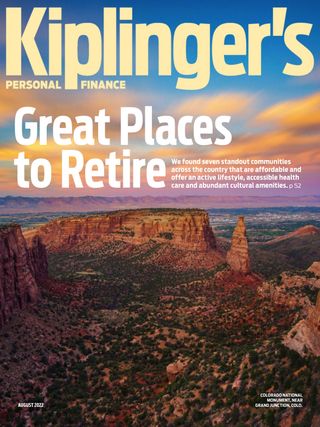

このストーリーは、Kiplinger's Personal Finance の August 2022 版からのものです。
Magzter GOLD を購読すると、厳選された何千ものプレミアム記事や、10,000 以上の雑誌や新聞にアクセスできます。
すでに購読者ですか? サインイン
Kiplinger's Personal Finance からのその他のストーリー

Kiplinger's Personal Finance
A TAX BREAK FOR MEDICAL EXPENSES
The editor of The Kiplinger Tax Letter responds to readers asking about health care write-offs.

2 mins
February 2026

Kiplinger's Personal Finance
Volunteering to Help Others at Tax Time
Through an IRS program, qualifying individuals can get free assistance with their tax returns.
2 mins
February 2026

Kiplinger's Personal Finance
CATCH-UP SAVERS FACE A TAXING 401(K) CHANGE
Under new rules, you may lose an up-front deduction but gain tax-free income once you retire.
2 mins
February 2026

Kiplinger's Personal Finance
The Case for Emerging Markets
Economic growth, earnings acceleration and bargain prices favor EM stocks.
3 mins
February 2026

Kiplinger's Personal Finance
THE NEW RULES OF RETIREMENT
Popular guidelines about how to save, invest and spend need to be updated and personalized to ensure you'll never run out of money.
15 mins
February 2026

Kiplinger's Personal Finance
Smart Ways to Share a Credit Card
Adding an authorized user has its benefits, but make sure you set the ground rules.
2 mins
February 2026

Kiplinger's Personal Finance
THE BEST AFFORDABLE FITNESS TRACKERS
These devices monitor your exercise, sleep patterns and more- and they don't cost an arm and a leg.
4 mins
February 2026
Kiplinger's Personal Finance
A VALUE FOCUS CLIPS RETURNS
THERE'S more to Mairs & Power Growth than its name implies. The managers favor firms with above-average earnings growth. But a durable, competitive position in their market- “a number-one or number-two position and gaining share,” says comanager Andrew Adams—and a reasonable stock price matter even more.
1 mins
February 2026

Kiplinger's Personal Finance
Look Beyond the Tech Giants
I am hooked on a podcast called Acquired, in which two smart guys do a deep analytical dive, typically lasting three or four hours, on a single successful company such as Coca-Cola or Trader Joe's. Ben Gilbert and David Rosenthal, a pair of venture capitalists, are especially adept at explaining what's behind the success of such tech giants as Alphabet (symbol GOOGL, $320), the former Google, which recently merited 11 hours and 42 minutes of dialogue all by itself.
4 mins
February 2026

Kiplinger's Personal Finance
How to Pay for Long-Term Care
A couple of months ago, I wrote that many Americans significantly underestimate how long they could live in retirement (see “Living in Retirement,” Dec.). With the possibility of a 30-year retirement becoming more common, retirees need to plan for so-called longevity risk to make sure their assets last a lifetime. And the longer you live, the more likely you'll need to pay for some form of long-term care. That can range from assistance with activities of daily living to in-home care to a nursing home stay.
2 mins
February 2026
Translate
Change font size