試す 金 - 無料
The Golden State Killer & Deleuze's ‘Dividual'
Philosophy Now
|April/May 2022
Angela Dennis computes the use and abuse of digital data.

In June of 2020, the infamous Golden State Killer was finally brought to justice. From the late 1970s to the early 80s he had terrorised neighbourhoods in California, creeping into homes at night and robbing, raping, and often killing their occupants. Police had few leads, the trail went cold. Then in 2018 investigators put a sample of DNA found at one of the crime scenes into a genealogical database called GEDMatch. GEDMatch was not designed to find criminals, it was intended to help people find people they were related to. It worked by making connections between the DNA sequence data of its members. The user, by entering their DNA sequence into the website, would be given information on likely relatives who were also members, creating a possible family tree. When investigators put the Golden State Killer’s DNA into the database, the system offered up some close matches – possible distant relatives of the suspect. This material, painstakingly triangulated with previously known information, allowed investigators to narrow their focus down to one person, Joseph James D’Angelo, who by then was an old man of seventy-two years. The police had found their killer.
After three decades of evading capture, eluding brilliant investigators, D’Angelo was caught by the brute power of mass data and algorithms, and he never saw it coming. This merging of forensic science and genealogy has now become a massive success, kicking off the burgeoning field of ‘forensic genealogy’ and leading to the resolution of over sixty other cold cases.
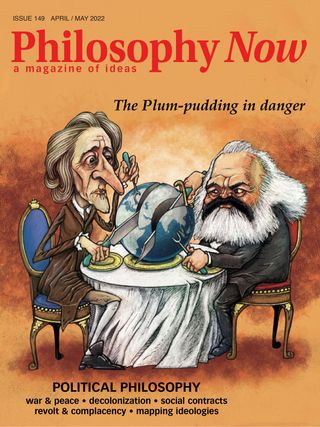

このストーリーは、Philosophy Now の April/May 2022 版からのものです。
Magzter GOLD を購読すると、厳選された何千ものプレミアム記事や、10,000 以上の雑誌や新聞にアクセスできます。
すでに購読者ですか? サインイン
Philosophy Now からのその他のストーリー

Philosophy Now
Nosferatu
Stefan Bolea considers two very different artistic approaches to love and death.

6 mins
April/May 2025

Philosophy Now
Heidegger's Ghost
Raymond Tallis wonders where Heidegger's body went when he was philosophising.
7 mins
April/May 2025

Philosophy Now
Is Comedy Good For Us?
Damaris Stock has a laugh with Plato and friends.
10 mins
April/May 2025

Philosophy Now
In Defense of Idleness
Wendell O'Brien says, 'Just Don't Do It'.
10 mins
April/May 2025

Philosophy Now
Leaving Nothing to Chance by Carl Knight
LEAVING NOTHING TO Chance (2025) by Carl Knight, is an informed, proficient and lucid defence of luck egalitarianism.
3 mins
April/May 2025

Philosophy Now
Star Maker by Olaf Stapledon
THE 1937 SCIENCE FICTION novel Star Maker was written by philosophy professor Olaf Stapledon in the dark days as Europe awaited the onslaught of Nazi Germany. This casts a shadow over the whole book.
6 mins
April/May 2025

Philosophy Now
Love & Emptiness in the Sufi Tradition
Medha Ninad Tambe meditates on Rumi, love and self-negation.
7 mins
April/May 2025

Philosophy Now
The Hedgehog's Dilemma: A Metaphor About the Challenges of Human Intimacy
Krishna Chaubey explains Arthur Schopenhauer's poignant thought experiment.
4 mins
April/May 2025

Philosophy Now
The Mirror & the Flame
Rebwar Fatah imagines Attar's & Hegel's shared path.
4 mins
April/May 2025
Philosophy Now
Free and Equal by Daniel Chandler
DANIEL CHANDLER, AN economist and philosopher based at the London School of Economics, begins Free and Equal: What Would a Fair Society Look Like? (2023) by asking an intriguing question. How is it, he wonders, that the most influential political philosopher of the last century has had almost no practical impact on politics or policy? The philosopher in question is John Rawls, whose magnum opus was A Theory of Justice (1971).
5 mins
April/May 2025
Translate
Change font size