
Magzter GOLDで無制限に
10,000以上の雑誌、新聞、プレミアム記事に無制限にアクセスできます。
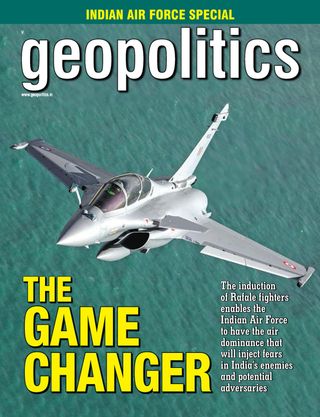
Fighter Jets For The IAF
Geopolitics
|October 2019
India has invited bids for the purchase of 114 fighter jets, valued at more than $15 billion and currently the world’s largest deal in play. AMIT GUPTA explains how to choose wisely and quickly.

It took India over a decade to choose the Rafale and ink the deal. The final purchase, however, was for only one-fourth of what the Indian Air Force (IAF) wanted. This was particularly troubling for two reasons: first, the IAF was shortchanged since it wanted 126 fighters but only got 36; and secondly, the French were hoping that India would do what it always does and place a follow-on order. The latter was particularly important since after 15-odd years of haggling, the expectation was that a truly big contract would follow. In fact, by the time the Rafale contract was signed, there was some discussion that if India did buy at least a small number of aircraft it would be considered a nonserious player in weapons acquisition and there was talk of “India fatigue”.
Now, the IAF wants 114 fighters and once again there is competition to select the plane. At the same time, the IAF talks about it has to counter a two-front threat and, therefore, needs a plane, in sufficient numbers, quickly. So, India has to choose wisely and quickly.
Learning from the Rafale
The Rafale deal became controversial because the media and the political opposition made it into an election issue with questions being raised about the alleged irregularities in the process. Further, the argument was made that because HAL was not given a contract to domestically assemble the aircraft, there was something insidious about the deal.
What is forgotten in all this is that the Rafale is a good plane which will allow the IAF to carry out both conventional and nuclear missions. The Mirage-2000, while a good plane, does not allow for pilot survivability in the case of a nuclear mission – the pilot would not survive the aftershock caused by a nuclear weapon he delivered. The Rafale, in contrast, is a better protected plane thereby allowing the pilot to return to base and not carry out a suicide mission.

このストーリーは、Geopolitics の October 2019 版からのものです。
Magzter GOLD を購読すると、厳選された何千ものプレミアム記事や、10,000 以上の雑誌や新聞にアクセスできます。
すでに購読者ですか? サインイン
Geopolitics からのその他のストーリー
Geopolitics
JOINTNESS TO REDEFINE MARITIME AIR POWER
The buzzword in New Delhi is multidomain warfare, which involves a high level of jointness between the three services. As mentioned in the last issue of Geopolitics (November 2025), jointness takes time and requires a large investment by the government in weapons systems, sensors, and training. But sensible and easy steps can be taken, especially in the maritime sphere, to integrate the Coast Guard, Air Force, and Navy into a potent force to safeguard the Arabian Sea and the Bay of Bengal, argues AMIT GUPTA

8 mins
December 2025

Geopolitics
THERMAL IMAGING AND BALLISTIC PROTECTION DRIVE SOLDIER MODERNISATION
Contemporary defence modernisation prioritises integrated soldier systems blending advanced thermal imaging with lightweight multi-hit ballistic protection, meeting demands for superior low-visibility awareness and survivability against evolving threats. India's indigenous manufacturing push aligns with Atmanirbhar Bharat, enhancing national security. A special report
5 mins
December 2025
Geopolitics
INDIA'S NEW HIGH-ALTITUDE PIVOT NEAR THE CHINA BORDER
Just kilometres from the LAC, India has activated one of the world's highest military airfields, a dramatic shift in Ladakh's strategic landscape. The Mudh-Nyoma airbase, now fully operational, signals faster mobility, sharper surveillance and a renewed posture along a frontier where infrastructure has become the new currency of power.
2 mins
December 2025
Geopolitics
THE MARITIME MAKEOVER
JOSEPH P CHACKO analyses the transforming role of the Indian Navy as an indigenous force multiplier, a modern blue-water fleet, and a crucial instrument in shaping India's emergence as an integral Indo-Pacific power
17 mins
December 2025
Geopolitics
GUARDING THE RIM
India's post-26/11 coastal security system boasts radars, patrol boats and new laws - yet beneath the optics lie old weaknesses. Training gaps, stranded infrastructure, jurisdictional clutter and climate stress continue to erode readiness.VISHAL DUGGAL reports
9 mins
December 2025

Geopolitics
SAGAR DEFENCE INAUGURATES PUNE FACILITY
Defence Engineering Pvt. Ltd has inaugurated its new plant in Pune, India. The plant will manufacture Uncrewed Surface Vehicles (USVs), marking a major step forward in the partnership with Liquid Robotics, a Boeing company, that was announced earlier this year to co-develop and co-produce advanced maritime systems.
2 mins
December 2025

Geopolitics
COCHIN SHIPYARD: THE COUNTRY'S SOLE AIRCRAFT CARRIER BUILDER
India is getting ready to add another aircraft carrier that will be nuclear-powered to its fleet, joining INS Vikramaditya and INS Vikrant. SUBHANGI PALVE takes a look at the only shipyard in the country to have built one.
7 mins
December 2025
Geopolitics
ICEYE'S BLUEPRINT FOR THE NEXT FRONTIER
ICEYE's fusion of miniaturised satellites, AI, and agile manufacturing transforms geospatial power, enabling nations to swiftly understand, decide, and act for strategic foresight, disaster preparedness, and security through real-time Earth Observation. A Special Report
4 mins
December 2025
Geopolitics
A report that calls for action
The Parliamentary Standing Committee on External Affairs has concluded that India’s current Indian Ocean strategy is fragmented, under-resourced, and insufficiently coordinated to meet accelerating geopolitical, security, and environmental challenges, especially China's expanding presence.
3 mins
December 2025
Geopolitics
SHOW STOPPER
The 19th edition of the Dubai Airshow recorded deals worth a historic USD 202 billion, but was marred by the unfortunate fatal crash of an IAF Tejas fighter jet. ATUL CHANDRA reports
10 mins
December 2025
Translate
Change font size