
Magzter GOLDで無制限に
10,000以上の雑誌、新聞、プレミアム記事に無制限にアクセスできます。
試す 金 - 無料
Right & Wrong About Right & Wrong
Philosophy Now
|June/July 2023
Paul Stearns argues against moral relativism and moral presentism.

“Whatever we may say about the merits of torturing children for pleasure, and no doubt there is much to be said on both sides, I am sure we all agree it should be done with sterilized instruments.” – G.K. Chesterton
“Man is the measure of all things.”
– Protagoras
One of the most common beliefs that people have about morality is the idea that different times and cultures have radically different moral standards. This assumption fuels moral relativism. Moral relativists believe cultures, individuals, and times do differ in their basic moral values, and that relativism is the best explanation for these differences. Moral relativists also hold that all moral views are equally valid because each culture (or person) invents their own morality.
The assumption that different times have radically different moral standards can also be seen in a position called moral presentism, which maintains that we should not judge the past using our present moral standards. For example, the American comedian Bill Maher recently said that Columbus committed atrocities, “but people back then were generally atrocious.” He argued that our judging Columbus or Washington is like “getting mad at yourself for not knowing what you know now when you were ten”, like saying, “stupid me for wanting to be a breakdancer and ghostbuster.” His point is that it is unfair to judge the past (or his ten-year-old self) from the current more mature perspective.
While there are differences between relativism and presentism, they both make this popular yet questionable assumption that different cultures have different moral standards. In this article, I want to critique this assumption by arguing that fundamental moral values do
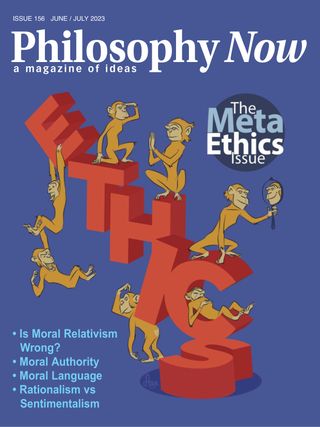

このストーリーは、Philosophy Now の June/July 2023 版からのものです。
Magzter GOLD を購読すると、厳選された何千ものプレミアム記事や、10,000 以上の雑誌や新聞にアクセスできます。
すでに購読者ですか? サインイン
Philosophy Now からのその他のストーリー

Philosophy Now
Nosferatu
Stefan Bolea considers two very different artistic approaches to love and death.

6 mins
April/May 2025

Philosophy Now
Heidegger's Ghost
Raymond Tallis wonders where Heidegger's body went when he was philosophising.
7 mins
April/May 2025

Philosophy Now
Is Comedy Good For Us?
Damaris Stock has a laugh with Plato and friends.
10 mins
April/May 2025
Philosophy Now
In Defense of Idleness
Wendell O'Brien says, 'Just Don't Do It'.
10 mins
April/May 2025

Philosophy Now
Leaving Nothing to Chance by Carl Knight
LEAVING NOTHING TO Chance (2025) by Carl Knight, is an informed, proficient and lucid defence of luck egalitarianism.
3 mins
April/May 2025

Philosophy Now
Star Maker by Olaf Stapledon
THE 1937 SCIENCE FICTION novel Star Maker was written by philosophy professor Olaf Stapledon in the dark days as Europe awaited the onslaught of Nazi Germany. This casts a shadow over the whole book.
6 mins
April/May 2025

Philosophy Now
Love & Emptiness in the Sufi Tradition
Medha Ninad Tambe meditates on Rumi, love and self-negation.
7 mins
April/May 2025

Philosophy Now
The Hedgehog's Dilemma: A Metaphor About the Challenges of Human Intimacy
Krishna Chaubey explains Arthur Schopenhauer's poignant thought experiment.
4 mins
April/May 2025

Philosophy Now
The Mirror & the Flame
Rebwar Fatah imagines Attar's & Hegel's shared path.
4 mins
April/May 2025
Philosophy Now
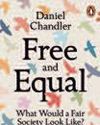
Free and Equal by Daniel Chandler
DANIEL CHANDLER, AN economist and philosopher based at the London School of Economics, begins Free and Equal: What Would a Fair Society Look Like? (2023) by asking an intriguing question. How is it, he wonders, that the most influential political philosopher of the last century has had almost no practical impact on politics or policy? The philosopher in question is John Rawls, whose magnum opus was A Theory of Justice (1971).
5 mins
April/May 2025
Translate
Change font size