試す 金 - 無料
THE BEST SCIENCE IMAGES OF 2023
BBC Science Focus
|New Year 2024
A PIECE OF ROCK BROKEN OFF AN ASTEROID HURTLING THROUGH SPACE, THE FIRST FOOTPRINTS OF HUMANS ARRIVING IN NORTH AMERICA AND A GIANT MEATBALL MADE OUT OF WOOLLY MAMMOTH. THESE ARE JUST SOME OF THE IMAGES THAT CAUGHT THE ATTENTION OF BBC SCIENCE FOCUS EDITORS THIS YEAR, AND NO, THAT LAST ONE WASN'T A MISTAKE. ENJOY OUR SELECTION OF IMAGES THAT HAD US RUBBING OUR EYES IN DISBELIEF IN 2023.

Rocket science
BOCA CHICA, TEXAS, USA
NOVEMBER
SpaceX, the spacecraft manufacturer founded by Elon Musk, conducted two tests of its reusable Starship system in 2023. Standing 121m (397ft) tall, it's twice the height of NASA's Space Shuttle and incorporates the world's most powerful rocket to date. The system has two stages: a passenger-carrying section on top (the second stage) and a rocket below (the first stage), powered by 33 methane and liquid oxygen-fuelled engines. Its maiden test flight (uncrewed) in April not only saw the system explode three minutes after launch, but the thrust from its engines also caused significant damage to the launchpad (see inset).

Its subsequent uncrewed test flight in November saw the second stage reach space successfully. Although it's believed to have self-destructed shortly afterwards, however.
In greater detail
NORTH CAROLINA, USA
APRIL
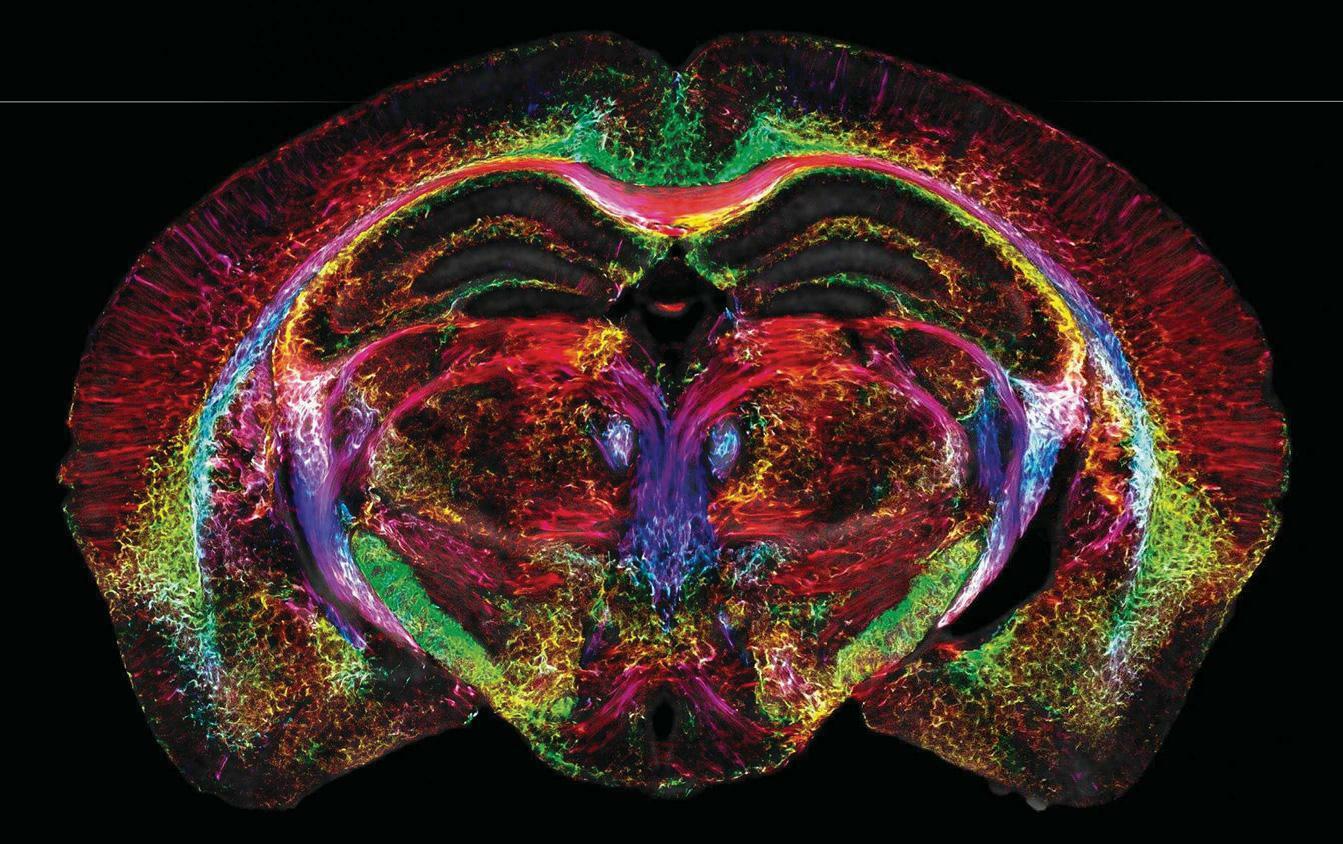
50 years ago, the Nobel Prize-winning chemist Paul Lauterbur described a new imaging technique in the journal Nature: magnetic resonance imaging (MRI). The technique remains at the forefront of modern medical diagnosis, but for the last four decades, researchers at Duke University in the US have been striving to improve it. This year, they showcased their results with this super-high resolution image of a mouse brain, made possible by a combination of stronger magnets and more powerful computers. Each voxel in the image (the equivalent of a pixel in 3D) is 64 million times smaller than in a standard MRI.

このストーリーは、BBC Science Focus の New Year 2024 版からのものです。
Magzter GOLD を購読すると、厳選された何千ものプレミアム記事や、10,000 以上の雑誌や新聞にアクセスできます。
すでに購読者ですか? サインイン
BBC Science Focus からのその他のストーリー

BBC Science Focus
ARE PSYCHOPATHS REALLY THAT GOOD AT LYING?
Picture infamous psychopaths from fiction, such as the eerily cold and calculating Patrick Bateman in the film adaptation of American Psycho, and they certainly seem like master deceivers. But what about real-life psychopaths? Research confirms that psychopaths are more inclined to lie to get what they want, and that they typically display a striking fearlessness - as if they have ice running through their veins.

1 min
January 2026
BBC Science Focus
WHY DO WE HAVE TWO OF SOME ORGANS, BUT ONLY ONE OF OTHERS?
The majority of animals on Earth, humans included, are bilaterally symmetrical. It means we can be divided roughly into two mirror-image sides. Evolutionary biologists believe that it has been like that for at least 300 million years, and because life organised this way survived, so did symmetrical design. Hence, two eyes, two ears, two lungs and two kidneys.
1 min
January 2026

BBC Science Focus
WHY DO CATS PREFER TO SLEEP ON THEIR LEFT?
I've said it before, and I'll keep saying it again and again and again: who knows why cats do anything?
1 min
January 2026

BBC Science Focus
FORGET COUNTING CALORIES TRY THIS INSTEAD...
Calorie counting isn't just difficult, it's riddled with problems that make it practically useless for anyone trying to lose weight.But there are alternatives
9 mins
January 2026

BBC Science Focus
SIGNS OF LIFE
The more planets we find outside our Solar System, the better our chances are of finding life on one of them. But if there really is life out there, how do we spot it?
8 mins
January 2026
BBC Science Focus
WHAT ACTUALLY MAKES SOMEBODY COOL?
Most of us have probably wanted to be cool at some point in our lives, and these efforts can have a big influence on the things we buy, the way we dress, the hobbies we invest in, the people we look up to and even the words we use.
2 mins
January 2026

BBC Science Focus
It's TIME to WAKE UP and SMELL the roses
What if the pursuit of happiness in the traditional sense – chasing wealth or power – is the very thing stopping you from being happy? Researchers are beginning to understand that spending time enjoying the simple things might be the secret ingredient to enjoying a happy, healthy life
8 mins
January 2026

BBC Science Focus
THE AARDVARK
In a time when people are being asked to consider eating insects, we should, perhaps, learn a thing or two from the aardvark (Orycteropus afer), Africa’s ant-guzzling gourmand. On an average night, the big-schnozzed mammal devours up to 50,000 of the crunchy critters.
2 mins
January 2026

BBC Science Focus
ADD WEIGHT TO LOSE WEIGHT
A very basic kind of wearable could make your New-Year-weight-loss plans stick
3 mins
January 2026

BBC Science Focus
AHEAD OF THEIR TIME
The Maya civilisation is known for its art and architecture.
8 mins
January 2026
Translate
Change font size