
Magzter GOLDで無制限に
10,000以上の雑誌、新聞、プレミアム記事に無制限にアクセスできます。
INCREDIBLE SOLAR SYSTEM CRATERS
How It Works UK
|Issue 198
Why these spectacular craters carved out by past impact events are among the most widespread and distinctive geological features in the Solar System
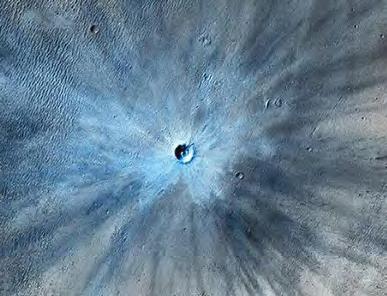
The planets and moons of the Solar System travel in neat, almostcircular orbits, which means they never run the risk of crashing into each other. But that's not true of smaller bodies like asteroids and comets, which are essentially chunks of material left over from the Solar System's formation. These move on much more eccentric orbits that can and do - collide with each other and with the larger members of the Solar System. Most of these collisions occur at very high speeds, typically many thousands of miles per hour, producing enough energy to vaporise the impactor and melt the surrounding rock. When the dust clears, all that's left is a big hole in the ground - an impact crater.
Impacts have been happening ever since the dawn of the Solar System. In fact, they reached their peak a few billion years ago, when there was far more rocky debris around. We still see evidence of these primordial impacts in places like the Moon and Mercury, where there's never been any atmosphere to erode the crater-covered terrain. On the other hand, our own planet lies at the opposite extreme. Not only do we have plenty of weather to wear the craters away, but they also get destroyed by volcanic activity and the gradual movement of tectonic plates. So finding traces of past impact events here on Earth often involves quite a bit of geological detective work.
The usefulness of craters for planetary scientists goes well beyond the impacts that formed them. Craters allow different terrains to be dated simply by counting them - the more craters, the older the surface. And because impacts often eject deeply buried material onto the surface, the composition of planetary interiors can be studied without the need for any digging or drilling.
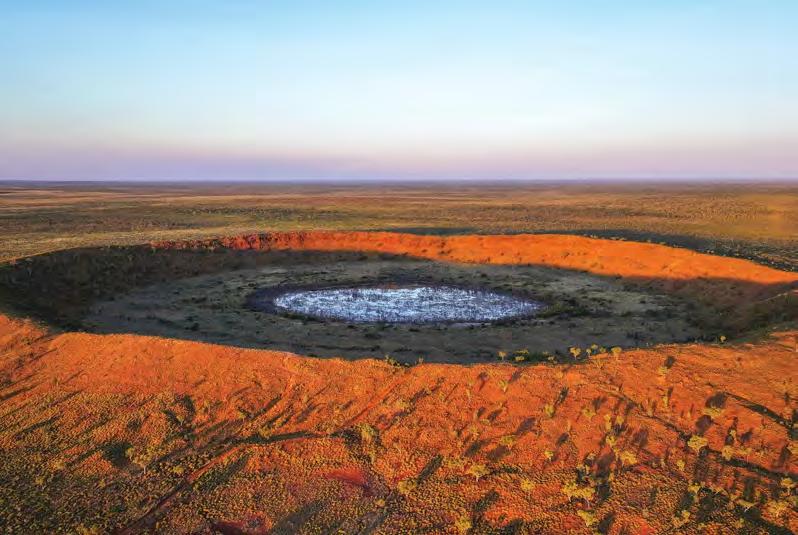 WOLFE CREEK
 LOCATION: EARTH
IMPACT SITE AGE: 120,000 YEARS

このストーリーは、How It Works UK の Issue 198 版からのものです。
Magzter GOLD を購読すると、厳選された何千ものプレミアム記事や、10,000 以上の雑誌や新聞にアクセスできます。
すでに購読者ですか? サインイン
How It Works UK からのその他のストーリー

How It Works UK
20 WEARABLE HEALTH TRACKERS
Whether you strap a wellness coach to your wrist or weave subtle sensors into your clothes, these devices are revolutionising how we track our health

9 mins
Issue 210
How It Works UK
SUPERPOWERED PLANTS
The world of plants is vibrant and diverse, just like this book.
1 min
Issue 210
How It Works UK
SECRET STORIES OF LOST BEASTS
We're all aware of the mighty dinosaurs that once roamed Earth, but there are so many weird and wonderful species that have been lost to time.
1 min
Issue 210

How It Works UK
ALL ABOUT BLIMPS
Is it a bird? Is it a spaceship? No... it's a non-rigid airship
2 mins
Issue 210
How It Works UK
SUPER QUESTERS MISSION: RAINFOREST MAGIC
Join adventurers Leo, Lilli and Bea as they transform into superheroes and journey to the rainforest in the pursuit of knowledge.
1 min
Issue 210
How It Works UK
HOW THE MIGHTY MAMMOTH RULED THE ICE AGE
Meet the prehistoric giants that roamed the Arctic Circle thousands of years ago
4 mins
Issue 210
How It Works UK
Have they found LIFE ON MARS?
Although it's by no means certain, scientists are slowly accumulating evidence that life once existed on the Red Planet
2 mins
Issue 210
How It Works UK
HOW FAST DO GLACIERS MOVE?
The speed at which a glacier flows depends on its mass, the depth and slope of the underlying rock bed and friction.
1 min
Issue 210

How It Works UK
HOW IN-FLIGHT WI-FI WORKS
This technology allows you to scroll to your heart's content while killing time at cruise altitude
3 mins
Issue 210
How It Works UK
HOW WIGWAMS WERE BUILT
Discover the construction and living conditions inside these traditional domed dwellings
1 mins
Issue 210
Listen
Translate
Change font size